
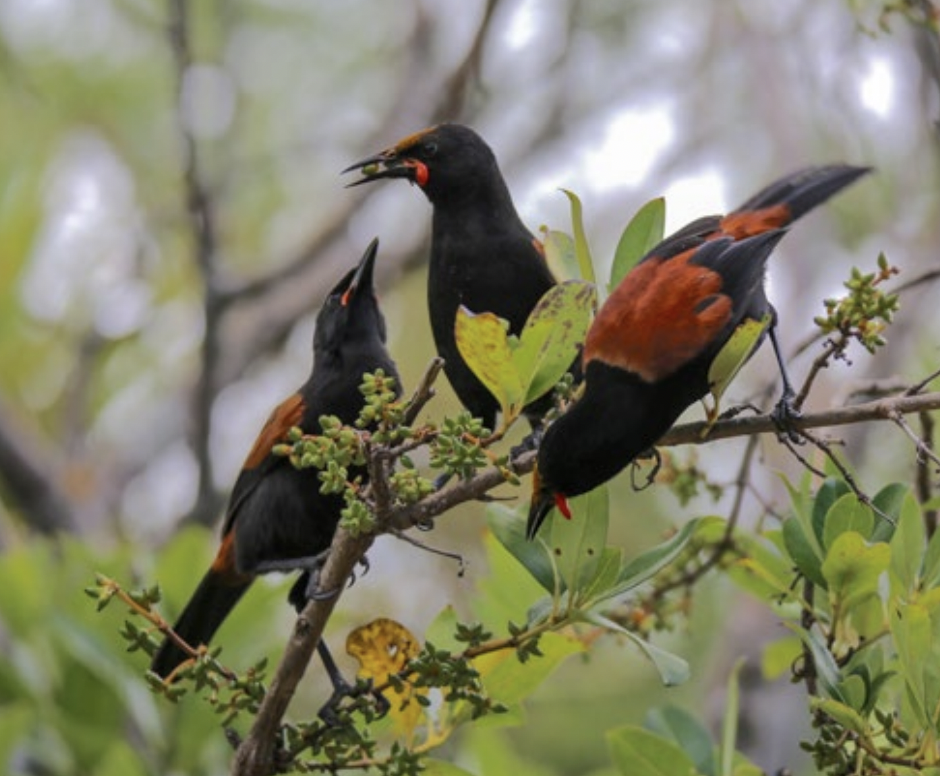
Celebrating 40 years of tīeke/saddleback
[vc_row row_height_percent="65" back_image="7511" overlay_alpha="50" gutter_size="3" column_width_percent="100" shift_y="0" z_index="0" uncode_shortcode_id="147032"][vc_column column_width_percent="100" position_vertical="middle" align_horizontal="align_center" gutter_size="3" overlay_color="color-584830" overlay_alpha="80" shift_x="0" shift_y="0" shift_y_down="0" z_index="0" medium_width="0" mobile_width="0" width="1/1"][vc_custom_heading text_color="color-xsdn" text_size="fontsize-321034" uncode_shortcode_id="150404" text_color_type="uncode-palette"]
Celebrating 40 years of tīeke/saddleback on Tiritiri Matangi
[/vc_custom_heading][/vc_column][/vc_row][vc_row][vc_column width="1/4"][vc_custom_heading heading_semantic="h4" text_size="h4" uncode_shortcode_id="132044"]Author: Stacey Balich, Guide
Date: May 2024, Dawn Chorus 137
Header image credit: John Sibley[/vc_custom_heading][/vc_column][/vc_row][vc_row][vc_column width="1/1"][vc_column_text uncode_shortcode_id="147480"]In 1984, 24 tīeke/saddleback from Cuvier Island were released on Tiritiri Matangi. They quickly established themselves with the help of nest boxes, roost boxes and regenerating bush. This year marks the 40th anniversary of their arrival, and, to celebrate this, Barbara Walter shared with me her experiences and stories from the early years. Dr Tim Lovegrove (Auckland Regional Council Heritage Department scientist) coordinated the translocation from Cuvier Island. The 24 tīeke, comprising six breeding pairs and 12 juveniles, came from five different areas of Cuvier Island and had distinct dialects. In order to preserve these distinctions, they were released in five different areas on Tiritiri Matangi: Bush 1, Bush 2, Wattle Valley, Bush 21, and Bush 22 (see Figure 1).
At the start, 360 nest boxes were made by the North Shore Forest and Bird branch, coordinated by Eric Geddes, who used to travel to the Island on a small runabout from Army Bay. There were some differences in how the boxes were made. Some were short and some were long, both types having a V shape for the opening. Later a grill was added to the opening to prevent mynas and ruru from getting in, especially ruru, as they were getting in and stealing the eggs. John Craig and Marijka Falenberg were the first to monitor the tīeke, and when Marijka finished John asked Barbara to continue with the project. She remembers going out at night with John and Marijka to monitor the nests, and she couldn't keep up with them because they had longer legs than her.
Barbara was tasked with the responsibility of checking the boxes once a week during the season, and twice a week when eggs were hatching. This was quite a laborious task, which required a great deal of dedication, attention to detail, and physical exertion. Ray prepared dinner for them on the days when Barbara was occupied with checking the boxes. Barbara and Ray also used to band the tīeke chicks in the nest boxes.[/vc_column_text][/vc_column][/vc_row][vc_row][vc_column width="1/1"][vc_row_inner][vc_column_inner width="1/2"][vc_single_image media="7512" media_width_percent="100" uncode_shortcode_id="171501"][/vc_column_inner][vc_column_inner width="1/2"][vc_single_image media="7514" media_width_percent="100" uncode_shortcode_id="463899"][/vc_column_inner][/vc_row_inner][vc_custom_heading text_size="h6" uncode_shortcode_id="283622"]
Left image: Figure 1: Map of Tiritiri Matangi Island showing the bush areas. Bush 1, 2, 21, 22 and Wattle Valley are circled.
Right image: Figure 2: Map of the North Island showing the tīeke translocations
[/vc_custom_heading][/vc_column][/vc_row][vc_row][vc_column width="1/1"][vc_column_text uncode_shortcode_id="540270"]
Tīeke are generally long-lived birds. Five or six of the original birds were still being seen in 1994 and two birds seen in 1998 had been banded back in 1978 and 1979. One female in Wattle Valley lived a long and fruitful life, reaching the impressive age of 21. Despite being a loyal and devoted partner, this tīeke had three different mates during her lifetime. Barbara mentioned that during one breeding season, she constructed multiple nests before selecting the perfect one to use.
In 1993, poisoned bait was dropped on the Island to eradicate the kiore (Pacific rat). Prior to this event, it was important to determine whether the tīeke would be likely to be affected by this, so bait was placed in some of the roost boxes. Fortunately, the tīeke showed no interest and the bait drop caused them no harm.
[/vc_column_text][/vc_column][/vc_row][vc_row][vc_column width="1/1"][vc_row_inner][vc_column_inner width="1/3"][vc_single_image media="7516" media_width_percent="100" uncode_shortcode_id="173901"][/vc_column_inner][/vc_row_inner][vc_row_inner][vc_column_inner width="1/1"][vc_custom_heading text_size="h6" uncode_shortcode_id="118936"]Photo credit: Kathryn Jones[/vc_custom_heading][/vc_column_inner][/vc_row_inner][/vc_column][/vc_row][vc_row][vc_column width="1/1"][vc_column_text uncode_shortcode_id="200943"]A thriving tīeke population
During the early years, tīeke used to lay three or four eggs per nest. However, over time, Barbara noticed that the number of eggs laid gradually decreased. It is now known that this decrease in egg-laying is a natural mechanism that helps regulate the population of tīeke. By laying fewer eggs, tīeke can ensure that the number of chicks hatching each year is balanced with the available resources in their habitat.
By the 1990s, the tīeke population was thriving. As the trees grew taller they had more natural places to build their nests, such as in the punga and harakeke/ flax bushes. In 1991 there were 60 pairs who produced 117 chicks and during the next season, there were 147 chicks. As a result of this productivity, the Island became a source for translocations to other sites. Barbara described how mist nets were put up and tīeke calls were played to attract the birds to catch them for translocations. The first translocation, to Otorohanga, took place in 1990, and many successful translocations followed (see Figure 2 above). Barbara remembers Ray being asked to go with the tīeke to Moturoa in the role of kaumātua.
Barbara said that she found herself busy with the planting and handed the monitoring over to Morag Fordham, who had been outstanding and, without
her help, the Island’s tīeke programme would not have been the huge success it has turned out to be.[/vc_column_text][/vc_column][/vc_row]

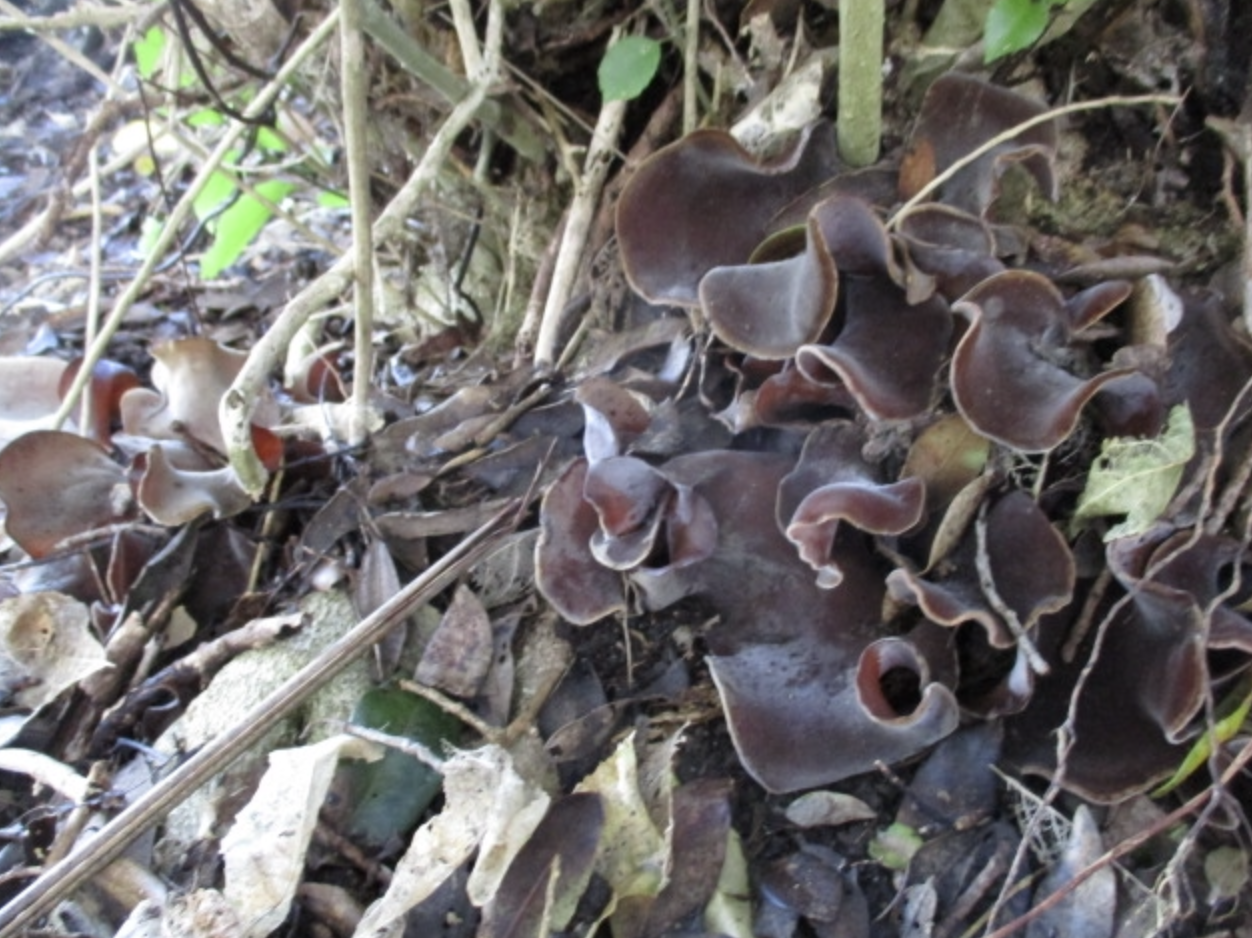
Soil: what helps create and maintain it
[vc_row row_height_percent="65" back_image="7476" overlay_alpha="50" gutter_size="3" column_width_percent="100" shift_y="0" z_index="0" uncode_shortcode_id="970512"][vc_column column_width_percent="100" position_vertical="middle" align_horizontal="align_center" gutter_size="3" overlay_color="color-584830" overlay_alpha="80" shift_x="0" shift_y="0" shift_y_down="0" z_index="0" medium_width="0" mobile_width="0" width="1/1"][vc_custom_heading text_color="color-xsdn" text_size="fontsize-321034" uncode_shortcode_id="837790" text_color_type="uncode-palette"]
Soil: what helps create and maintain it
[/vc_custom_heading][/vc_column][/vc_row][vc_row][vc_column width="1/4"][vc_custom_heading heading_semantic="h4" text_size="h4" uncode_shortcode_id="237642"]Author: Libby May, Guide
Date: September 2024[/vc_custom_heading][/vc_column][/vc_row][vc_row][vc_column width="1/1"][vc_column_text uncode_shortcode_id="703044"]Healthy soil is fundamental to our continued healthy life. It provides plants, filters and manages the volume of rainwater, hosts an enormous biodiversity both above and below ground and it can tell us about our past as well as protect our future.
It’s a huge carbon pool, absorbing carbon dioxide from the air – 1,500 billion tonnes of carbon globally – almost three times more carbon than in all above ground biomass including trees, shrubs and grasses. According to the Land Care Research Soils portal, each year unsustainable land management around the globe is responsible for around 24 billion tonnes of fertile soil being contaminated, washed off the land or blown away by the wind. In New Zealand it’s 192 million tonnes a year. (1)
It’s not a speedy process, creating healthy, rich, fertile soil. Its origins start with bare rock and sediment surfaces being weathered and disintegrating under the influence of climate. Over time the surface becomes available to vegetation, lead by lichens (of which we have an abundance on Tiritiri Matangi) which will root in any cracks they can find such as the greywacke we see on the Wattle Track. A thin layer of vegetation will gradually build up and in the fulness of time start decomposition which in turn produces organic acids. These help break down the initial material. As life increases on the surface, biological, chemical and physical weathering continues beneath.
There are more species of organisms in the soil than there are above ground; a handful of soil contains millions of individual living organisms. They help break down animal wastes, fallen leaves and other dead flora as well as fauna and turn it into humus which they then distribute throughout the soil. They also help with maintaining soil structure and water filtering. These include earthworms, lice (of the wood variety), spiders, springtails (a favourite of the North Island robin - New Zealand has two of the largest known in the world, Holocanthella, which can be up to 17mm long compared to the average 1-3mm) and mites, plus microorganisms – bacteria, fungi and archaea.
[/vc_column_text][/vc_column][/vc_row][vc_row][vc_column width="1/1"][vc_row_inner][vc_column_inner width="1/1"][vc_single_image media="7481" media_width_percent="100" uncode_shortcode_id="122733"][/vc_column_inner][/vc_row_inner][vc_custom_heading text_size="h6" uncode_shortcode_id="172786"]
Photo credit: Taken from the publication referrenced below under “Creative Commons”
[/vc_custom_heading][/vc_column][/vc_row][vc_row][vc_column width="1/1"][vc_column_text uncode_shortcode_id="207487"]
To give some scope to this vast biodiversity, the Land Care Research page on Invertebrates states there have been 22,000 arthropod species described, with at least that number again waiting to be discovered. Of that approximately 80% are endemic.
For more information on this fascinating subject follow any of the links provided, or download the 'Soil Atlas: Facts and figures about earth, land and fields' publication link below: It’s a 68 page free download.
1 Bartz et al. (2015). Soil Atlas 2015 - Facts and figures about earth, land and fields. Heinrich Boell Foundation. Institute for Advanced Sustainability Studies. Potsdam, Germany. 4th edition.
[/vc_column_text][/vc_column][/vc_row][vc_row][vc_column width="1/1"][vc_row_inner][vc_column_inner width="1/3"][vc_single_image media="7477" media_width_percent="100" uncode_shortcode_id="120293" title="Click here to visit the Soils Portal" media_link="url:https%3A%2F%2Fsoils.landcareresearch.co.nz%2Ftopics%2Funderstanding-soils%2Fwhy-bother-about-soils%2F"][/vc_column_inner][vc_column_inner width="1/3"][vc_single_image media="7478" media_width_percent="100" uncode_shortcode_id="185596" title="Click the image to visit landcare research website" media_link="url:https%3A%2F%2Fwww.landcareresearch.co.nz%2Fdiscover-our-research%2Fbiodiversity-biosecurity%2Fplants-invertebrates-fungi-and-bacteria%2Finvertebrate-systematics%2F"][/vc_column_inner][vc_column_inner width="1/3"][vc_single_image media="7479" media_width_percent="100" uncode_shortcode_id="118441" title="Click here to view the soil atlas" media_link="url:https%3A%2F%2Fwww.boell.de%2Fen%2F2015%2F01%2F07%2Fsoil-atlas-facts-and-figures-about-earth-land-and-fields"][/vc_column_inner][/vc_row_inner][/vc_column][/vc_row]
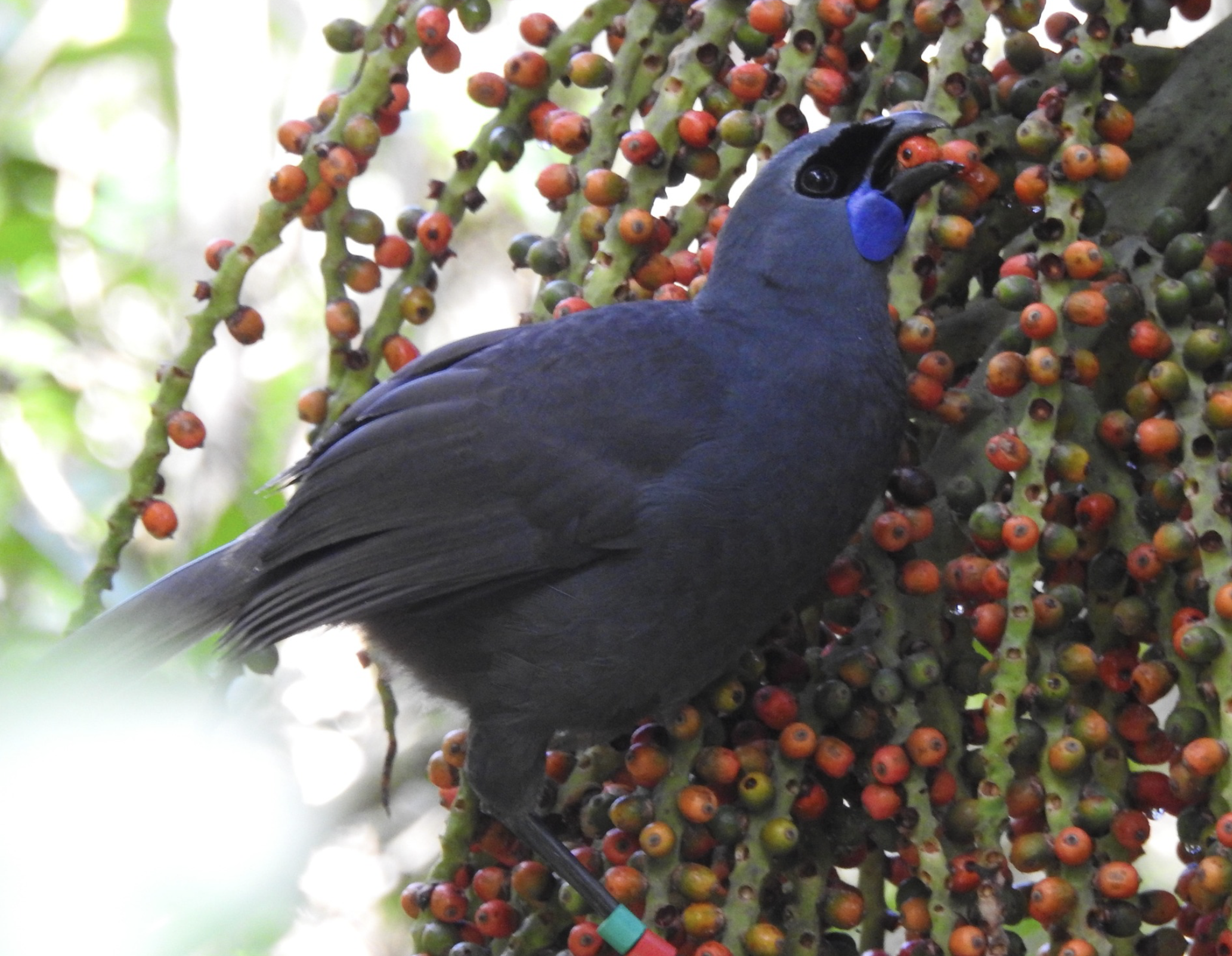
Spring has definitely sprung!
[vc_row row_height_percent="65" back_image="7468" overlay_alpha="50" gutter_size="3" column_width_percent="100" shift_y="0" z_index="0" uncode_shortcode_id="243960"][vc_column column_width_percent="100" position_vertical="middle" align_horizontal="align_center" gutter_size="3" overlay_color="color-584830" overlay_alpha="80" shift_x="0" shift_y="0" shift_y_down="0" z_index="0" medium_width="0" mobile_width="0" width="1/1"][vc_custom_heading text_color="color-xsdn" text_size="fontsize-321034" uncode_shortcode_id="692641" text_color_type="uncode-palette"]Spring has definitely sprung![/vc_custom_heading][/vc_column][/vc_row][vc_row][vc_column width="1/4"][vc_custom_heading heading_semantic="h4" text_size="h4" uncode_shortcode_id="198586"]Author: Neil Davies, Guide
Date: September 2024
Photos credit: Neil Davies[/vc_custom_heading][/vc_column][/vc_row][vc_row][vc_column width="1/1"][vc_column_text uncode_shortcode_id="810315"]Sunday 1st Sept.
On Sunday Mary-Ann and I were over on the island checking tracking tunnel cards as part of our on-going monitoring programme. Nothing untoward and just the usual critters showing up on the cards – footprints of birds, weta, wētā punga, skinks, tuatara and Duvachel gecko to name a few. However, it was impossible not to be taken by the level of bird song, even in the middle of the day, which indeed sounded like the ‘dawn chorus’. There were lots of encounters with kōkako, hihi, korimako, tūī, pōpokotea and tīeke as well as several tuatara spotted outside their burrows. I think they were celebrating the return of sunshine and mild temperatures after the heavy rain, thunder and lightning from the weather ‘bomb’ that passed over on Saturday night.
Things definitely seem to be warming up and Spring has definitely sprung! Kōwhai and karo are still blooming prodigiously all over the island and the ground is now being carpeted with yellow flower petals and the deep crimson colour of the karo flowers. It also looks like it's going to be an exceptional year for harakeke (flax) with a huge number of flower spikes and the first flowers already opening (I haven’t seen any on the mainland yet). Rewarewa has started to flower too which also seems earlier than usual. So, plenty of food for our nectar feeders - tūī, hihi and korimako. Perhaps this means the birds will be breeding earlier this year!
Right now is a great time to visit the island (is there ever not a good time to visit?) I snapped a few photos and videos to capture some of those moments.[/vc_column_text][/vc_column][/vc_row][vc_row][vc_column width="1/1"][vc_row_inner][vc_column_inner width="1/2"][vc_single_image media="7464" media_width_percent="100" media_ratio="four-three" uncode_shortcode_id="844771"][/vc_column_inner][vc_column_inner width="1/2"][vc_single_image media="7465" media_width_percent="100" media_ratio="four-three" uncode_shortcode_id="603495"][/vc_column_inner][/vc_row_inner][vc_custom_heading text_size="h6" uncode_shortcode_id="114889"]Kōkako enjoying the nīkau[/vc_custom_heading][/vc_column][/vc_row][vc_row][vc_column width="1/1"][vc_row_inner][vc_column_inner width="1/2"][vc_single_image media="7470" media_width_percent="100" media_ratio="four-three" uncode_shortcode_id="192578"][/vc_column_inner][vc_column_inner width="1/2"][vc_single_image media="7471" media_width_percent="100" media_ratio="four-three" uncode_shortcode_id="207358"][/vc_column_inner][/vc_row_inner][vc_custom_heading text_size="h6" uncode_shortcode_id="189131"]Spring has sprung[/vc_custom_heading][/vc_column][/vc_row]
Tropical newcomers thrive as our sea temperatures continue to increase off Tiritiri Matangi
[vc_row row_height_percent="65" back_image="7450" overlay_alpha="50" gutter_size="3" column_width_percent="100" shift_y="0" z_index="0" uncode_shortcode_id="102057"][vc_column column_width_percent="100" position_vertical="middle" align_horizontal="align_center" gutter_size="3" overlay_color="color-584830" overlay_alpha="80" shift_x="0" shift_y="0" shift_y_down="0" z_index="0" medium_width="0" mobile_width="0" width="1/1"][vc_custom_heading text_color="color-xsdn" text_size="fontsize-321034" uncode_shortcode_id="853768" text_color_type="uncode-palette"]Tropical newcomers thrive as our sea temperatures continue to increase off Tiritiri Matangi[/vc_custom_heading][/vc_column][/vc_row][vc_row][vc_column width="1/4"][vc_custom_heading heading_semantic="h4" text_size="h4" uncode_shortcode_id="416137"]Author: John Sibley, Guide
Date: August 2024
Photos credit: John Sibley[/vc_custom_heading][/vc_column][/vc_row][vc_row][vc_column width="1/1"][vc_column_text uncode_shortcode_id="644533"]Once again in 2024 the winter minimum sea temperature off Tiritiri Matangi stayed two degrees higher than the historical recorded average 50-60 years ago.[/vc_column_text][/vc_column][/vc_row][vc_row][vc_column width="1/1"][vc_single_image media="7451" media_width_percent="100" uncode_shortcode_id="314973"][/vc_column][/vc_row][vc_row][vc_column width="1/1"][vc_column_text uncode_shortcode_id="185261"]At the same time two warm water species from the tropical North took advantage of this and were able to dominate the local marine ecology to the detriment of its indigenous residents.
The first species to appear in 2024 was the tropical toxic cyanobacterium Okeania, which now forms a permanent part of the seagrass community around the Gulf. Aided on by the half million tonne sewage spill from Parnell in October last year, Okeania grew rapidly in January to smother vast areas of seagrass. [/vc_column_text][/vc_column][/vc_row][vc_row][vc_column width="1/1"][vc_row_inner][vc_column_inner width="1/2"][vc_single_image media="7452" media_width_percent="100" uncode_shortcode_id="899342"][/vc_column_inner][vc_column_inner width="1/2"][vc_single_image media="7453" media_width_percent="100" uncode_shortcode_id="116054"][/vc_column_inner][/vc_row_inner][vc_custom_heading text_size="h6" uncode_shortcode_id="129539"]Left: Leaving a few strands on a microscope slide one sunny afternoon resulted in a tangled mass four hours later
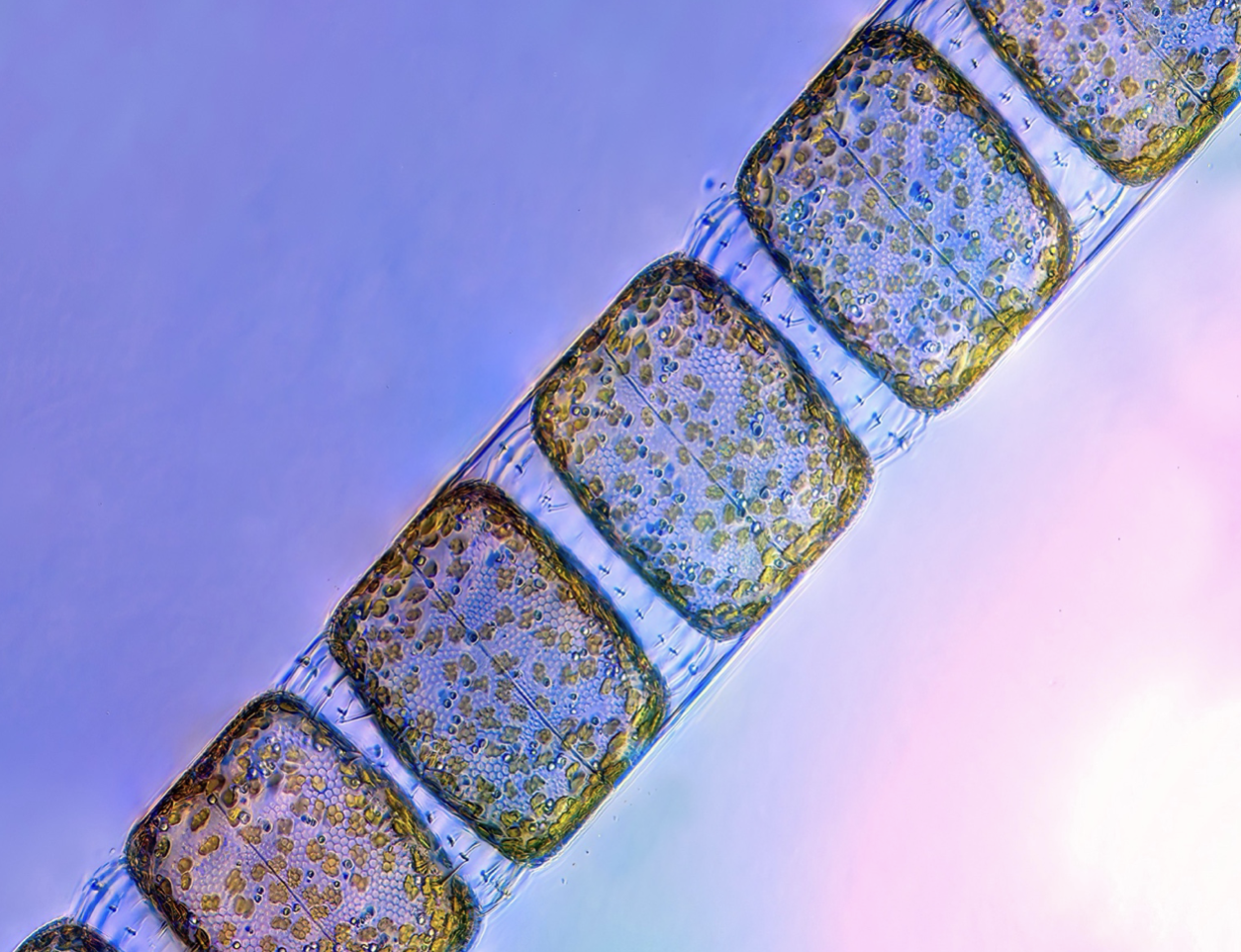
Right: Off Tiritiri Matangi the seagrass beds were affected from the wharf to Hobbs Bay, with slimy fingers (picture above) breaking away and floating up to the surface just where swimmers love to come and cool down after a hot days walking.[/vc_custom_heading][/vc_column][/vc_row][vc_row][vc_column width="1/1"][vc_column_text uncode_shortcode_id="196077"]Off Waikehe Island the council were called in to clear the resulting half metre deep layer of black slime off the beaches. Off Tiritiri Matangi the seagrass beds were affected from the wharf to Hobbs Bay, with slimy fingers (picture above) breaking away and floating up to the surface just where swimmers love to come and cool down after a hot days walking. The toxins produced are known to cause contact dermatitis, skin ulcers and even corneal perforations. Growth rates of this organism are truly impressive. When observing Okeania under the microscope, the strands are in constant rapid sliding motion as the cells divide. Leaving a few strands on a microscope slide one sunny afternoon resulted in a tangled mass four hours later, (See picture previous page) such was the astonishing growth rate. Since the sewage leak last year, amounts of the cyanobacterium have decreased, but it still forms a significant component of the changed seagrass ecosystem. [/vc_column_text][/vc_column][/vc_row][vc_row][vc_column width="1/1"][vc_column_text uncode_shortcode_id="164289"]The other tropical invader is a chain forming diatom called Stephanopyxis (below). It is a real beauty with its clear glass “skeleton” scattering light like a string of gems. It is harmless to humans but still competes with the native species of diatom for light and nutrients. Stephanopyxis first appeared in the plankton hauls taken off Tiritiri Matangi Wharf in mid May. It quickly “bloomed” until it was virtually the only species of diatom present. It is now slowly decreasing in numbers as the original native species return. [/vc_column_text][/vc_column][/vc_row][vc_row][vc_column width="1/1"][vc_single_image media="7454" media_width_percent="100" uncode_shortcode_id="180643"][/vc_column][/vc_row][vc_row][vc_column width="1/1"][vc_column_text uncode_shortcode_id="974009"]It remains to be seen if it becomes part of the regular marine community.
This is just one example of how our marine (and terrestrial) environment is being impacted as climate change proceeds.
There are many other examples on Tiritiri Matangi, and the overall longer-term situation is extremely serious.[/vc_column_text][/vc_column][/vc_row]
Seabird Counting
[vc_row row_height_percent="65" back_image="7446" overlay_alpha="50" gutter_size="3" column_width_percent="100" shift_y="0" z_index="0" uncode_shortcode_id="259370" shape_dividers=""][vc_column column_width_percent="100" position_vertical="middle" align_horizontal="align_center" gutter_size="3" overlay_color="color-584830" overlay_alpha="80" shift_x="0" shift_y="0" shift_y_down="0" z_index="0" medium_width="0" mobile_width="0" width="1/1"][vc_custom_heading text_color="color-xsdn" text_size="fontsize-321034" uncode_shortcode_id="138387" text_color_type="uncode-palette"]Seabird Counting[/vc_custom_heading][/vc_column][/vc_row][vc_row][vc_column width="1/4"][vc_custom_heading heading_semantic="h4" text_size="h4" uncode_shortcode_id="104761"]Author: Roy Gosney, Guide
Date: August 2024
Photo credit: Oscar Thomas[/vc_custom_heading][/vc_column][/vc_row][vc_row][vc_column width="1/1"][vc_column_text uncode_shortcode_id="141354"]
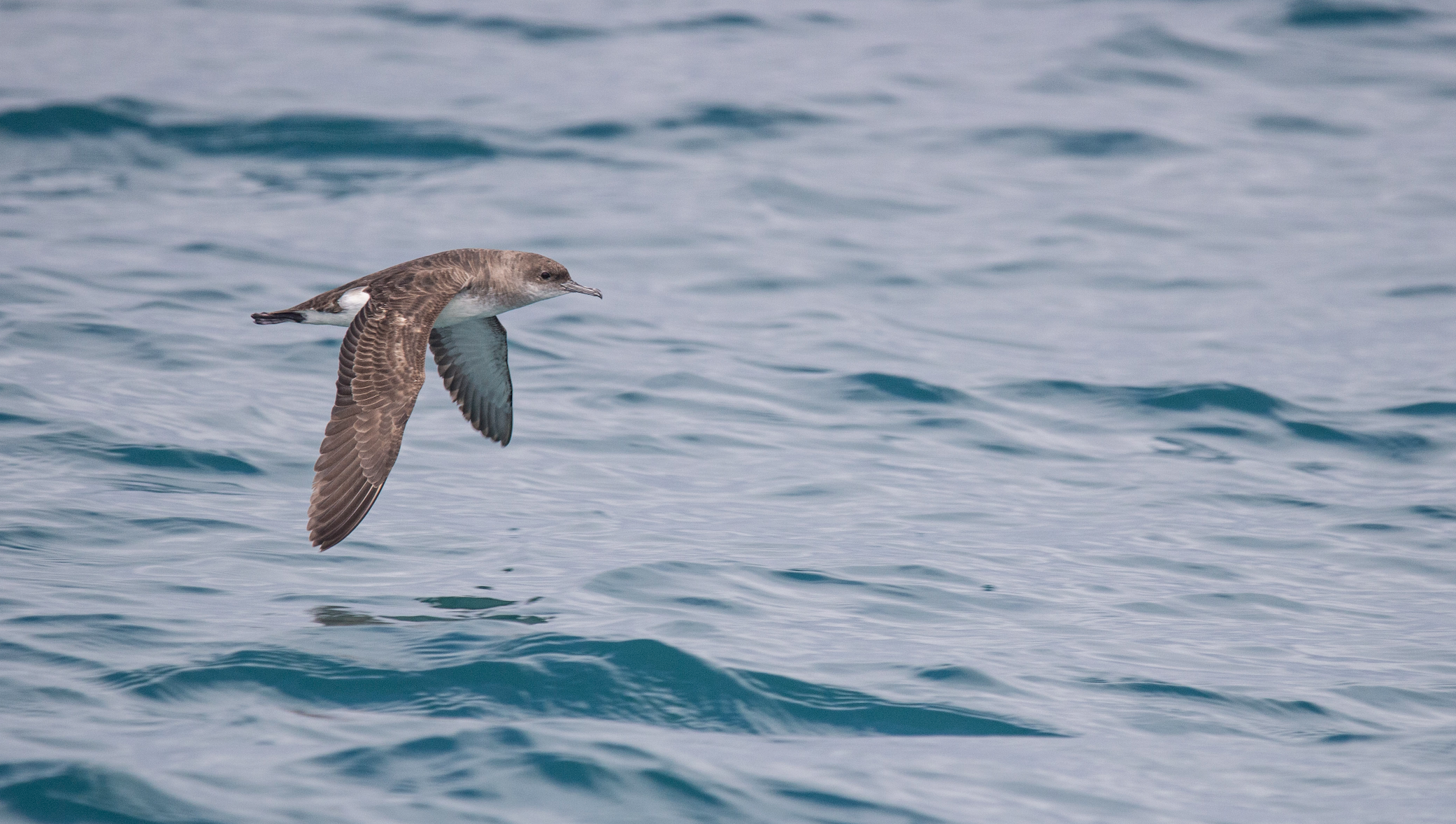
There is no doubting the success of Tiritiri Matangi in preserving bird species that have principally succumbed to human devastation. This achievement however provides no indication of how more successful species are faring. Enter the ubiquitous seabirds whose status is a good indicator of overall ecological health, given their existence on the margins of land and sea.
A little-known project on Tiritiri Matangi has been Seabird Counting, the aim of which is to help fill this gap in our knowledge. Seabird counting has been an annual event taking place between September and January and is in its 12th year. Mike Dye did this for the first 10 years ably describing his experience in a 17th May issue of Guidelines. I assisted Mike over the last 5 years until we were joined by Rachel Taylor. Rachel and Mike, now no longer in Auckland, left a vacuum that I, in a mad moment, agreed to fill. Consequently, I started the 23-24 season on my own, but thanks mainly to Mike’s article, a number of people have come forward and we’ve built a good team comprising: Scott Camlin, Bethny Uptegrove, Sue Beaumont Orr, Yvonne Vaneveld and Julie Benjamin.
The target species are primarily Red-billed Gulls (RBGs), Black-backed Gulls (BBGs), White-fronted Terns (WFTs) and Pied Shags (PS) because these all have established nesting areas on the Island. We are also interested in other species including Caspian Tern, Pied Shag, Little Shag, and Reef Heron. The simple method we employ involves counting these birds in known breeding areas and colonies while being vigilant for lone breeders and new colonies.
We are often asked why we bother to count seabirds. “Seagulls are everywhere, they’re a nuisance stealing our chips”. The truth is that only Black-backed Gulls are thriving, while the others are in the ‘at risk’ or ‘threatened’ conservation status. Hence, it is important to detect the population changes of these birds and to understand the causes. Tiritiri Matangi is a small piece of the moving jigsaw puzzle that is New Zealand’s overall seabird study. The study in the short term identifies areas of importance for shorebirds, estimates the abundance and proportion of the different populations that use those areas, and in the long term estimates population trends of the shorebirds.
We are a growing team; our Seabird Counting project is becoming more known amongst Supporters of Tiritiri Matangi volunteers and more people are putting their name forward to join in the counting. Is there an increasing interest in our seabird population or is it that people are seeing how much fun we’re having? (H&S skip over this…) That fun part? Bounding over hill & dale, confidently striding ahead toward precipitous cliff edges, eyes assisted by heavy binoculars, ignoring the rolly gravelly patches, feeling for the return track between thick stands of flax and twiggy bush, all while ignoring scratchy heat, aching muscles and growling hunger as we pass by seductive shady bits of lush grassy hillside; no time to rest. The birds and the ferry wait for no one.
[/vc_column_text][/vc_column][/vc_row]
Birds—The Formula 1s of the Animal World
[vc_row row_height_percent="65" back_image="7308" overlay_alpha="50" gutter_size="3" column_width_percent="100" shift_y="0" z_index="0" uncode_shortcode_id="493685"][vc_column column_width_percent="100" position_vertical="middle" align_horizontal="align_center" gutter_size="3" overlay_color="color-584830" overlay_alpha="80" shift_x="0" shift_y="0" shift_y_down="0" z_index="0" medium_width="0" mobile_width="0" width="1/1"][vc_custom_heading text_color="color-xsdn" text_size="fontsize-321034" uncode_shortcode_id="106080" text_color_type="uncode-palette"]
Birds—The Formula 1s of the Animal World
[/vc_custom_heading][/vc_column][/vc_row][vc_row][vc_column width="1/4"][vc_custom_heading heading_semantic="h4" text_size="h4" uncode_shortcode_id="111716"]Author: Malcolm Pullan, Guide
Date: July 2024
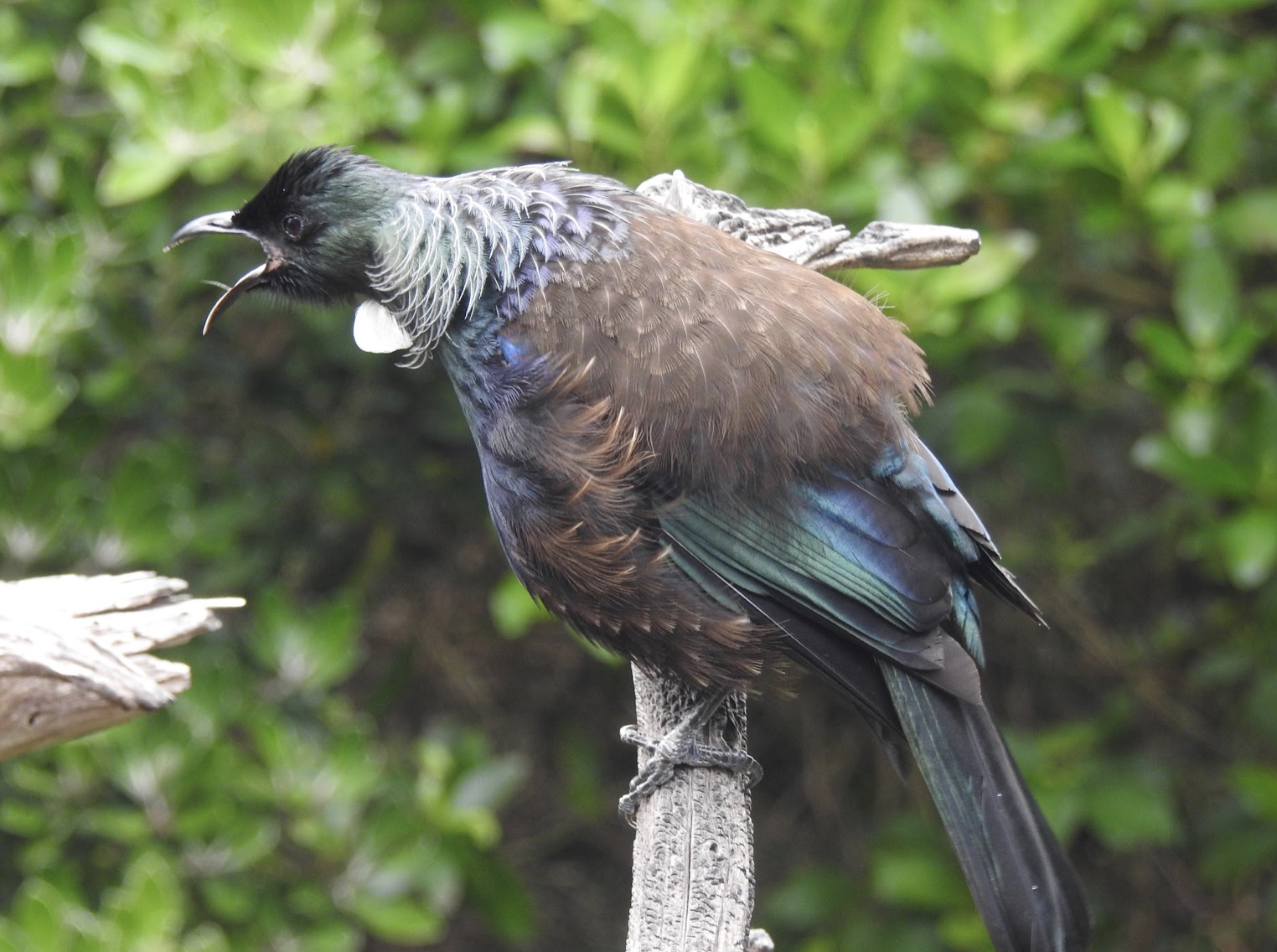
Photo and video credit: Neil Davies[/vc_custom_heading][/vc_column][/vc_row][vc_row][vc_column width="1/1"][vc_column_text uncode_shortcode_id="175072"]Have you ever marveled at the extraordinary journeys that some birds go on when they’re feeding or migrating? Have you ever wondered how birds are able to fly through the forest so quickly, yet not crash into things? Have you ever wondered how it is that many birds can remain on the ground as a car is approaching and then quickly escape at the very last second? You haven’t? Oh well, neither had I until a few years ago. Now, though, I think about it almost every time I see a bird. For I now know that underpinning these observations is something quite special about birds that explains so much about why birds are the way they are.
Birds are hot(1). In fact, they’re the hottest vertebrates (2) around. You and I maintain a more or less constant body temperature of around 37°C. That’s fairly typical for a mammal. Birds also maintain a relatively constant internal body temperature—except theirs is likely to be in the range of 39– 43°C, i.e. quite a bit higher than your average mammal. Now you don’t need to know much chemistry—or baking for that matter—to know that when you heat things up, chemical processes speed up. This is what happens in birds. Stuff happens more quickly. For instance, reaction times are faster and muscles can work harder. Fast reaction times explain how birds can dodge a moving car and how a bird can fly around the forest at speed without crashing. The long journeys some birds undertake are made possible by having muscles that can work hard (as is being able to fly around the forest at speed in the first place). Birds simply couldn’t do these things if the chemistry in their bodies wasn’t in overdrive, and the chemistry in their bodies wouldn’t be in overdrive if they didn’t have high body temperatures.
Birds are really approaching the limit of what is possible for a vertebrate. The absolute internal temperature limit for vertebrates seems to be about 46°C. Anything above that can cause brain damage that’s fatal. Despite this, there are even birds that maintain a body temperature of around 45°C!(3) [/vc_column_text][/vc_column][/vc_row][vc_row][vc_column width="1/2"][vc_single_image media="7314" media_width_percent="100" uncode_shortcode_id="824766" title="Human respiratory system"][/vc_column][vc_column width="1/2"][vc_single_image media="7312" media_width_percent="100" uncode_shortcode_id="192316" title="Air sacs of a typical bird"][/vc_column][/vc_row][vc_row][vc_column width="1/1"][vc_column_text uncode_shortcode_id="718185"]Having a high body temperature is hard work. It’s unsurprising then that a bird’s body is fine-tuned for maximum performance. More energy is needed, so birds need to eat more and/or use their energy more efficiently. Oxygen needs to be pumped round the body more efficiently. Waste products need to be removed more rapidly. These are just some of the obvious fine tunings a bird has. If vertebrates are likened to cars, then birds are the Formula 1 racing cars. A tweak here, a redesign there—all for optimum efficiency.
.[/vc_column_text][/vc_column][/vc_row][vc_row][vc_column width="1/1"][vc_single_image media="7597" media_width_percent="100" uncode_shortcode_id="587229"][/vc_column][/vc_row][vc_row][vc_column width="1/1"][vc_column_text uncode_shortcode_id="175391"]It would be possible to write a book on the many ways a bird is fine-tuned for high performance. I’m just going to take one example to illustrate the point: getting oxygen into the body. Bird lungs are quite different from our lungs, and they breathe quite differently too. Everything about the respiratory system of birds is optimised to get as much oxygen into the blood as quickly as possible (and carbon dioxide out at the same time).
When humans breathe in, air goes into the lungs and ends up in numerous little sacs called alveoli (see diagram above). Once there, oxygen passes across the lining of the alveoli to enter the blood. At the same time carbon dioxide passes the other way. When we breathe out the carbon dioxide is expelled.
That’s all very well and good. But there’s a lot of time in a breath when there’s not much oxygen going into the blood. When we breathe out, we’re just getting rid of carbon dioxide sitting in the lungs. Oxygen doesn’t return until the next breath. What if lungs could be designed so that there is always oxygen going into the lungs? That would be so much more efficient. [/vc_column_text][/vc_column][/vc_row][vc_row][vc_column width="1/1"][vc_column_text uncode_shortcode_id="715427"]And that’s precisely what birds do. Birds have a one way system in the their lungs. In order to facilitate this, they have something else as well: air sacs for storage (see diagram). There are sacs towards the head of the bird and sacs towards the rear. Some of these sacs are even in bones. (This has the added advantage of making the bird lighter than it would be if the bones were solid, thus helping with flight, but that’s another story.) The air sacs are connected to the lungs. The lungs have numerous tubes called parabronchi (see diagram). Like the alveoli in mammals, oxygen enters the blood across the lining of the parabronchi and carbon dioxide leaves. However, unlike alveoli in mammals, air does not go in and out of the parabronchi, but flows in one direction only. Not only that, fresh air is arriving into the parabronchi whether the bird is breathing in or out.[/vc_column_text][/vc_column][/vc_row][vc_row][vc_column width="1/1"][vc_single_image media="7315" media_width_percent="100" uncode_shortcode_id="130690"][/vc_column][/vc_row][vc_row][vc_column width="1/1"][vc_column_text uncode_shortcode_id="770673"]How does that work you may ask? This is where the air sacs come in. They act like bellows to the parabronchi. When a bird takes a breath in, air enters the rear air sacs and the entrance to the lungs (see diagram above). When the bird breathes out, these air sacs pump air into the parabronchi. On the next breath in, that air will then go into the air sacs near the head (and the exit to the lungs). On the next breath out, that air will be exhaled. In this way, fresh air is always entering the parabronchi. Really efficient, isn't it? There are other efficiency tweaks too. For instance, the lining of the parabronchi is much thinner than the lining of the alveoli in mammals. This allows oxygen and carbon dioxide to pass more quickly to and from the blood respectively. Birds are able to have this thinner lining because their lungs don’t inflate and deflate like mammal lungs do. The lining of the alveoli in mammal lungs needs to be able to cope with being stretched when air enters. The lining of the parabronchi in birds doesn’t need to stretch so can get away with being thinner.
The list of fine tunings birds have goes on and on. Formula 1 racing cars indeed! I will finish though with a little coda on our beloved kiwi. You may have noticed I mentioned the upper limit for the internal body temperature of a bird, but didn’t say anything about the lower limit. It turns out that the kiwi is more or less at this lower limit. It has one of the lowest internal body temperatures of any bird, if not the lowest. The body temperature of a kiwi is around 37–38°C (with one study measuring it 36–37°C). (4) This is about the same as us. Not only this, kiwi don’t have air sacs in their bones. Their bones are filled with marrow like ours. These are yet more ways in which kiwi are more like a mammal than a bird. The DOC team who monitor kiwi could well have observations on the dodging speed of a kiwi compared to other non- or reluctant-flying birds on the motu. [/vc_column_text][/vc_column][/vc_row][vc_row][vc_column width="1/1"][vc_column_text uncode_shortcode_id="937425"](1)Although visitors to Tiritiri Matangi may argue that birds are really cool. (Sorry, I couldn’t resist the dad joke!)
(2) Loosely speaking, vertebrates are those creatures most people would call animals. They comprise mammals, reptiles, amphibians, birds, and the various forms of fish (including sharks and rays).
(3) The highest known body temperature appears to be in the Somber Hummingbird from Brazil (Eupetomena cirrochloris). Having said that, a recent study has shown that the red-billed quelea from Africa (Quelea quelea) can tolerate a temporary body temperature around 48–49°C, although the brain is kept cooler than this. See https://www.ncbi.nlm.nih.gov/pmc/articles/PMC7403380/.
(4)See https://sora.unm.edu/sites/default/files/journals/auk/v113n03/p0687-p0692.pdf for a discussion of the body temperatures of kiwi. The lower temperature comes from an earlier study (referred to in the linked article) and was a daytime temperature. Daytime is when kiwi normally sleep, and so one would naturally expect a lower temperature then.
References:
- Gill, F.B. & Prum, R.O. 2019. Ornithology (4th ed.). W.H. Freeman and Company, New York. (Chapter 6 in particular)
- Pough, F.H, Bemis, W.E, McGuire, B. & Janis, C.M. 2023. Vertebrate Life (11th ed.). Sinauer Associates, New York. (pp. 296–297)
Diagrams from Wikipedia (shared through Creative Common licensing):
- https://commons.wikimedia.org/wiki/File:Human_Lungs.gif
- https://commons.wikimedia.org/wiki/File:Cranial_sinus_and_postcranial_air_sac_systems_in_birds .jpg
- https://commons.wikimedia.org/wiki/File:Bird%27s_respiratory_system.jpg
- https://commons.wikimedia.org/wiki/File:Bird_Respiration_-_Air_circulation_%28FR%29.svg#file (edited to replace French labels with English ones)
[/vc_column_text][/vc_column][/vc_row]
Highway robbery
[vc_row row_height_percent="65" back_image="7304" overlay_alpha="50" gutter_size="3" column_width_percent="100" shift_y="0" z_index="0" uncode_shortcode_id="186589" shape_dividers=""][vc_column column_width_percent="100" position_vertical="middle" align_horizontal="align_center" gutter_size="3" overlay_color="color-584830" overlay_alpha="80" shift_x="0" shift_y="0" shift_y_down="0" z_index="0" medium_width="0" mobile_width="0" width="1/1"][vc_custom_heading text_color="color-xsdn" text_size="fontsize-321034" uncode_shortcode_id="119921" text_color_type="uncode-palette"]Highway robbery[/vc_custom_heading][/vc_column][/vc_row][vc_row][vc_column width="1/4"][vc_custom_heading heading_semantic="h4" text_size="h4" uncode_shortcode_id="166861"]Author: Jonathan Mower, Guide
Date: July 2024
Photo and video credit: Jonathan Mower[/vc_custom_heading][/vc_column][/vc_row][vc_row][vc_column width="1/1"][vc_column_text uncode_shortcode_id="204542"]
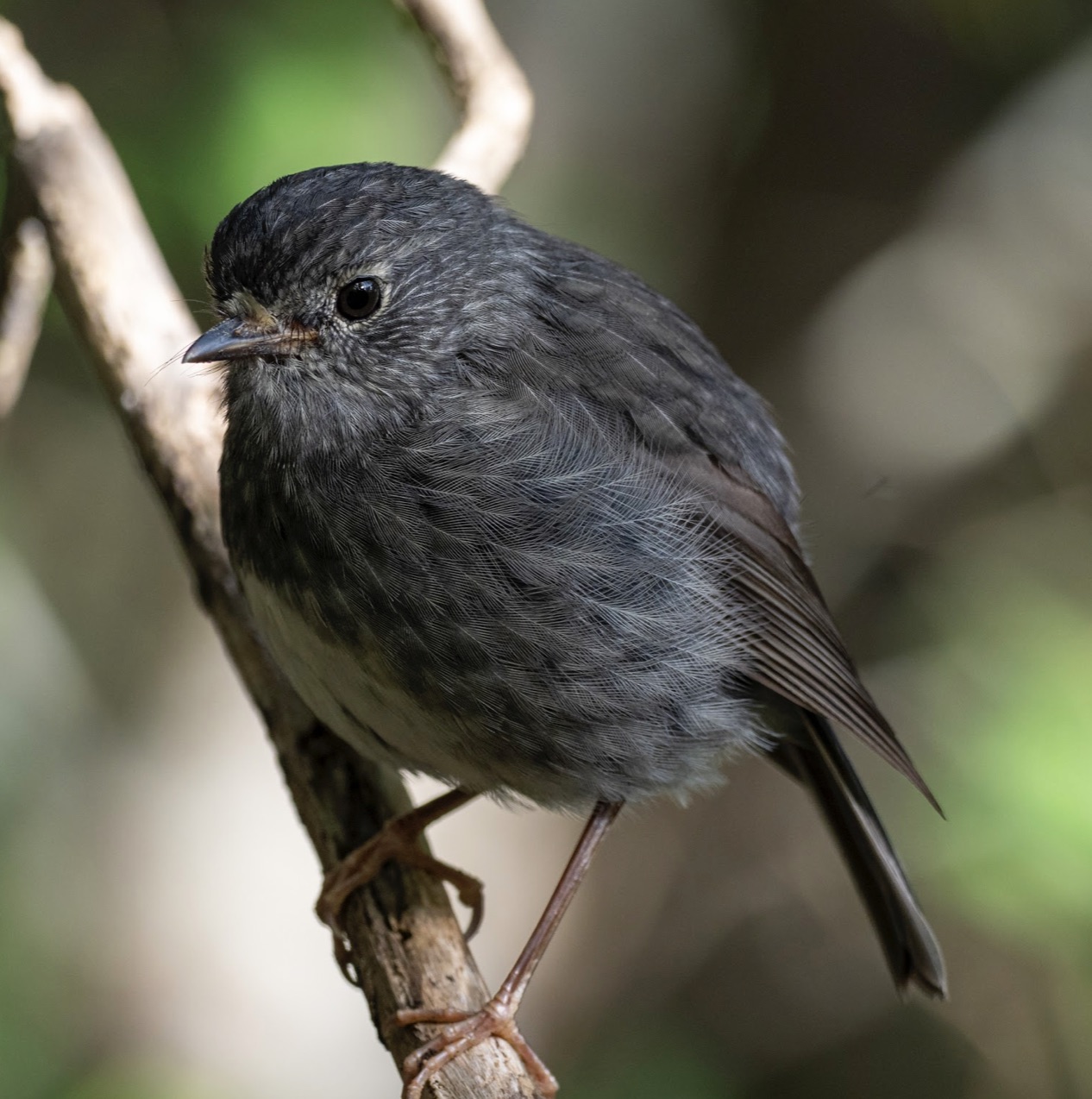
This short video clip captures a moment of interspecies interaction when a toutouwai/ North Island robin came across a tīeke/ North Island saddleback that had captured and killed a wētā.
The toutouwai was a much more dominant bird and harassed the more timid tīeke, eventually causing the tīeke to abandon its prey to the toutouwai which snatched it and flew away.
The small wattles and timid nature may mean the tīeke was a young and inexperienced hunter because I have previously seen tīeke aggressively dispatch large prey including hura/giant centipedes and wētā.
By nature, the toutouwai are often bold and aggressively territorial toward others of their own kind but here we see them interacting and showing dominance over a very different species.[/vc_column_text][/vc_column][/vc_row][vc_row][vc_column width="1/1"][vc_single_image media="7302" media_width_percent="100" uncode_shortcode_id="483511" media_link="url:https%3A%2F%2Fyoutu.be%2FvyxN5-Arlkg"][/vc_column][/vc_row]
With Matariki approaching, it is an opportunity to look back and look forward
[vc_row row_height_percent="65" back_image="7230" overlay_alpha="50" gutter_size="3" column_width_percent="100" shift_y="0" z_index="0" uncode_shortcode_id="136416"][vc_column column_width_percent="100" position_vertical="middle" align_horizontal="align_center" gutter_size="3" overlay_color="color-584830" overlay_alpha="80" shift_x="0" shift_y="0" shift_y_down="0" z_index="0" medium_width="0" mobile_width="0" width="1/1"][vc_custom_heading text_color="color-xsdn" text_size="fontsize-321034" uncode_shortcode_id="920151" text_color_type="uncode-palette"]With Matariki approaching, it is an opportunity to look back and look forward[/vc_custom_heading][/vc_column][/vc_row][vc_row][vc_column width="1/4"][vc_custom_heading heading_semantic="h4" text_size="h4" uncode_shortcode_id="132517"]Author: Ian Alexander, Supporters of Tiritiri Matangi Island Chair
Date: June 2024
Photo header credit: Geoff Beals[/vc_custom_heading][/vc_column][/vc_row][vc_row][vc_column width="1/1"][vc_column_text uncode_shortcode_id="118250"]With Matariki approaching, it is an opportunity to look back and look forward, celebrating the past year and thinking of what can be achieved over the next year.
It has been a year of change for volunteers and staff on and off the Island. Having farewelled two of our beloved members late last year, we remember them - Ray Walter and Mel Galbraith, two men who contributed a life of service in many different ways to the development of our island conservation project. And there are others who have passed away during the year who in their own way have also contributed to the work of the Island.
Guiding both public and schools has continued to be a major part of the operations of Tiritiri Matangi as have efforts made by all our sub-committees and task groups across biodiversity, infrastructure, advocacy, education, fundraising, membership, retail and IT.
Climate has and will continue to dominate the Island ngahere and tracks requiring constant attention by our regular working parties and individuals.
Looking forward there remains much to do to ensure the proper care and attention to the Island's flora and fauna and to continue to provide opportunities to everyday New Zealanders in citizen science.
Tiritiri Matangi island holds an appeal as a haven for New Zealand wildlife and humans to enjoy and our future role includes protection of this incredible taonga.
[/vc_column_text][/vc_column][/vc_row][vc_row row_height_percent="0" overlay_alpha="50" gutter_size="3" column_width_percent="100" shift_y="0" z_index="0" uncode_shortcode_id="146972"][vc_column column_width_percent="100" gutter_size="3" override_padding="yes" column_padding="2" overlay_alpha="50" shift_x="0" shift_y="0" shift_y_down="0" z_index="0" medium_width="0" mobile_width="0" shadow="xs" width="1/3" uncode_shortcode_id="181790"][vc_single_image media="7232" media_width_percent="100" uncode_shortcode_id="286269"][/vc_column][vc_column width="1/3"][vc_single_image media="7231" media_width_percent="100" uncode_shortcode_id="173509"][/vc_column][vc_column width="1/3"][vc_single_image media="7235" media_width_percent="100" uncode_shortcode_id="210240"][/vc_column][/vc_row][vc_row][vc_column width="1/1"][vc_column_text uncode_shortcode_id="183888"]Left: Ray Walter, photo credit Martin Sanders
Middle: Ray Walter and Mel Galbraith at the opening of the Kawerau Track, photo credit from Tiritiri Matangi archives
Right: Mel Galbraith.[/vc_column_text][/vc_column][/vc_row][vc_row][vc_column width="1/1"][vc_column_text uncode_shortcode_id="636992"]
He aha te mea nui o te ao
What is the most important thing in the world?
He tangata, he tangata, he tangata
It is the people, it is the people, it is the people
Māori proverb
[/vc_column_text][/vc_column][/vc_row]