
[vc_row row_height_percent=”65″ back_image=”8351″ overlay_alpha=”50″ gutter_size=”3″ column_width_percent=”100″ shift_y=”0″ z_index=”0″ content_parallax=”0″ uncode_shortcode_id=”188806″][vc_column column_width_percent=”100″ position_vertical=”middle” align_horizontal=”align_center” gutter_size=”3″ overlay_color=”color-584830″ overlay_alpha=”80″ shift_x=”0″ shift_y=”0″ shift_y_down=”0″ z_index=”0″ medium_width=”0″ mobile_width=”0″ width=”1/1″][vc_custom_heading text_color=”color-xsdn” text_size=”fontsize-321034″ uncode_shortcode_id=”178942″ text_color_type=”uncode-palette”]
Tiritiri Matangi’s Nīkau Grove
[/vc_custom_heading][/vc_column][/vc_row][vc_row][vc_column width=”1/4″][vc_custom_heading heading_semantic=”h4″ text_size=”h4″ uncode_shortcode_id=”981691″]Author: Warren Brewer
Photo credits: Warren Brewer[/vc_custom_heading][/vc_column][/vc_row][vc_row][vc_column width=”1/1″][vc_column_text uncode_shortcode_id=”110253″]One of the highlights of the Wattle Valley Walk is seeing the nīkau grove, planted during 1994. Nīkau, Rhopalostylis sapida, is regarded as the world’s southernmost palm. The large palm family, Arecaceae,is mostly found in tropical and subtropical climates. Nīkau is one of the few temperate climate outliers.
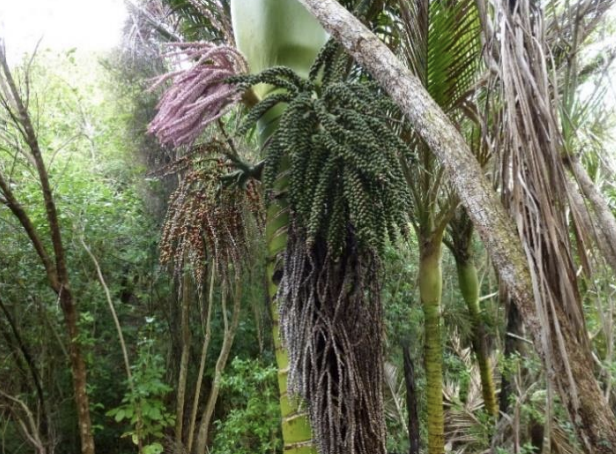
Tiritiri Matangi’s palms first flowered during 2010 and there is now a steady display of flowers and ripening fruit for visitors to enjoy. Nīkau flowers are carried on compact, much branched inflorescences. Separate male and female flowers are grouped into threes, a central female with two larger lateral males. The male flowers, with six stamens, open first. They soon disappear and female flowers open
Pollination is mostly done by small insects. A few small birds (hihi on Tiritiri Matangi) also seek the nectar amongst the sprays, collecting pollen on their feathers. New fruit which forms is green at first then ripens to a bright red to orange-red. Each fruit contains one seed. Kererū and kōkako are keen harvesters. Nīkau leaves were used by Māori for thatch, mats, baskets and wrapping food. Immature inflorescences and the young growing tip are edible when cooked.
The species name sapida means savoury, pleasant to taste. Rhopalostylis means club shaped style.[/vc_column_text][/vc_column][/vc_row][vc_row][vc_column width=”1/2″][vc_single_image media=”8345″ media_width_percent=”100″ media_ratio=”four-three” uncode_shortcode_id=”104305″][vc_custom_heading uncode_shortcode_id=”206433″]
Picture to left shows flowering with male flowers opening and a visiting fly. Right is a close-up of male flowers with stamens.
[/vc_custom_heading][/vc_column][vc_column width=”1/2″][vc_single_image media=”8346″ media_width_percent=”100″ media_ratio=”four-three” uncode_shortcode_id=”693614″][/vc_column][/vc_row][vc_row][vc_column width=”1/2″][vc_single_image media=”8347″ media_width_percent=”100″ media_ratio=”four-three” uncode_shortcode_id=”174315″][vc_custom_heading heading_semantic=”h5″ uncode_shortcode_id=”130157″]
To left is a mix of new flowers, green and ripe fruit. Right is a close up of fruit beginning to ripen.
[/vc_custom_heading][/vc_column][vc_column width=”1/2″][vc_single_image media=”8348″ media_width_percent=”100″ media_ratio=”four-three” uncode_shortcode_id=”155165″][/vc_column][/vc_row]