
[vc_row row_height_percent=”65″ back_image=”7823″ overlay_alpha=”50″ gutter_size=”3″ column_width_percent=”100″ shift_y=”0″ z_index=”0″ content_parallax=”0″ uncode_shortcode_id=”180863″][vc_column column_width_percent=”100″ position_vertical=”middle” align_horizontal=”align_center” gutter_size=”3″ overlay_color=”color-584830″ overlay_alpha=”80″ shift_x=”0″ shift_y=”0″ shift_y_down=”0″ z_index=”0″ medium_width=”0″ mobile_width=”0″ width=”1/1″][vc_custom_heading text_color=”color-xsdn” text_size=”fontsize-321034″ uncode_shortcode_id=”110235″ text_color_type=”uncode-palette”]
E-Bikes and Solar Power: How DOC and Volunteers Are Cutting Carbon on Tiritiri Matangi
[/vc_custom_heading][/vc_column][/vc_row][vc_row][vc_column width=”1/4″][vc_custom_heading heading_semantic=”h4″ text_size=”h4″ uncode_shortcode_id=”936946″]Photo credit: Janet Petricevich[/vc_custom_heading][/vc_column][/vc_row][vc_row][vc_column width=”1/1″][vc_column_text uncode_shortcode_id=”213550″]The Department of Conservation (DOC) is taking meaningful steps toward a greener future, starting with two wheels and the sun.
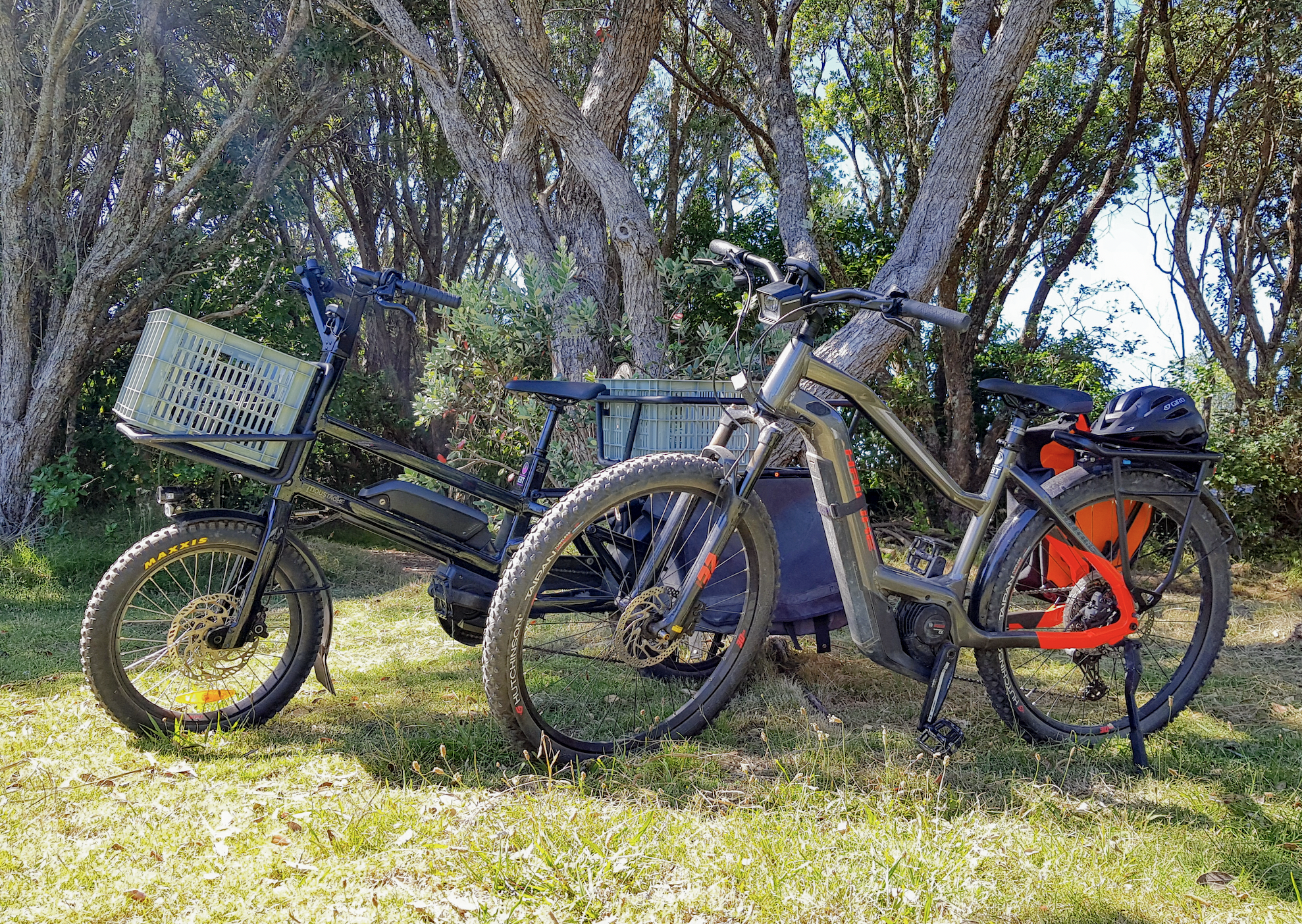
As part of its mission to reduce carbon emissions and model sustainable practices, DOC has added two electric bikes to the transport fleet on Tiritiri Matangi Island. One is a cargo e-bike, perfect for transporting gear and tools, while the other is a standard e-bike used by rangers and Supporters of Tiritiri Matangi (SoTM) volunteers to move around the island efficiently, no petrol required..
The e-bikes are powered by solar energy. Tiritiri Matangi Island is equipped with solar panels that generate electricity for island operations. That means these e-bikes are not only replacing vehicle trips but are being charged with 100% renewable energy.
A Solar-Powered Island
Tiritiri Matangi is no stranger to solar energy. The iconic Tiritiri Matangi lighthouse, New Zealand’s oldest operating lighthouse still in use, has been fully automated and solar-powered since 1990. Its solar panels charge batteries that power the lighthouse’s light assembly. In 2002, the original system was upgraded to a modern rotating beacon, further improving its reliability and efficiency.
Together, the solar-powered lighthouse and electric bikes reflect the island’s commitment to sustainable, low-impact operations, showing that even remote, heritage-rich places can lead the way in renewable energy use.[/vc_column_text][/vc_column][/vc_row][vc_row][vc_column width=”1/1″][vc_single_image media=”7824″ media_width_percent=”100″ uncode_shortcode_id=”197339″][vc_custom_heading uncode_shortcode_id=”987346″]Simon Fordham using ‘Mo’ to deliver new tititipounamu/rifleman nest boxes prior to the start of the breeding season.[/vc_custom_heading][/vc_column][/vc_row][vc_row][vc_column width=”1/1″][vc_column_text uncode_shortcode_id=”354960″]Why E-Bikes?
Electric bikes are a smart alternative to traditional fuel-powered vehicles, especially on a conservation island where minimising environmental impact is crucial.
- No direct emissions – E-bikes don’t burn fossil fuels.
- Energy efficient – They use far less energy than cars or quad bikes.
- Quiet operation – Great for keeping the peace in sensitive wildlife habitats.
- Eco-friendly access – They leave a much smaller footprint, literally and figuratively.
The cargo e-bike, in particular, helps with transporting essential gear, whether it’s tools for track maintenance or resources for the biodiversity team.[/vc_column_text][/vc_column][/vc_row][vc_row][vc_column width=”1/1″][vc_single_image media=”7823″ media_width_percent=”100″ uncode_shortcode_id=”962669″][/vc_column][/vc_row]