
[vc_row row_height_percent=”65″ back_image=”4976″ overlay_alpha=”50″ gutter_size=”3″ column_width_percent=”100″ shift_y=”0″ z_index=”0″ uncode_shortcode_id=”867834″][vc_column column_width_percent=”100″ position_vertical=”middle” align_horizontal=”align_center” gutter_size=”3″ overlay_color=”color-584830″ overlay_alpha=”80″ shift_x=”0″ shift_y=”0″ shift_y_down=”0″ z_index=”0″ medium_width=”0″ mobile_width=”0″ width=”1/1″][vc_custom_heading text_color=”color-xsdn” text_size=”fontsize-321034″ uncode_shortcode_id=”998795″ text_color_type=”uncode-palette”]A tech upgrade[/vc_custom_heading][/vc_column][/vc_row][vc_row][vc_column width=”1/4″][vc_custom_heading heading_semantic=”h4″ text_size=”h4″ uncode_shortcode_id=”189615″]Author: Stacey Balich
This text has been collated using the Hihi Conservation 2022 – Annual Report
Date: 16/07/23[/vc_custom_heading][/vc_column][/vc_row][vc_row][vc_column width=”1/1″][vc_column_text uncode_shortcode_id=”135213″]The Hihi Conservation 2022 Annual Report shares that for nearly the past three decades it has been a rite of passage for every hihi hatched in a nest box to receive a set of colour bands when they turn 21 days old. On one leg, they have two colours; on the other, they have one colour and one metal band. This allows researchers to individually identify the birds which supports monitoring, management and research. Dr John Ewan shares in his report that on Tiritiri Matangi all female hihi nest in nest boxes, so every bird in the population can be banded before fledging. This means family relationships are known for every hihi on the island.
Observing and locating individual birds requires enormous manpower and data can sometimes be limited by the size of the field team and environmental conditions. This can sometimes result in incomplete band reading or misidentification. In 2015, the Hihi Recovery Group began exploring how to modernise hihi monitoring. They selected a technology called Radio Frequency Identification (RFID).
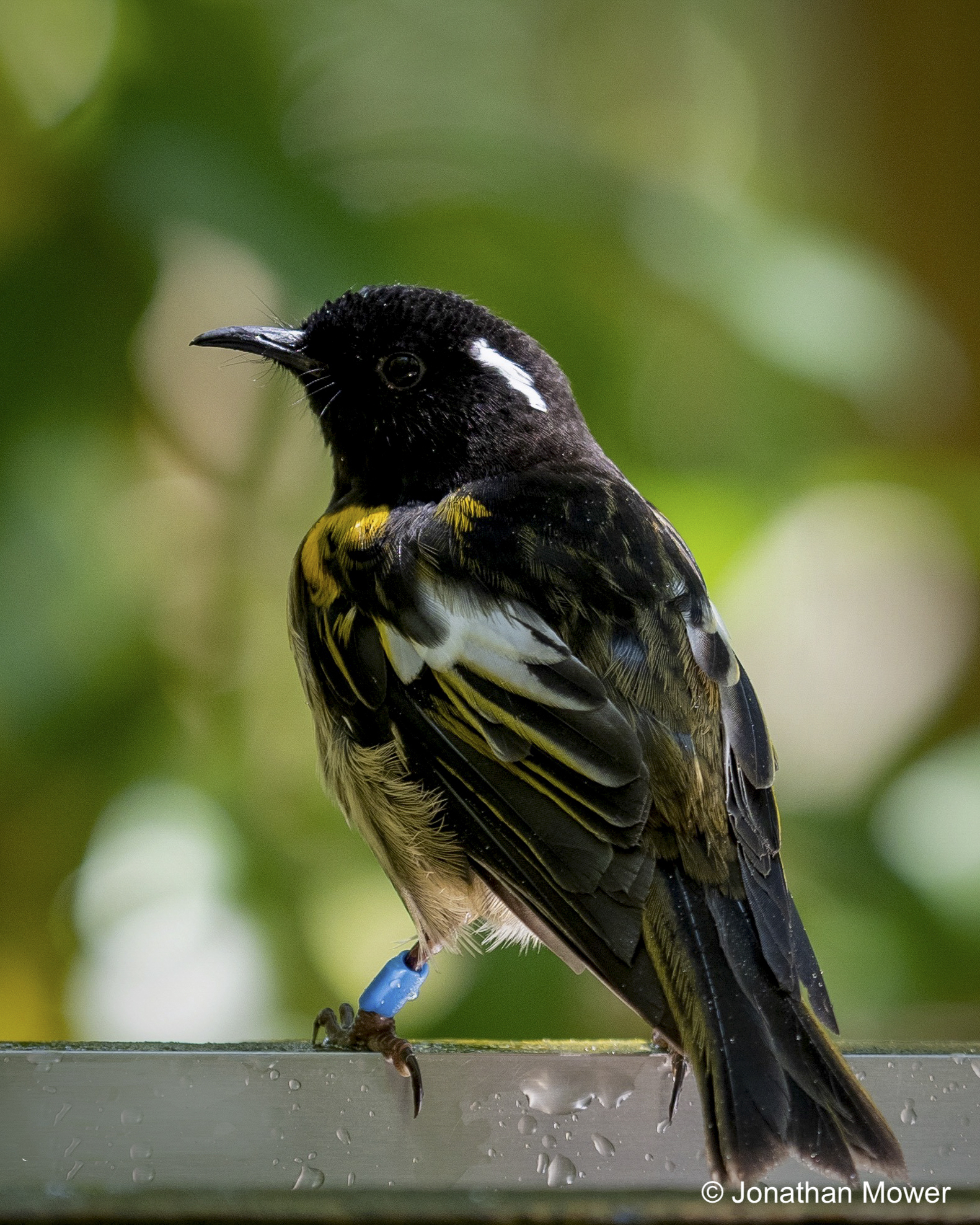
RFID involves attaching a tiny computer chip storing a unique identification number to an animal. Special RFID ‘readers’ are then placed in key locations throughout the environment to ‘read’ these numbers when tagged animals come in close proximity. Dr John Ewan explains it as the same technology behind tap-and-go credit card payments. The chips are only a few millimetres long so they can be attached unobtrusively even to small birds like hihi with no effect on their wellbeing or behaviour.[/vc_column_text][/vc_column][/vc_row][vc_row row_height_percent=”0″ overlay_alpha=”50″ gutter_size=”3″ column_width_percent=”100″ shift_y=”0″ z_index=”0″ uncode_shortcode_id=”155460″][vc_column column_width_percent=”100″ gutter_size=”3″ override_padding=”yes” column_padding=”2″ overlay_alpha=”50″ shift_x=”0″ shift_y=”0″ shift_y_down=”0″ z_index=”0″ medium_width=”0″ mobile_width=”0″ shadow=”xs” width=”1/1″ uncode_shortcode_id=”181790″][vc_row_inner row_inner_height_percent=”0″ overlay_alpha=”50″ equal_height=”yes” gutter_size=”3″ shift_y=”0″ z_index=”0″ uncode_shortcode_id=”169089″][vc_column_inner column_width_percent=”100″ position_vertical=”middle” align_horizontal=”align_center” gutter_size=”3″ overlay_alpha=”50″ shift_x=”0″ shift_y=”0″ shift_y_down=”0″ z_index=”0″ medium_width=”0″ mobile_width=”0″ width=”1/2″ uncode_shortcode_id=”382822″][vc_single_image media=”5868″ media_width_percent=”100″ alignment=”right” advanced=”yes” media_overlay_opacity=”50″ media_padding=”2″ uncode_shortcode_id=”929305″][/vc_column_inner][vc_column_inner column_width_percent=”100″ position_vertical=”middle” align_horizontal=”align_center” gutter_size=”3″ overlay_alpha=”50″ shift_x=”0″ shift_y=”0″ shift_y_down=”0″ z_index=”0″ medium_width=”0″ mobile_width=”0″ width=”1/2″ uncode_shortcode_id=”194832″][vc_single_image media=”4993″ media_width_percent=”100″ uncode_shortcode_id=”114610″][/vc_column_inner][/vc_row_inner][vc_custom_heading text_color=”color-849512″ text_size=”h6″ uncode_shortcode_id=”211807″ text_color_type=”uncode-palette”]Left: A male hihi with a blue RFID chip
Photo credit: Jonathan Mower
Right: Banding a hihi fledgling
Photo credit: Mhairi McCready[/vc_custom_heading][/vc_column][/vc_row][vc_row][vc_column width=”1/1″][vc_column_text uncode_shortcode_id=”451100″]In 2020 the Hihi Recovery Group and the Department of Conservation’s Electronics Team finalised a design. The custom, injection-moulded colour bands fit hihi perfectly and hold a built-in RFID chip. They are now fully rolled out on Tiritiri Matangi, where each nestling now receives two colour bands on one leg and one long RFID colour band on the other leg. All six of the supplementary feeding stations are equipped with RFID readers. The adult hihi population will receive a band upgrade next time they are caught for normal population monitoring.
Dr John Ewan shares that direct observation will always play a central role in hihi monitoring and that RFID technology will provide a major boost to data collection.[/vc_column_text][/vc_column][/vc_row][vc_row][vc_column width=”1/1″][vc_single_image media=”4996″ media_width_percent=”100″ uncode_shortcode_id=”212771″][/vc_column][/vc_row][vc_row row_height_percent=”0″ overlay_alpha=”50″ equal_height=”yes” gutter_size=”3″ column_width_percent=”100″ shift_y=”0″ z_index=”0″][vc_column column_width_percent=”100″ position_vertical=”middle” align_horizontal=”align_center” gutter_size=”2″ override_padding=”yes” column_padding=”0″ back_image=”4979″ back_position=”center top” overlay_color=”color-jevc” overlay_alpha=”20″ shift_x=”0″ shift_y=”0″ shift_y_down=”0″ z_index=”0″ medium_width=”0″ mobile_width=”0″ shadow=”xs” width=”1/3″ uncode_shortcode_id=”158870″ overlay_color_type=”uncode-palette”][vc_row_inner limit_content=””][vc_column_inner column_width_percent=”100″ align_horizontal=”align_center” gutter_size=”2″ override_padding=”yes” column_padding=”2″ overlay_alpha=”50″ shift_x=”0″ shift_y=”0″ shift_y_down=”0″ z_index=”0″ medium_width=”0″ mobile_width=”0″ width=”1/1″][vc_custom_heading text_color=”color-xsdn” text_size=”h1″ uncode_shortcode_id=”113567″ text_color_type=”uncode-palette”]Hihi Conservation Report 2022 – Annual Report by Dr John Ewen[/vc_custom_heading][vc_empty_space empty_h=”2″][/vc_column_inner][/vc_row_inner][vc_row_inner row_inner_height_percent=”0″ overlay_alpha=”50″ equal_height=”yes” gutter_size=”3″ shift_y=”0″ z_index=”0″ limit_content=””][vc_column_inner column_width_percent=”100″ position_vertical=”bottom” gutter_size=”3″ override_padding=”yes” column_padding=”2″ overlay_alpha=”50″ shift_x=”0″ shift_y=”0″ shift_y_down=”0″ z_index=”0″ medium_width=”0″ mobile_width=”0″ width=”1/1″][vc_button button_color=”accent” wide=”yes” border_width=”0″ link=”url:https%3A%2F%2Fwww.hihiconservation.com%2Fwp-content%2Fuploads%2F2022%2F08%2FHihiConservation2022_web.pdf|target:_blank” button_color_type=”uncode-palette” uncode_shortcode_id=”132471″]View[/vc_button][/vc_column_inner][/vc_row_inner][/vc_column][vc_column column_width_percent=”100″ position_vertical=”middle” align_horizontal=”align_center” gutter_size=”2″ override_padding=”yes” column_padding=”0″ back_image=”4978″ back_position=”center top” overlay_color=”color-jevc” overlay_alpha=”20″ shift_x=”0″ shift_y=”0″ shift_y_down=”0″ z_index=”0″ medium_width=”0″ mobile_width=”0″ shadow=”xs” width=”1/3″ uncode_shortcode_id=”302902″ overlay_color_type=”uncode-palette”][vc_row_inner limit_content=””][vc_column_inner column_width_percent=”100″ align_horizontal=”align_center” gutter_size=”2″ override_padding=”yes” column_padding=”2″ overlay_alpha=”50″ shift_x=”0″ shift_y=”0″ shift_y_down=”0″ z_index=”0″ medium_width=”0″ mobile_width=”0″ width=”1/1″][vc_custom_heading text_color=”color-xsdn” text_size=”h1″ uncode_shortcode_id=”957308″ text_color_type=”uncode-palette”]Hihi Conservation Website[/vc_custom_heading][vc_empty_space empty_h=”2″][/vc_column_inner][/vc_row_inner][vc_row_inner limit_content=””][vc_column_inner column_width_percent=”100″ position_vertical=”bottom” gutter_size=”3″ override_padding=”yes” column_padding=”2″ overlay_alpha=”50″ shift_x=”0″ shift_y=”0″ shift_y_down=”0″ z_index=”0″ medium_width=”0″ mobile_width=”0″ width=”1/1″][vc_empty_space empty_h=”0″][vc_button button_color=”accent” wide=”yes” border_width=”0″ link=”url:https%3A%2F%2Fwww.hihiconservation.com|target:_blank” button_color_type=”uncode-palette” uncode_shortcode_id=”567822″]Visit[/vc_button][/vc_column_inner][/vc_row_inner][/vc_column][vc_column column_width_percent=”100″ position_vertical=”middle” gutter_size=”2″ override_padding=”yes” column_padding=”0″ back_image=”4980″ back_position=”left top” overlay_color=”color-jevc” overlay_alpha=”20″ shift_x=”0″ shift_y=”0″ shift_y_down=”0″ z_index=”0″ medium_width=”0″ mobile_width=”0″ shadow=”xs” width=”1/3″ uncode_shortcode_id=”178666″ overlay_color_type=”uncode-palette”][vc_row_inner limit_content=””][vc_column_inner column_width_percent=”100″ align_horizontal=”align_center” gutter_size=”2″ override_padding=”yes” column_padding=”2″ overlay_alpha=”50″ shift_x=”0″ shift_y=”0″ shift_y_down=”0″ z_index=”0″ medium_width=”0″ mobile_width=”0″ width=”1/1″][vc_custom_heading text_color=”color-xsdn” text_size=”h1″ uncode_shortcode_id=”124000″ text_color_type=”uncode-palette”]
How hihi are the symbol of challenge and hope for conservation
[/vc_custom_heading][vc_empty_space empty_h=”2″][/vc_column_inner][/vc_row_inner][vc_row_inner limit_content=””][vc_column_inner column_width_percent=”100″ position_vertical=”bottom” gutter_size=”3″ override_padding=”yes” column_padding=”2″ overlay_alpha=”50″ shift_x=”0″ shift_y=”0″ shift_y_down=”0″ z_index=”0″ medium_width=”0″ mobile_width=”0″ width=”1/1″][vc_button button_color=”accent” wide=”yes” border_width=”0″ link=”url:https%3A%2F%2Fwww.hihiconservation.com%2Fwp-content%2Fuploads%2F2015%2F10%2FHihi_pamphlet_2015.pdf|target:_blank” button_color_type=”uncode-palette” uncode_shortcode_id=”136891″]View[/vc_button][/vc_column_inner][/vc_row_inner][/vc_column][/vc_row]