Birds—The Formula 1s of the Animal World
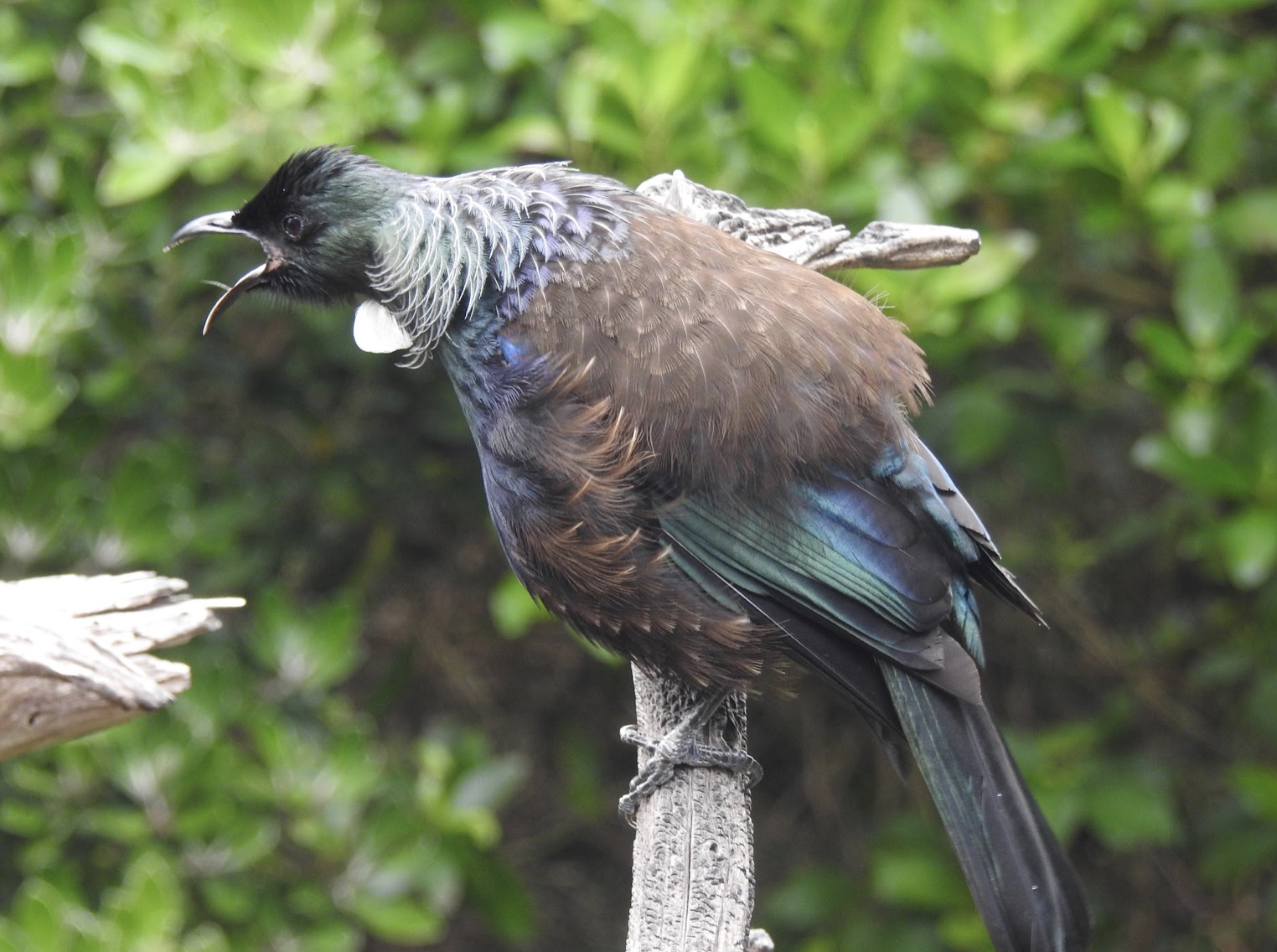
Birds—The Formula 1s of the Animal WorldAuthor: Malcolm Pullan, GuideDate: July 2024Photo and video credit: Neil DaviesHave you ever marveled at the extraordinary journeys that some birds go on when they’re feeding or migrating? Have you ever wondered how birds are able to fly through the forest so quickly, yet not crash into things? Have you ever wondered how it is that many birds can remain on the ground as a car is approaching and then quickly escape at the very last second? You haven’t? Oh well, neither had I until a few years ago. Now, though, I think about it almost every time I see a bird. For I now know that underpinning these observations is something quite special about birds that explains so much about why birds are the way they are. Birds are hot(1). In fact, they’re the hottest vertebrates (2) around. You and I maintain a more or less constant body temperature of around 37°C. That’s fairly typical for a mammal. Birds also maintain a relatively constant internal body temperature—except theirs is likely to be in the range of 39– 43°C, i.e. quite a bit higher than your average mammal. Now you don’t need to know much chemistry—or baking for that matter—to know that when you heat things up, chemical processes speed up. This is what happens in birds. Stuff happens more quickly. For instance, reaction times are faster and muscles can work harder.…
Highway robbery
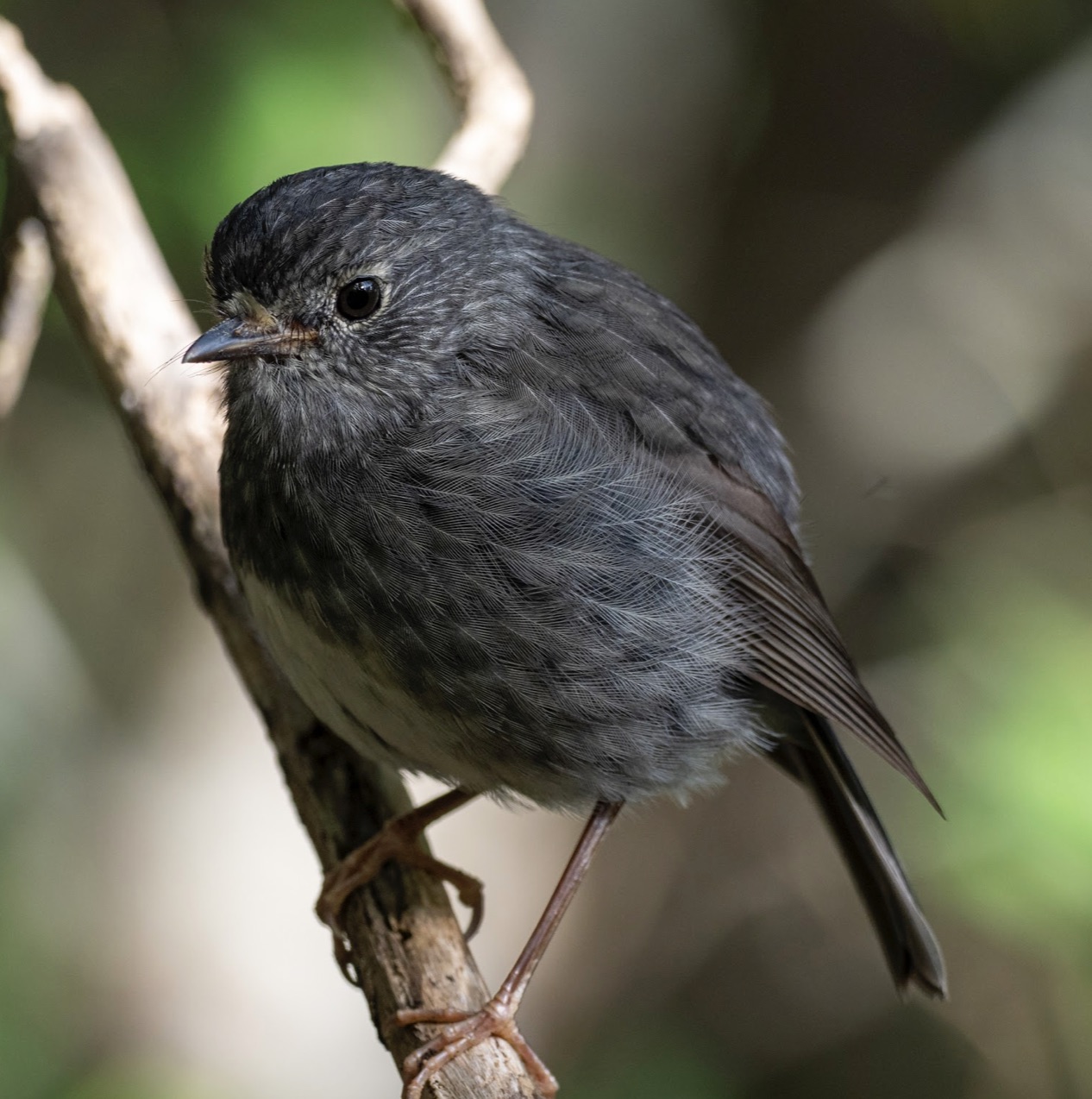
Highway robberyAuthor: Jonathan Mower, GuideDate: July 2024Photo and video credit: Jonathan Mower This short video clip captures a moment of interspecies interaction when a toutouwai/ North Island robin came across a tīeke/ North Island saddleback that had captured and killed a wētā. The toutouwai was a much more dominant bird and harassed the more timid tīeke, eventually causing the tīeke to abandon its prey to the toutouwai which snatched it and flew away. The small wattles and timid nature may mean the tīeke was a young and inexperienced hunter because I have previously seen tīeke aggressively dispatch large prey including hura/giant centipedes and wētā. By nature, the toutouwai are often bold and aggressively territorial toward others of their own kind but here we see them interacting and showing dominance over a very different species.
With Matariki approaching, it is an opportunity to look back and look forward
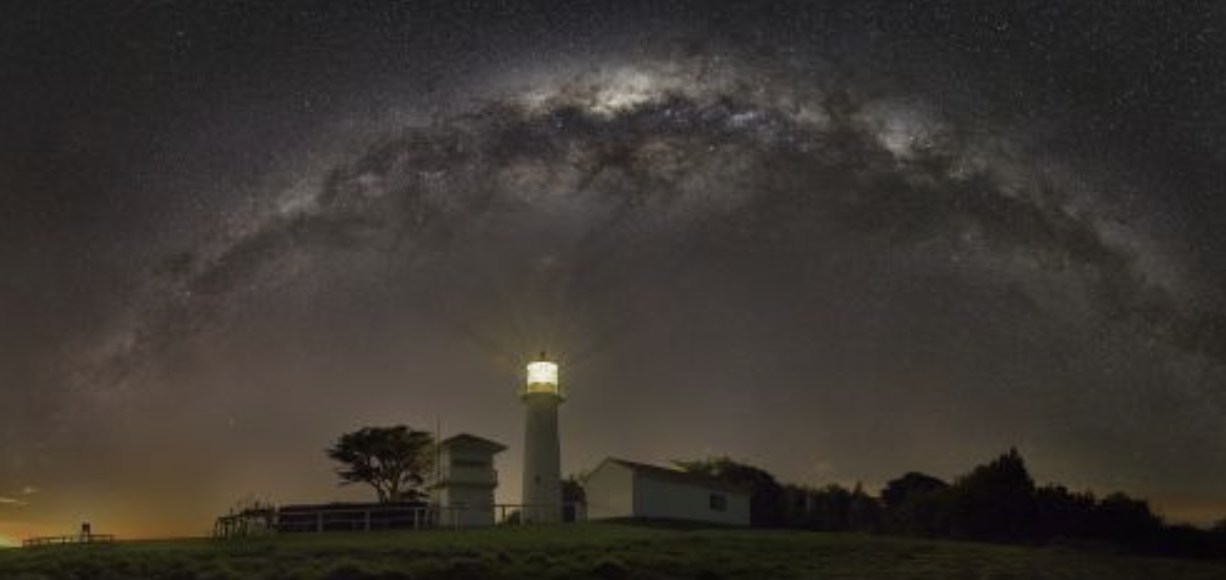
With Matariki approaching, it is an opportunity to look back and look forwardAuthor: Ian Alexander, Supporters of Tiritiri Matangi Island ChairDate: June 2024Photo header credit: Geoff BealsWith Matariki approaching, it is an opportunity to look back and look forward, celebrating the past year and thinking of what can be achieved over the next year. It has been a year of change for volunteers and staff on and off the Island. Having farewelled two of our beloved members late last year, we remember them – Ray Walter and Mel Galbraith, two men who contributed a life of service in many different ways to the development of our island conservation project. And there are others who have passed away during the year who in their own way have also contributed to the work of the Island. Guiding both public and schools has continued to be a major part of the operations of Tiritiri Matangi as have efforts made by all our sub-committees and task groups across biodiversity, infrastructure, advocacy, education, fundraising, membership, retail and IT. Climate has and will continue to dominate the Island ngahere and tracks requiring constant attention by our regular working parties and individuals. Looking forward there remains much to do to ensure the proper care and attention to the Island’s flora and fauna and to continue to provide opportunities to everyday…
Tiritiri Matangi Island Signal Mast Reconstruction
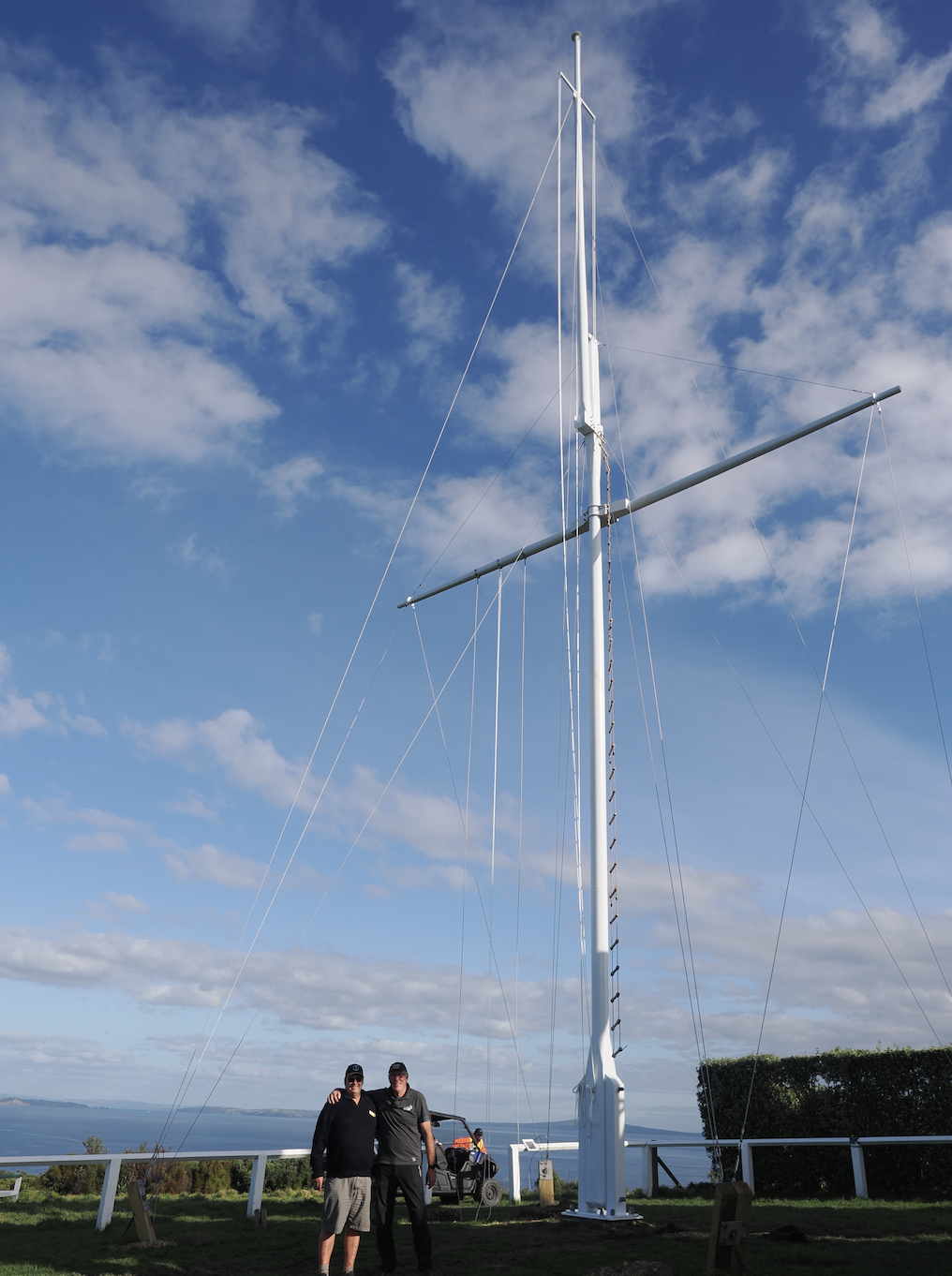
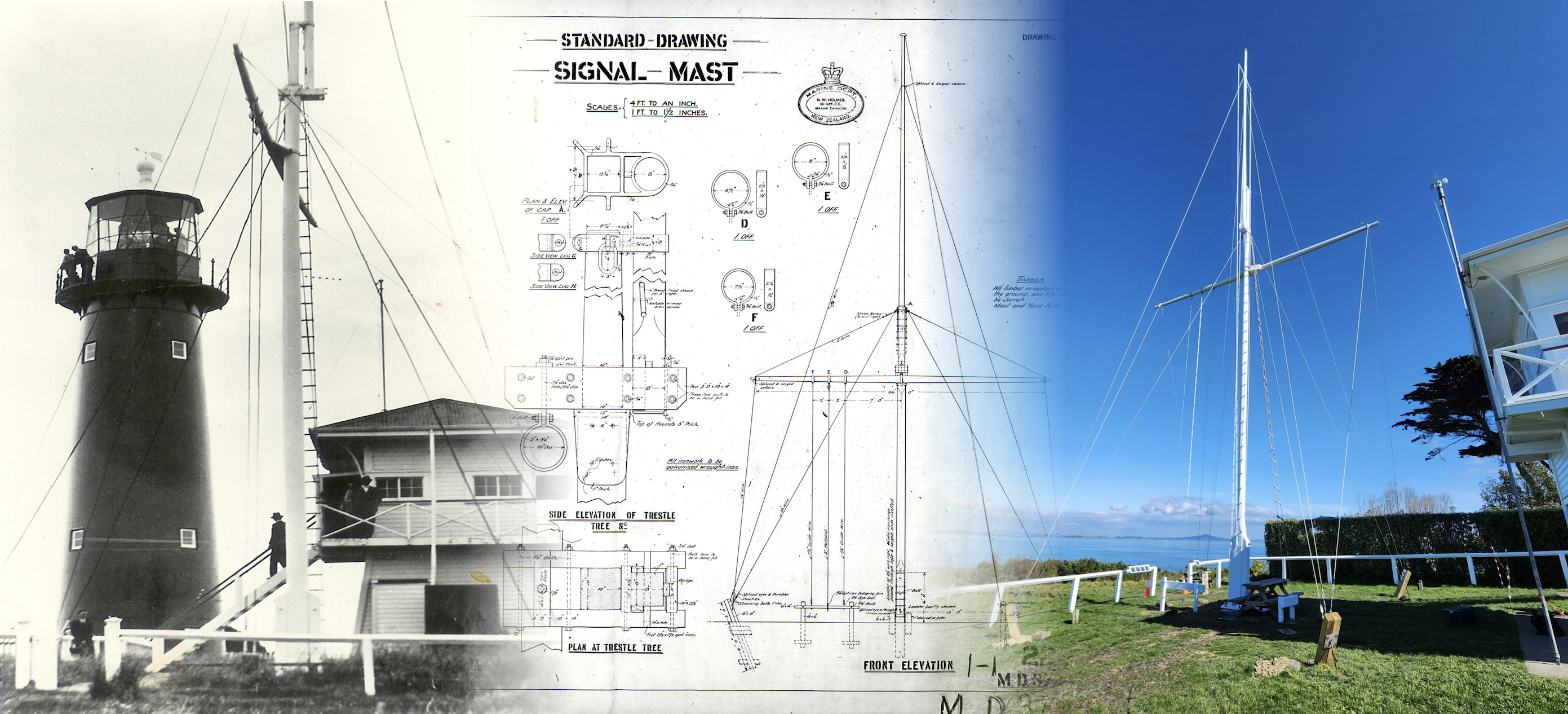
Tiritiri Matangi Island Signal Mast ReconstructionAuthor: Carl HaysonDate: Taken from the Dawn Chorus, 135 November 2023Header photo: Geoff BealsThe replica mast has been rebuilt to the exact specifications of the original structure which was erected in the late 19th century. It last existed in the 1940s but, along with all the other signal masts on lighthouse stations around the country, was taken down when manual signalling was no longer required. In the early 2000s, SoTM restored the 1908 watchtower which had fallen into disrepair, and this is now a popular attraction for visitors. The mast was an integral part of the original signal station, and when Ray Walter and Carl Hayson discovered a small section of the old mast in 2003, a plan was conceived to rebuild it.
Its original function was to provide shipping information to the Ports of Auckland in the days before wireless transmitters were available. Signalling was conducted with a combination of flags and woven baskets which were seen by a station on Mt Victoria in Auckland. At 25m tall, the mast is slightly higher than the lighthouse and can easily be seen from the sea.
The kiwis are here
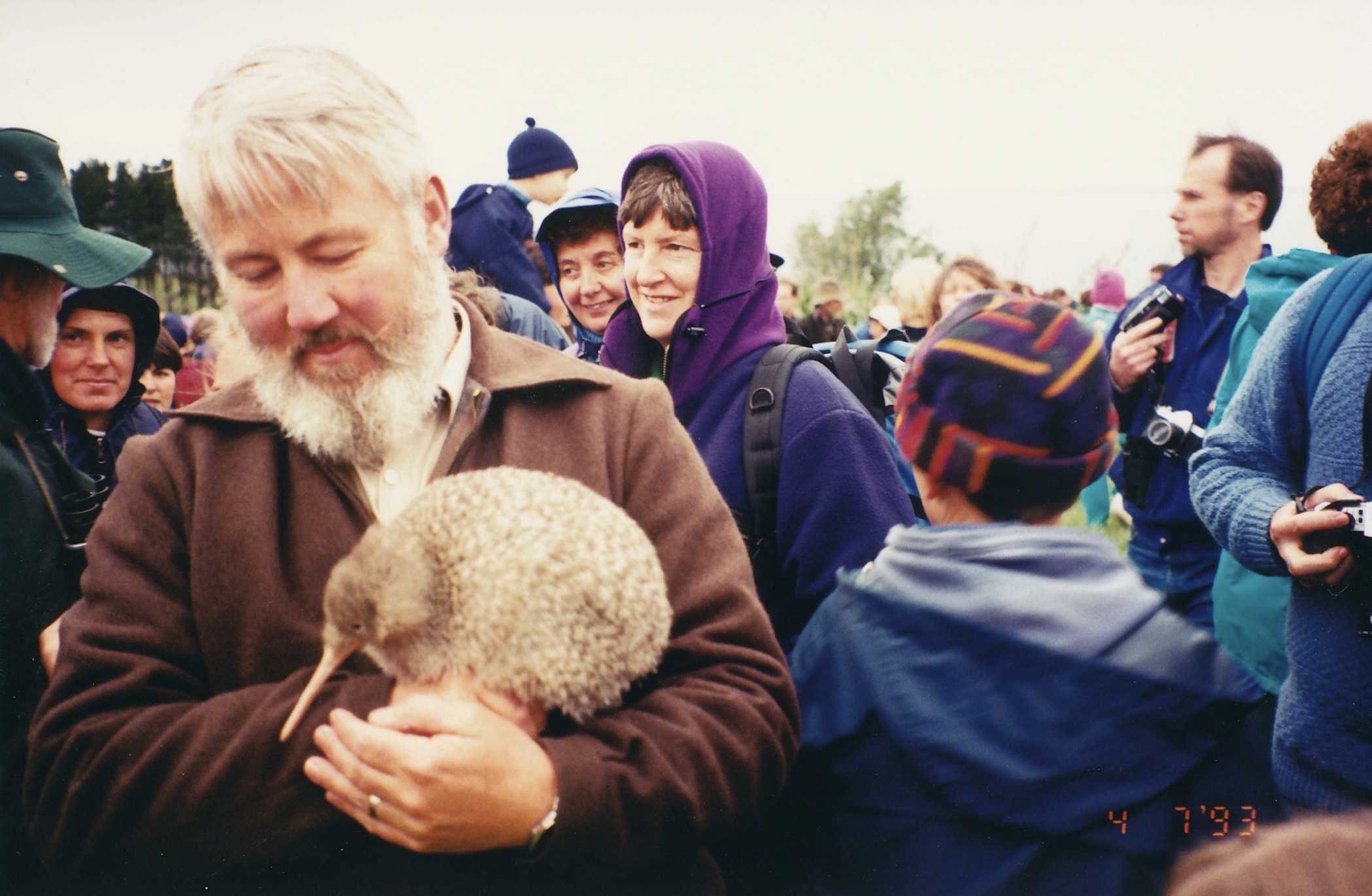
The kiwis are hereFrom the Tiritiri Matangi ArchivesEditor: Zane BurdettBulletin No.14Date: August 1993In fact, since the five pairs of little spotted kiwi arrived, they’ve been here, there and everywhere on Tiritiri – exploring what is now their new home. They arrive on the 4th of July – ‘Kiwi Independence Day’. That day, over 500 people; babies, children, teenagers, adults, young and old, officials, sponsors, scientists, reporters and Yamagata whenua – had waited. They had waited together on a ridge under a great cloudy sky with a cool wind blowing – but the wait was worth it! The was the first public release of the little spotted kiwi. Maybe on this day the number of people in recent history to have seen a living little spotted kiwi in the feather had probably doubled! The kiwis arrive by helicopter at about 3pm accompanied by representatives of Ngtai To a and Te Ottawa, tangata whenua of Kapiti Island, the Minister of Conservation Mr Denis Marshall and DoC staff. They were greeted by representatives of Te Kawerau a Maki, tangata whenua of Tiritiri Matangi. Following speeches by officials and Dell Hood and Mel Galbraith – 4 birds were taken by DoC staff and shown to the gathering. All the birds were taken to their released sites and placed into prepared burrows. The arrival of the little spotted kiwi on Tiritiri was made…
Copper Rod
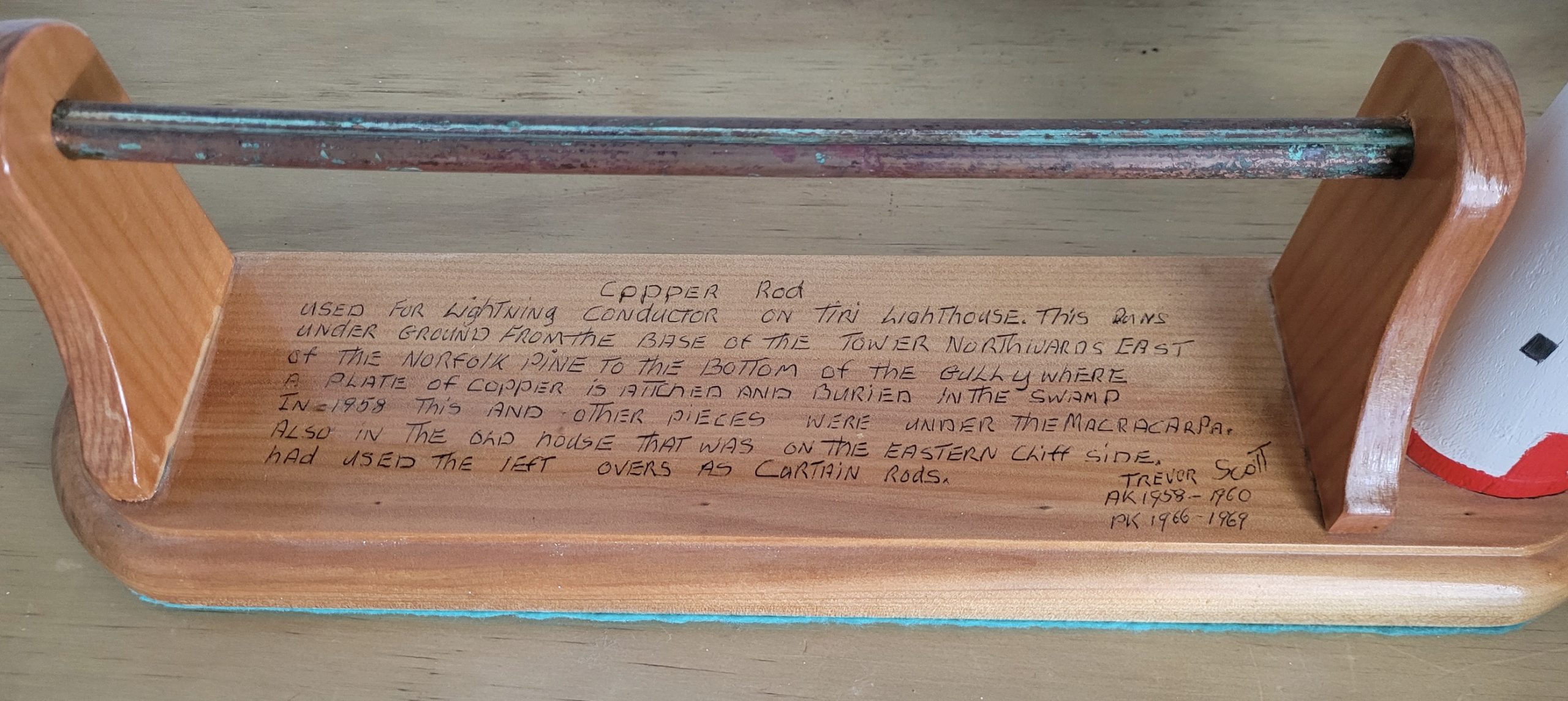
Copper RodAuthor: Trevor ScottHeader Photo from the archives, pre 1971Date: March 2024Did you know that lighthouses are often struck by lightning? To prevent damage caused by these strikes, lighthouses are equipped with metal poles called lightning rods. These rods are attached to a thick copper wire that runs from the top of the lighthouse down to the ground. When lightning strikes the tower, it enters through the lightning rod and travels down the wire into the ground, minimizing potential damage.
Trevor Scott, who was the lighthouse keeper on Tiritiri Matangi from 1958-1960 and 1966-1969, shared that he remembers seeing the spare left over copper rods used to hang up curtains in the lighthouse keepers house.

Not your average Tuesday on Tiritiri Matangi – or maybe it is!
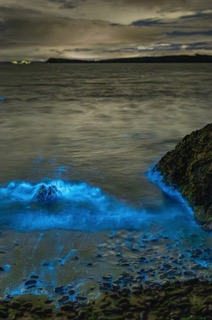
Not your average Tuesday on Tiritiri Matangi – or maybe it is!Author: Grant Birley. From his second visit to the Island and his first overnight stay.Photo credit: Grant BirleyDate: 20th March 2024My Tuesday morning on the island started like any other morning on Tiritiri Matangi. Up early to get out into the bush to enjoy the dawn’s chorus – it truly is a sound to behold! Then it was back to the bunkhouse for a quick breakfast and coffee, a little breakfast chat around the table and then off on what was going to be a very busy day! The forecast wasn’t great with predictions of rain coming through but that was not to deter my plans of walking around the entire Island! I started at the Bunkhouse and went up the East Coast Track all the way to the Papakura Pa and then back along the tracks that hugged the Western coastline. While it was a long day, it yielded some great sightings and a few special captures too. I absolutely loved the variation in flora and fauna at different stages along the island. My photography goals on the island were two fold. Firstly, in the day, to traverse as much of the island in search of the incredible bird and wildlife that call Tiritiri Matangi home and, secondly, to capture and experience the magic of the night that has become synonymous with this island, from the very elusive and incredibly special creatures who wander…
We chatter quietly away and then someone hears the first kōkako calls
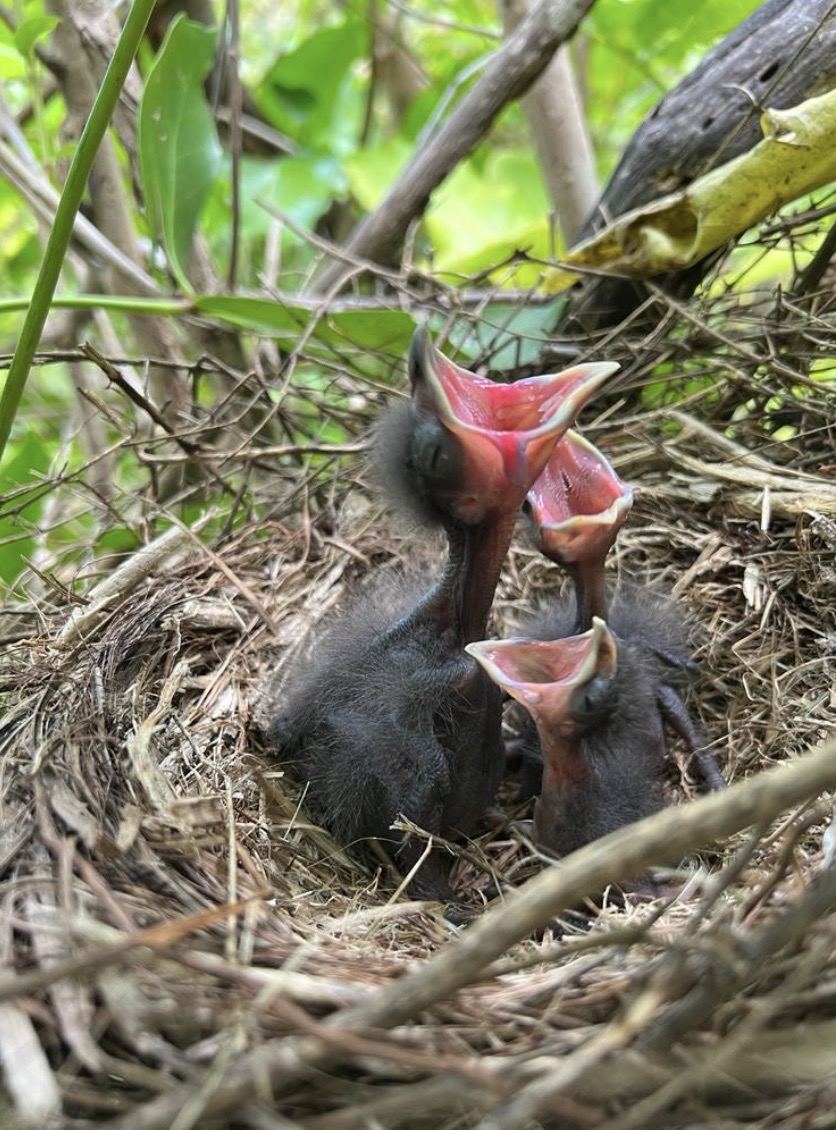
We chatter quietly away and then someone hears the first kōkako calls Author and photo credit: Kathryn JonesDate: 10th February 2024It’s 4.30 am, pitch dark, on a morning in early December. I woke before my alarm went off. Time to start my day. Luckily I am a morning person. I get dressed in my work clothes quickly and quietly, trying to make as little noise as possible so others can continue to sleep. Outside I look up at the moon, the stars, and the lighthouse lights with awe. The team gathers in the bunkhouse kitchen and dining area for a bit of breakfast, and then we each go through our own routine to get ready to go out into the field. Boots, water bottle, binoculars, hand-held radio, pack with snacks and other miscellaneous gear, head torch with red light on. We walk across the grass to the implement shed to sign out and have a safety briefing. It is still dark. We head out to where we are going to look for our first pair of kōkako for the day. Often we head up Coronary Hill and admire the early dawn colours, and then head quickly away. Sometimes, walking along Ridge Rd, ruru fly past you and brush ever so slightly against your arm. We chatter quietly away and then someone hears the-first kōkako calls and we then all listen intently. We reach the area we are going to be working in, and the team leader organises us into starting positions around…
Spade brigade
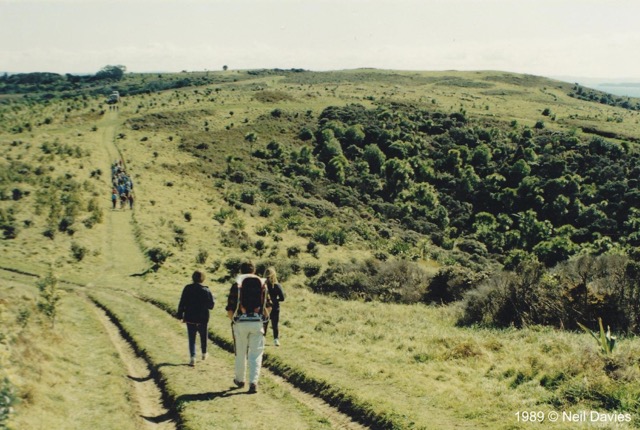
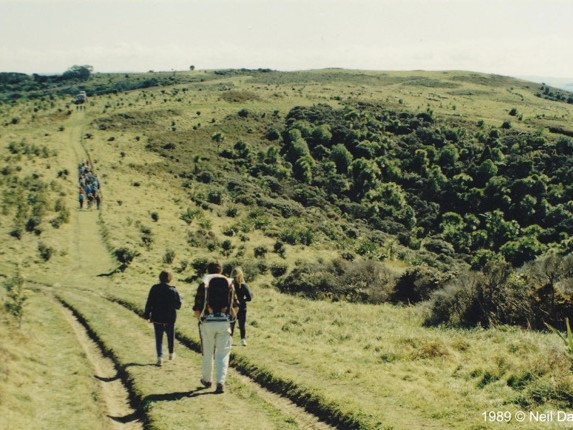
Spade brigadePhoto credits: Neil DaviesIt’s inspiring to think about the planting programme that started in 1984 on the island to help restore the native birdlife habitat. It’s impressive that over 10 years 280,000 trees were planted by volunteers, which included thirty different species of trees and shrubs. These volunteers formed the “spade brigade” and used pointed spades to plant seedlings that had germinated in the island’s nursery. It’s great to see people coming together to preserve the natural environment. Thanks to the vision of the Neil Mitchell and John Craig who thought of the idea and to the efforts of the volunteers.
The Tiritiri Matangi project changed the way conservation was done in New Zealand. Previously, only a select group of privileged scientists were involved in conservation efforts, which mostly took place in remote areas. However, this project paved the way for community-led-conservation, making it possible for everyone to be involved in conservation.
Below are the before and after photos showing the forest growth.
Tiritiri Matangi: a perfect fit for United Nations environment programme
Tiritiri Matangi: a perfect fit for United Nations environment programmeAuthor: Mel Galbraith (From the Dawn Chorus Archives, 130 August 2022)Date: August 2022Ecological restoration on Tiritiri was well ahead of its time. It has taken initiatives such as the sanctuary to encourage a global declaration that is now being internationally recognised, explains Mel Galbraith. Twelve hours after we collectively chorused Auld Lang Syne to welcome in the 1st January 2021, the United Nations launched a “Decade on Ecosystem Restoration” 2021-2030. Not that you would have noticed; there were no fanfares and I doubt if any of the local firework displays were in recognition of this cause. No doubt the global pandemic was occupying the headlines at the time. And, even as we edge back towards a new more stable “norm”, it is still unlikely that the UN initiative will demand much media recognition. Such is the nature of (positive) environmental news. The UN Decade on Ecosystem Restoration 2021-2030 explicitly calls for … Preventing, halting and reversing the degradation of ecosystems worldwide: “The over-arching vision for the UN Decade is a world where – for the health and wellbeing of all life on Earth and that of future generations – the relationship between humans and nature has been restored, where the area of healthy ecosystems is increasing, and where…