
Secrets in the Bark: A Ferry Chat on Pūriri Moths
Written by Stacey Balich, with inspiration from volunteer Jonathan MowerPhoto credits: Jonathan Mower
Pūriri moths are mesmerising. They’re New Zealand’s largest moth, spanning up to 150 cm across their wings. Yet, they remain largely hidden during most of their lives. I’ve only glimpsed a handful, since the adult stage lasts barely 2 days, just enough time to mate and lay eggs.
Recently on the ferry to Tiritiri Matangi, I had one of those golden volunteer conversations that was full of shared wonder and inevitably ending with more questions than answers (which I love). We were chatting about how many trees pūrirī moths use as their host. It turns out, the caterpillars aren’t picky at all. While they take their name from the pūriri tree, their host range spans well over 70 native, naturalised, and cultivated species. Which I have no idea that is was that many.
Among native species, pūriri moths have been found in pūriri trees, known for their broad canopy and wildlife support and putaputāwētā, a tree so iconic its name refers to wētā inhabiting old pūriri moth burrows. But that’s not all, these adaptable caterpillars also burrow into exotic and cultivated trees such as eucalyptus, English oak, silver birch, and fruit trees like lemon, apple, and cherry, and have even been recorded in small shrubs like Quintinia serrata, Pomaderris apetala, and Griselinia lucida.
During our chat, Jonathan pointed out that while some host trees tolerate the burrowing caterpillars, others react defensively. Within cherry trees, for example, sap floods the tunnel during winter, eventually sealing the hole over the summer
This wide variety of hosts shows just how versatile and resilient pūrirī moth caterpillars are and that they are able to thrive in diverse habitats from native broadleaf forests to suburban gardens. It’s the kind of fact that sparkles in a ferry‑chat, turning a simple question into a doorway to wonder.
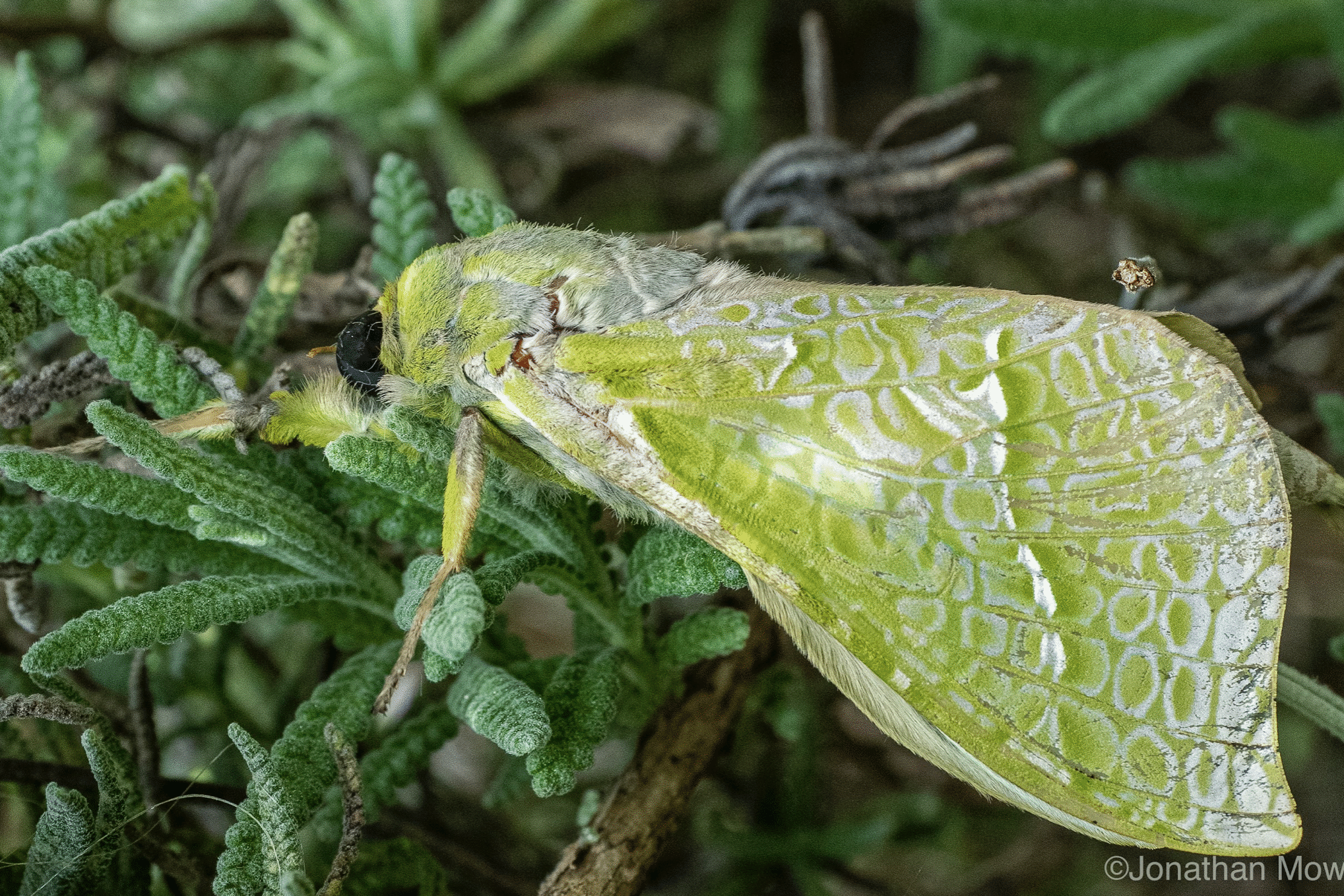
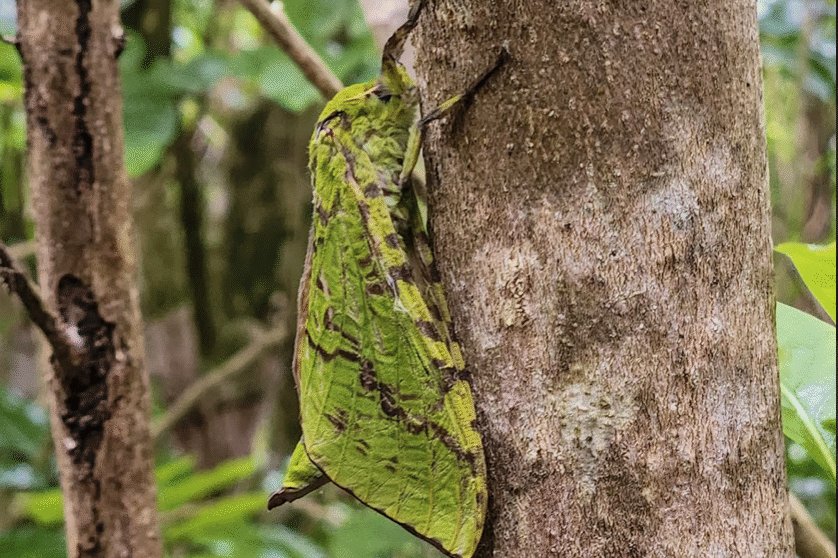
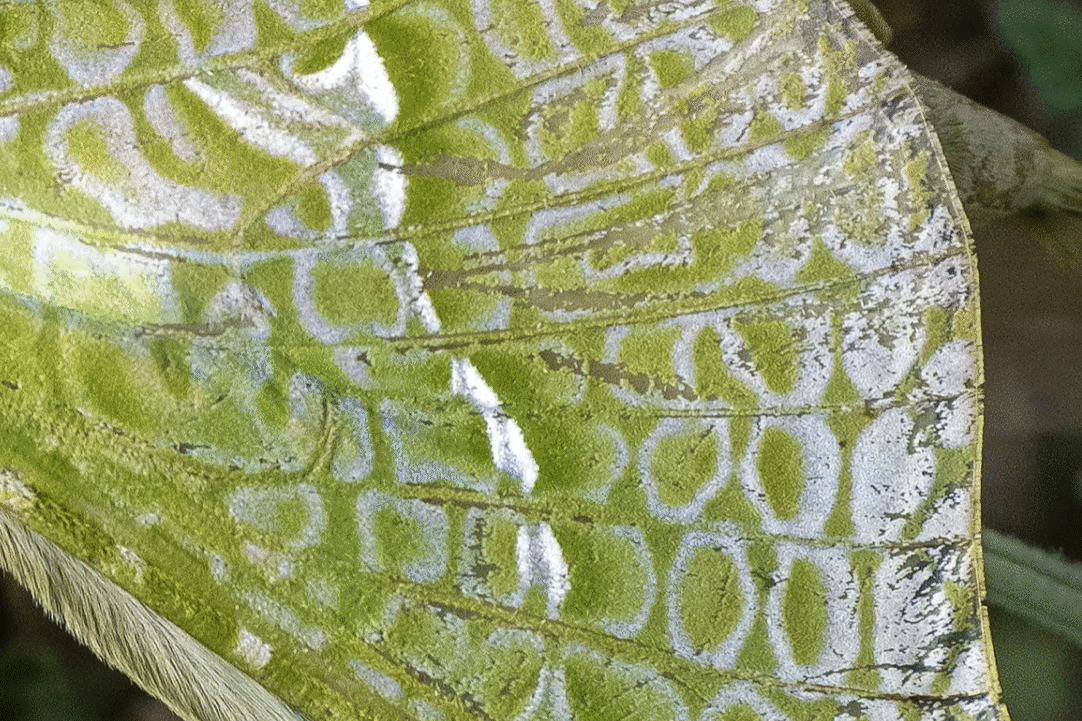
Left image: Male pūriri mothMiddle: Pūriri MothRight: Pūriri moth wing up closePhoto credits: Jonathan Mower
Click on the button to visit the Manaaki Whenua Landcare Research webpage about Pūriri Moth
Pūriri Moth Lifecycle
After mating, the female pūriri moth scatters up to 2,000 eggs on the forest floor, where they hatch within two weeks. The caterpillars begin life in the “litter phase,” feeding on bracket fungi under logs and twigs for 2–3 months. They then enter the “transfer phase,” seeking out a host tree (from over 70 known native and exotic species) and boring into the bark to create a distinctive seven-shaped tunnel. In the long “tree phase,” the caterpillar feeds on the tree’s callus tissue, living hidden inside its tunnel for up to five years (typically two to three). When fully grown, it seals the burrow and pupates inside, eventually emerging as a large, green adult moth. The adult lives for just 2–3 days, does not feed, and focuses solely on reproduction.