Remembering Cloudsley Shovell and Te Koha Waiata, Tiritiri Matangi’s Founding Kōkako Pair
The following content is the work of Morag Fordham and drawn from previous editions of Dawn Chorus collated by Janet Petricevich.Heading photo credit: Cloudsley Shovell, Geoff Beals
The North Island kōkako (Callaeas wilsoni) is one of Aotearoa New Zealand’s most hauntingly beautiful and unique forest birds. A member of the ancient wattlebird family, kōkako are related to tīeke/saddlebacks and the now-extinct huia. Easily recognised by their steel-blue-grey plumage, black mask, and vivid fleshy blue wattles at the base of their beak, kōkako are often heard before they are seen. Their rich, organ-like duet song carries through the forest canopy, creating an unforgettable soundscape.
Unlike most birds, kōkako prefer to glide and hop through the treetops rather than fly in long stretches. They are curious, gentle birds that live in monogamous pairs and maintain strong territories, often working together to defend their patch and raise chicks. Their diet consists of leaves, fruit, flowers and invertebrates, making them vital seed dispersers in healthy forest ecosystems.
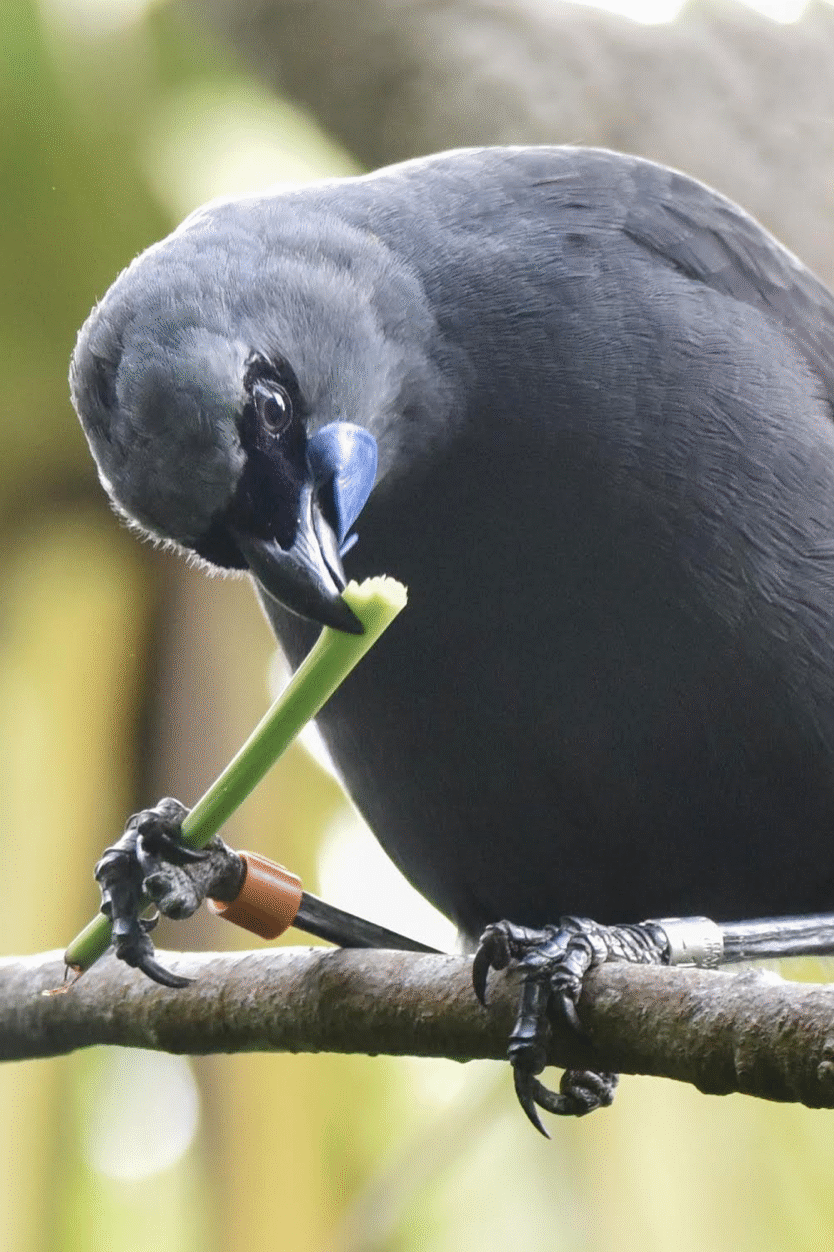
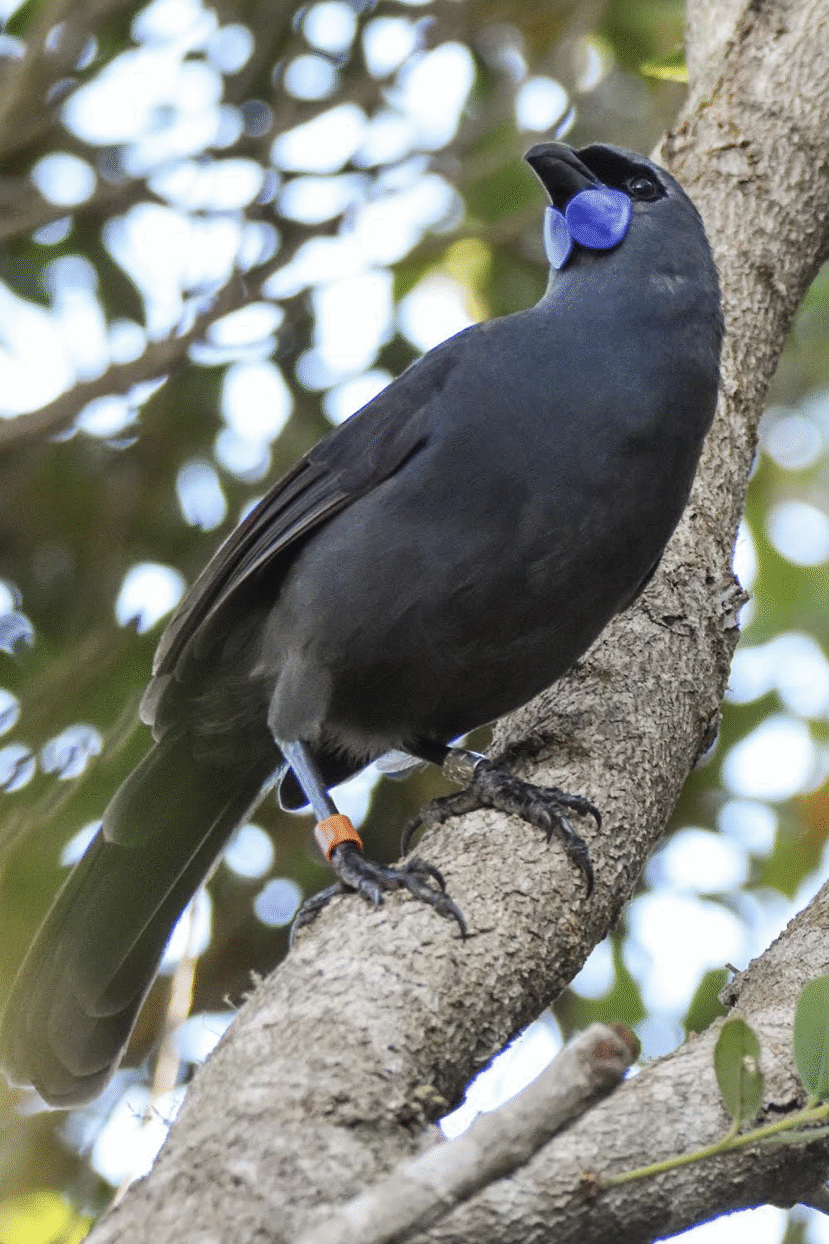

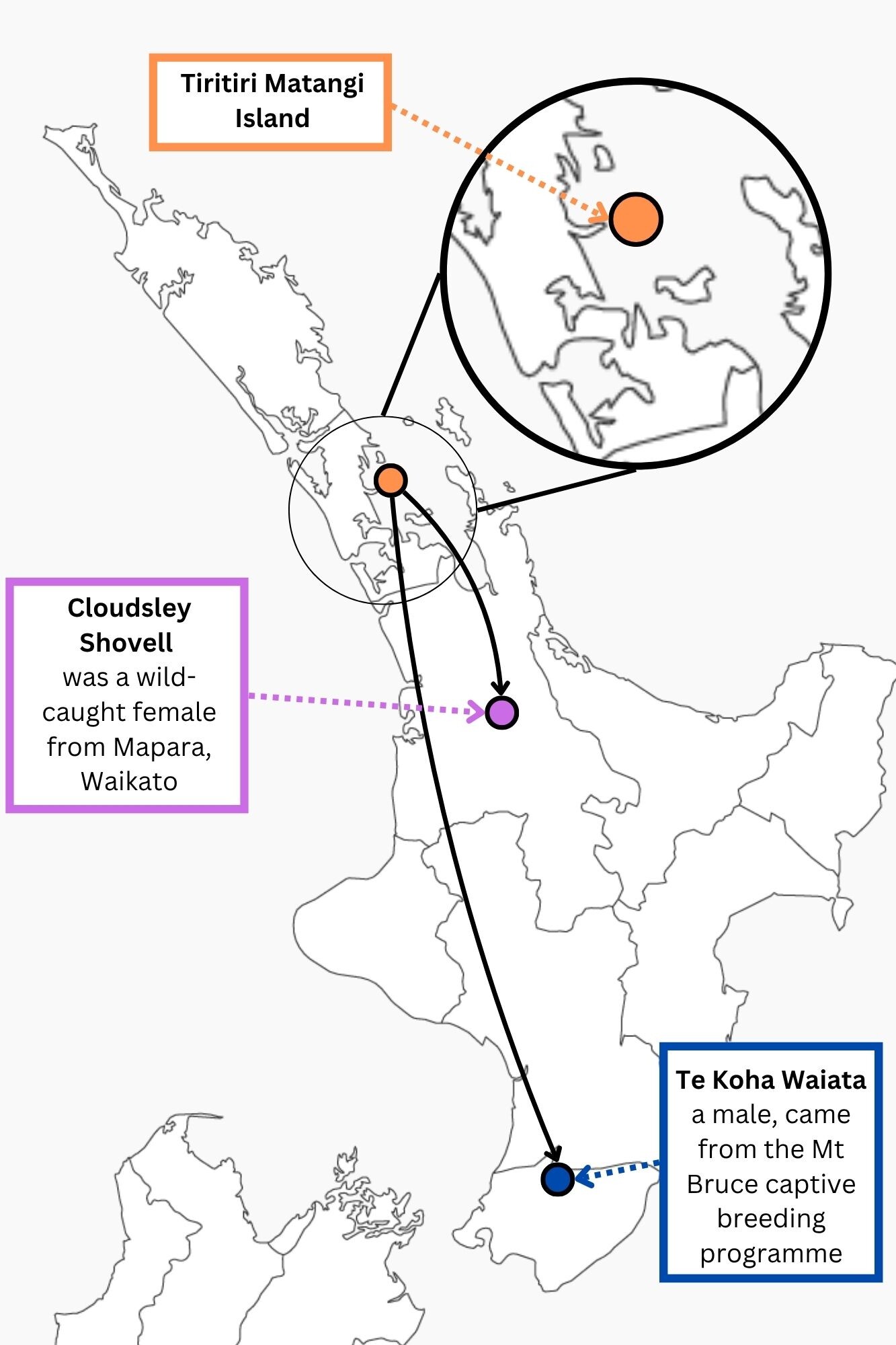
The two photos on the left feature Cloudsley Shovell, a beautiful female kōkako admired not only for her striking appearance but for the special place she held in the heart of Tiritiri Matangi. The third image shows her long-time companion, Te Koha Waiata.Photo credits: Cloudsley Shovell – Darren Markin; Te Koha Waiata – Geoff Beals.The map shows where Cloudsley Shovell and Te Koha Waiata were translocated from.
On Tiritiri Matangi Island, kōkako were reintroduced as part of the island’s forest restoration project, and two particular birds Cloudsley Shovell and Te Koha Waiata became legendary among supporters and visitors for their long-standing partnership and success as parents.
Cloudsley Shovell was a wild-caught female from Mapara, Waikato, born around December 1996. Te Koha Waiata, a male, came from the Mt Bruce captive breeding programme, born on 22 November 1996 to parents Pork Chop and Ma, themselves descendants of wild-caught birds from the Rangitoto Ranges and Pirongia Forest Park.
The pair were among the first kōkako released onto Tiritiri Matangi Island on 10 August 1997. Shortly after release, Cloudsley Shovell and Te Koha Waiata paired up and stayed together faithfully for nearly two decades. From 1997 until 2015, the duo successfully fledged 22 chicks, playing a crucial role in establishing a thriving kōkako population on the island.
Despite other potential suitors being available (including Te Koha Waiata’s four brothers, who were also released on the island), Cloudsley Shovell appeared devoted to her original partner. Te Koha Waiata disappeared from his territory in June 2015 and was never seen again. The following season, Cloudsley Shovell paired briefly with another male, Bandit, but after his translocation to Taranaki in May 2017, she eventually found a new mate, Hemi.
Cloudsley Shovell reached the impressive age of 20 in December 2016, a testament to her resilience and importance to Tiritiri’s ecosystem. She vanished during the Covid lockdown period in April/May 2020 and is presumed to have passed away at 23 years old, a remarkable lifespan for a wild bird.

Cloudsley Shovell. Photo credit: Geoff Beals


A busy Cloudsley Shovell and Te Koha Waiata.Photo credit: Niels Meyer Westfeld
Key Milestones
- 10 August 1997 – First kōkako release on Tiritiri Matangi: Te Koha Waiata (male) and Cloudsley Shovell (female)
- December 1998 – January 1999 – First kōkako chick successfully hatches and fledges on the island
- June 2015 – Te Koha Waiata disappears from his territory and is later presumed dead
- 2015/16 season – Cloudsley Shovell pairs with Bandit
- December 2016 – Cloudsley Shovell turns 20 years old
- May 2017 – Bandit and others are translocated to Parininihi; Cloudsley Shovell pairs again
- April/May 2020 – Cloudsley Shovell disappears during Covid lockdown, presumed dead at 23
Their legacy lives on not just in their offspring, but in the echoing song of kōkako that now drifts through the canopy of Tiritiri Matangi, a sound heard in living memory, thanks to two remarkable birds, the conservation community who made their return possible, and the mana whenua, whose deep connection to this land and taonga species we respectfully acknowledge.