Tiritiri Through Their Eyes: Volunteer Voices - Caroline
Tiritiri Through Their Eyes: Volunteer Voices - Caroline
Tiritiri Through Their Eyes: Volunteer Voices - Caroline
Questions answered by Caroline, volunteer guide and weeder
- What’s your favourite conservation success story from Tiritiri Matangi?
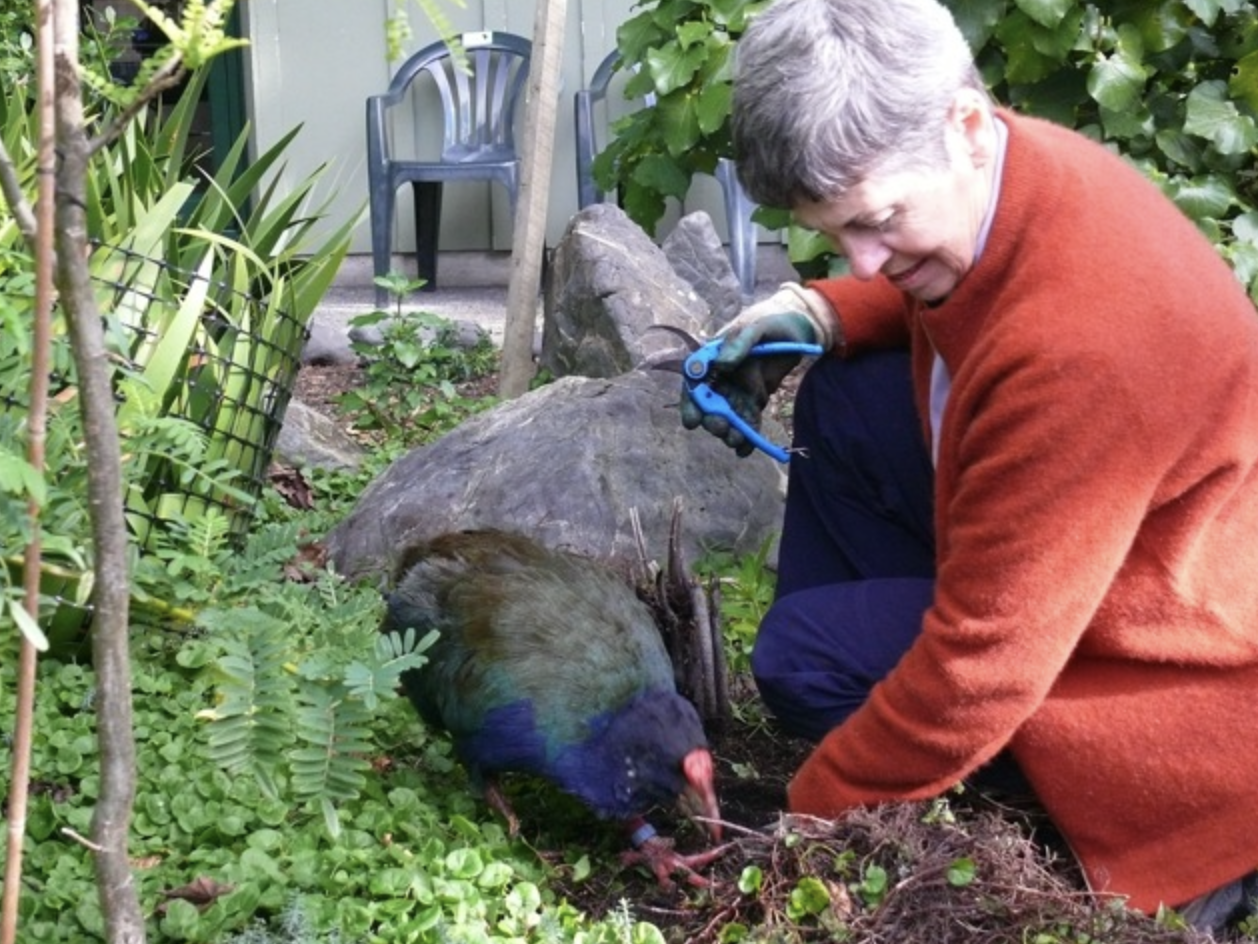
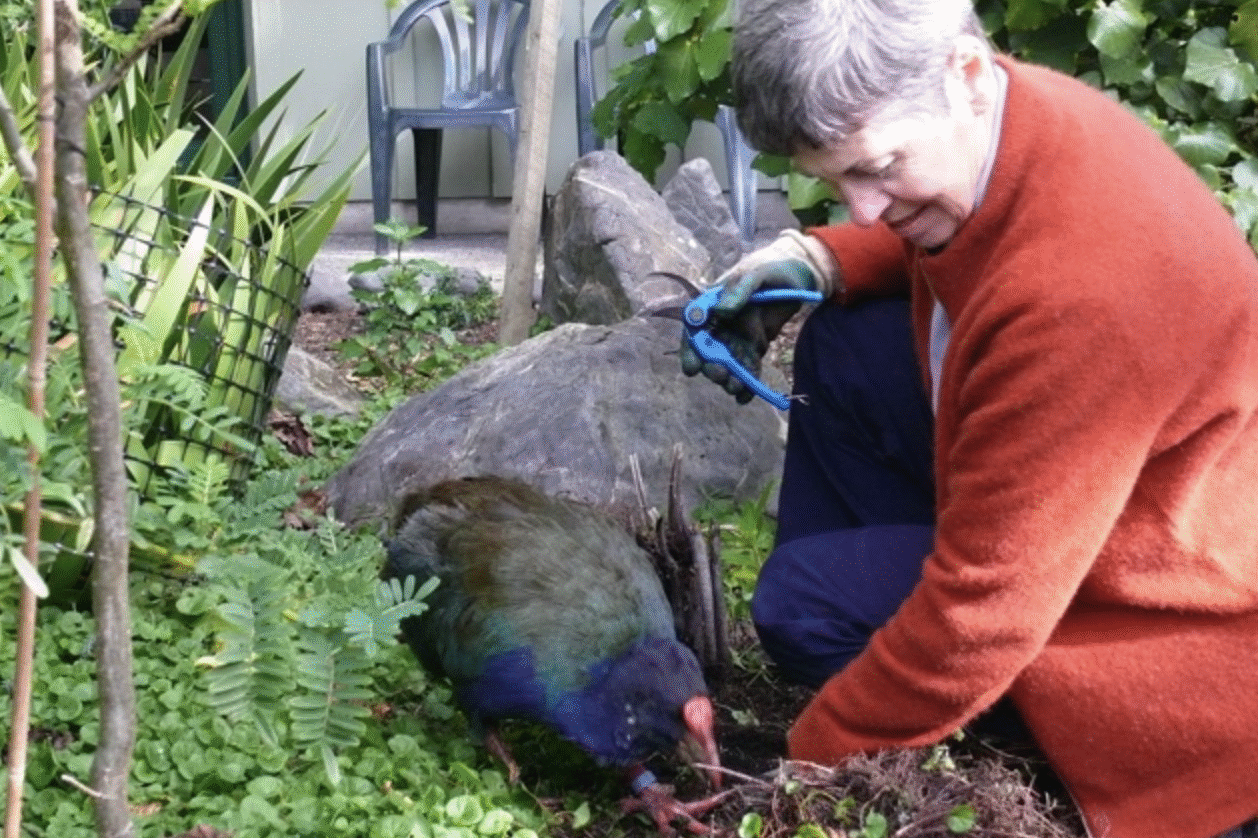
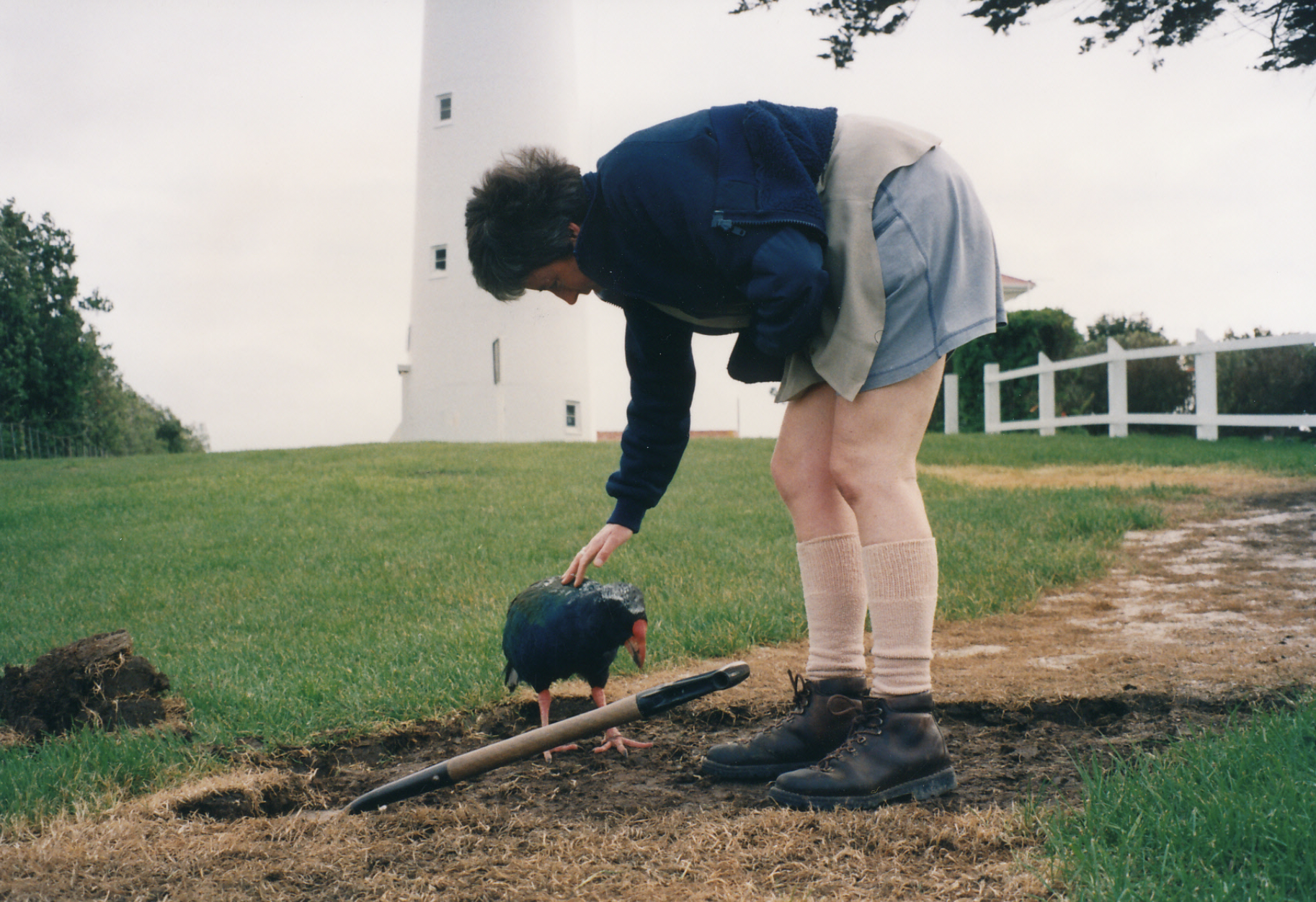
The old takahē, Greg. He was the last takahē to be fed by humans using a puppet. He thought that we were there to feed him. At lunch he was a menace because he used to steal the school children’s food. I used to go and get my weeding tool and show it to him and he would follow me along like a dog. I used to have to lift him out the way as he would get in the way of me digging and he would grunt at me. - Which species do you think visitors most often overlook, but are actually really important to the ecosystem here?
The public are usually interested in everything. Except some of the teenage children because it is uncool.
- Can you tell me about a moment that really moved you while guiding here?
I now have two grandchildren, one is already a guide and the other one wants to be one. - How do the birds on Tiritiri Matangi behave differently from those on the mainland?
The birds stay in sight and don’t fly off. - What inspired you to become a guide/volunteer on Tiritiri, and what do you love most about it?
I have always been interested in birds from a very young age. My mother was interested in birds, too. Once a cuckoo laid its egg in a nest in our garden, and I remember trying to feed it a large worm, and my mother came running down the garden letting me know that the mother birds cut up the worm with their beak. So we put it back in the nest. Also, when I was at school, I used to monitor the birds in the school grounds until I found out that there was a girl following behind me, collecting the eggs.I love that I feel I am being useful in my retirement. - What do you think the biggest challenge for Tiritiri’s future is?
The changing climate - What would you say to someone thinking about becoming a volunteer here?
Do and enjoy it.
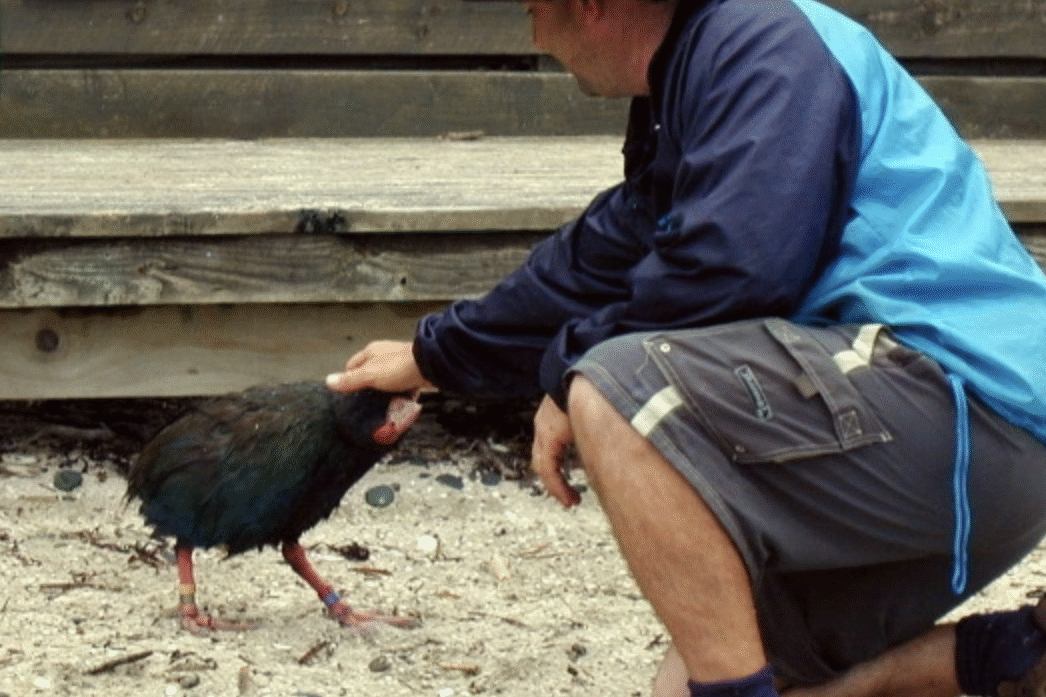

Left image: Greg enjoying a neck scratch. Photo credit: D.Dugan
Middle: Greg. Photo credit: M. Chappell
Right: Greg the helper/ Photo credit: Warren Jowett

The Life and Time of Mr Blue the Takahē
The Life and Time of Mr Blue the Takahē
The Life and Time of Mr Blue the Takahē
From the Supporters of Tiritiri Matangi Archives. Bulletin 28, Summer 1996/97. Editor Peter Lee
For many visitors, Mr Blue was Tiritiri. No visit seemed complete without a sight of the ‘old man’ mischievously investigating visitors around the nursery. Somehow, he always seemed almost human in his fearlessness, his curiosity and his desire to have his chin scratched. It was difficult at times to remember that he in fact was a representative of one of the world’s rarest species. Yet he was…
Mr Blue’s story started as an egg collected from the Murchison Mountains in Fiordland and hatched at Te Anna on 12 December 1984. From there, he was transferred to Maud Island – where his inquisitive nature soon showed up, as the photos show.
His fame, though, truly arrived when he was chosen in 1991 as one of the two takahēs to initiate DoC’s policy of enhancing the species’ survival by building a population of takahē on Tiritiri. The release would herald a number of firsts – the first onto an ‘open’ island, and the first outside its hitherto-accepted ancestral range. Would it work? And who would pay the cost?
Fortunately for Tiritiri, funding was made available through the generous sponsorship of Du Pong New Zealand. This, and subsequent donations by Du Post, made it possible to implement the programme.
Many of us were privileged to watch the arrival of Mr Blue and Stormy on Saturday 1 May 1991. As the helicopter descended, we waited outside the specially constructed pens in the valley below the bunkhouse. Eventually, two boxes arrived, and with a great flourish DoC’s Dick Veitch and Auckland University’s John Craig opened the cages and extracted the birds.
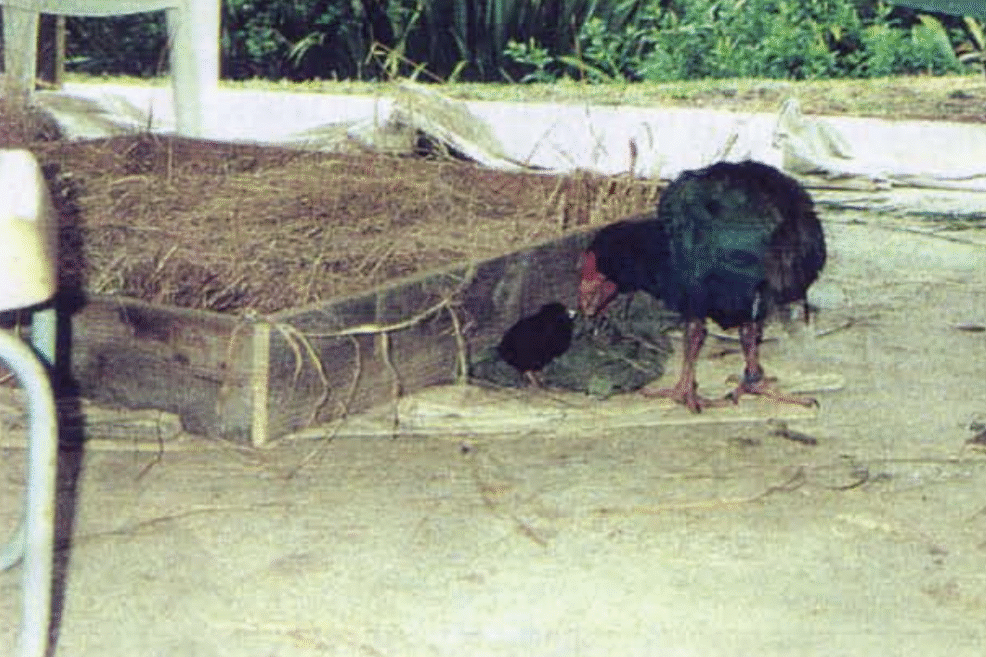
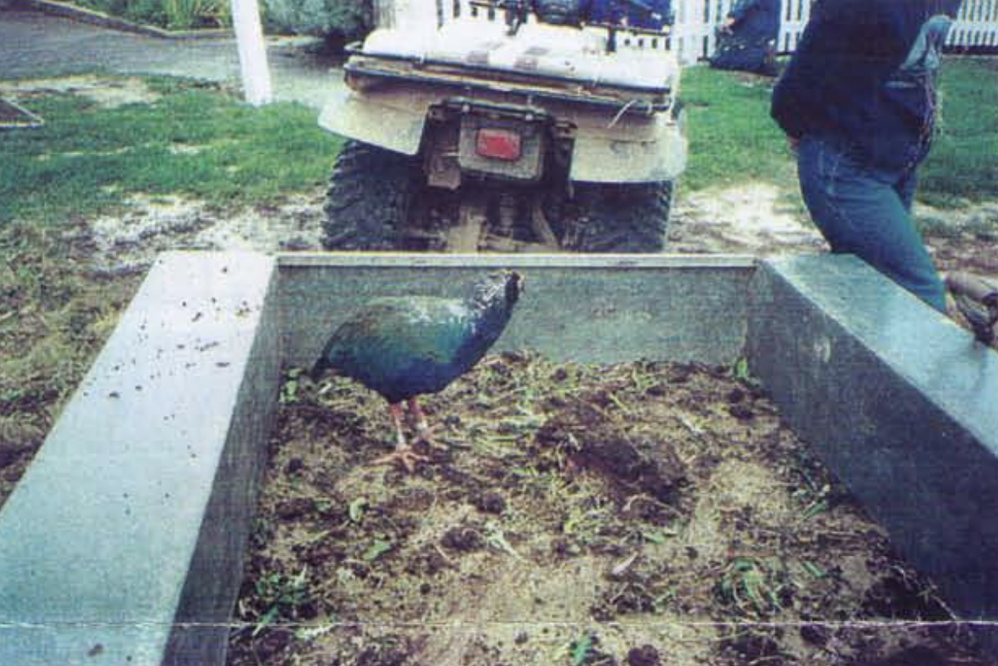
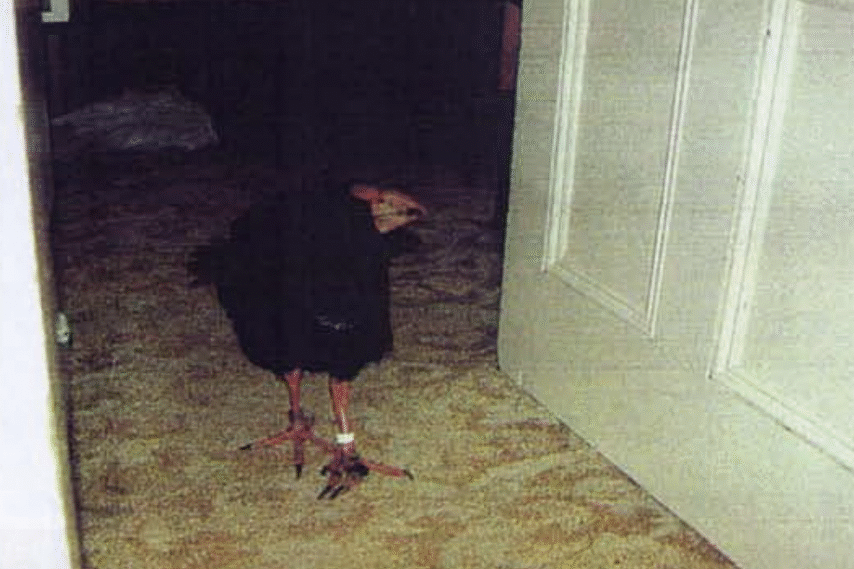
Image on the left: I’m a good daddy. Saving Matangi after a terrible downpour, Matangi was dried with a hairdryer. Photo credit: Ray WalterMiddle image: Now, what can I find to eat here… Photo credit: R Lincoln
Image on the right: Quick, while nobody’s looking! Photo credit: B Walter
Given that they had previously led a quiet life, they took the glare of publicity well. After all, who would enjoy being paraded around six hundred onlookers, all straining to have a look, and many armed with cameras? After the assembled multitude had satiated itself, Mr Blue and Stormy were released into their pens.
Their release into the ‘wild’ some weeks later was greeted with some trepidation by Ray and Barbara. After all, how would the birds be monitored? What would happen if they took off to other parts of the island?
Would they even stay together? With relief, we realised that the lighthouse area would remain their home for some time to come…
The ‘minor’ hiccup of having two males was not the complete tragedy it might have seemed. Because Mr Blue displayed many nesting signs, DoC decided in early 1992 to try using “the odd couple” as foster parents for a fertile egg – transferred from Maud Island, and itself another “first”. Much to everyone’s delight, the egg was well cared for and eventually hatched, producing a little chick which was named Matangi.
At first, Matangi prospered, and was given no shortage of attention by its human entourage. Mr Blue and Stormy carried on as if parenting was the most natural thing in the world for them.
Unfortunately, Matangi died of an infection at ten months.
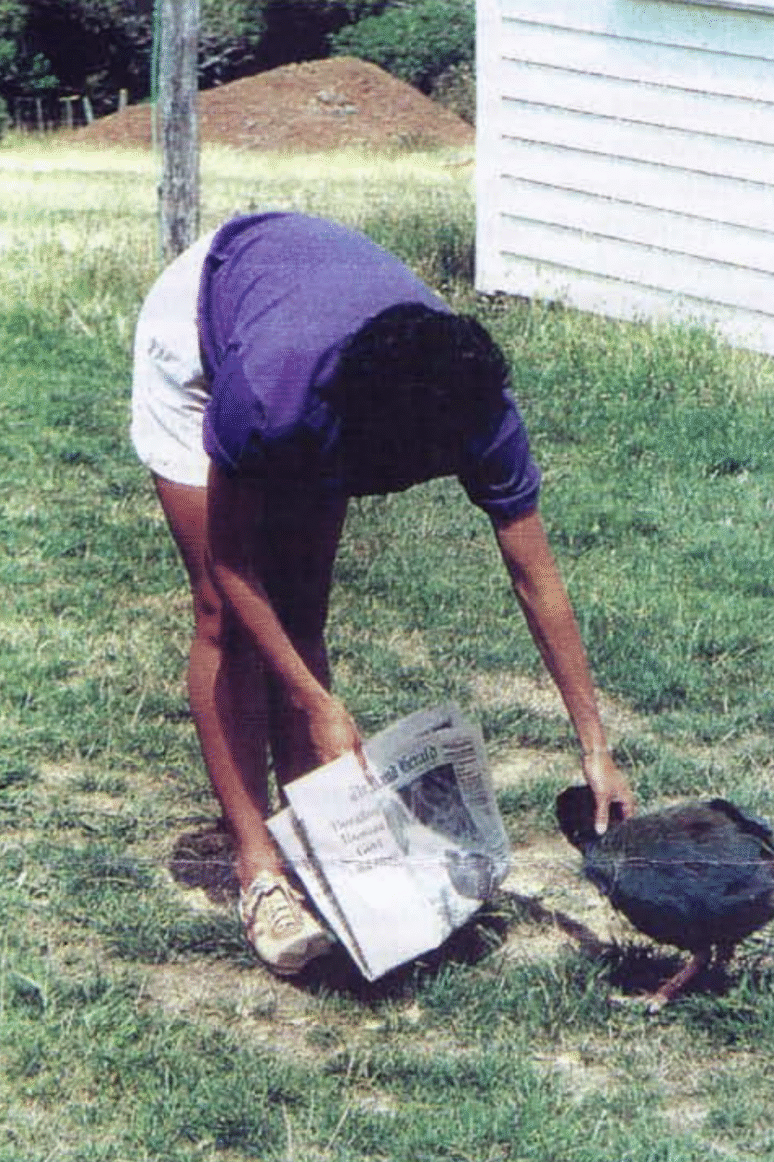

Image on the left: Ngaire Dawson shows Mr Blue his photo in the paper. Photo credit: Ray WalterImage on the right: E.Morton and Mr Blue ’92. Photo credit: McLeod
Other takahē were progressively transferred to Tiritiri, including the island’s first female, JJ. JJ soon paired up with Stormy and produced a chick, Aroha. Mr Blue’s love life took a turn for the better when he teamed up with Aroha in 1993.
While his attentions proved rather fickle over time, he was nevertheless an attentive father when Aroha was selected to foster and hatch another egg in spring 1994. (This chick, named Whetu, is still alive and well.)
In spring 1995 Mr Blue left the island for treatment of an infected foot at Auckland Zoo. Unfortunately, his recovery was very slow, and following further damage he was once again shipped to the zoo for a further operation in mid 1996.
Of all the takahē, Mr Blue was the one we most strongly associated with the lighthouse area – always inspecting visitors with his insatiable curiosity. Unfortunately, during 1996 Mr Blue faced territorial challenges from Stormy and JJ, and it became increasingly obvious that they were trying to usurp him. It was no surprise when he was seen fleeing from Stormy in Wattle Valley one afternoon in late November. What happened next will mostly likely forever remain a mystery, but the next day Mr Blue was found dead beside a stream. While the subsequent autopsy revealed a stomach full of black mud, we will never know for sure if this was the cause.
The warmth Mr Blue generated in the hearts and minds of all who were privileged to meet him was matched by the grief at his loss. Children in particular miss this wonderful character – in fact, more children wrote to the NZ Herald after his death than on any other topic in the history of that paper.
When you next visit Tiritiri, look out for the pūriri tree between the toilets and the bunkhouse. It marks when Mr Blue and buried. Barring accidents, this tree will endure for decades if not centuries – and will be an ongoing reminder that Mr Blue may have gone but he is not forgotten. With luck – and the assistance of many individuals – the takahē breeding programme initiated so successfully by Mr Blue will continue to be one of the brightest examples of conservation success.
We hope this pictorial tribute will bring back many happy memories.
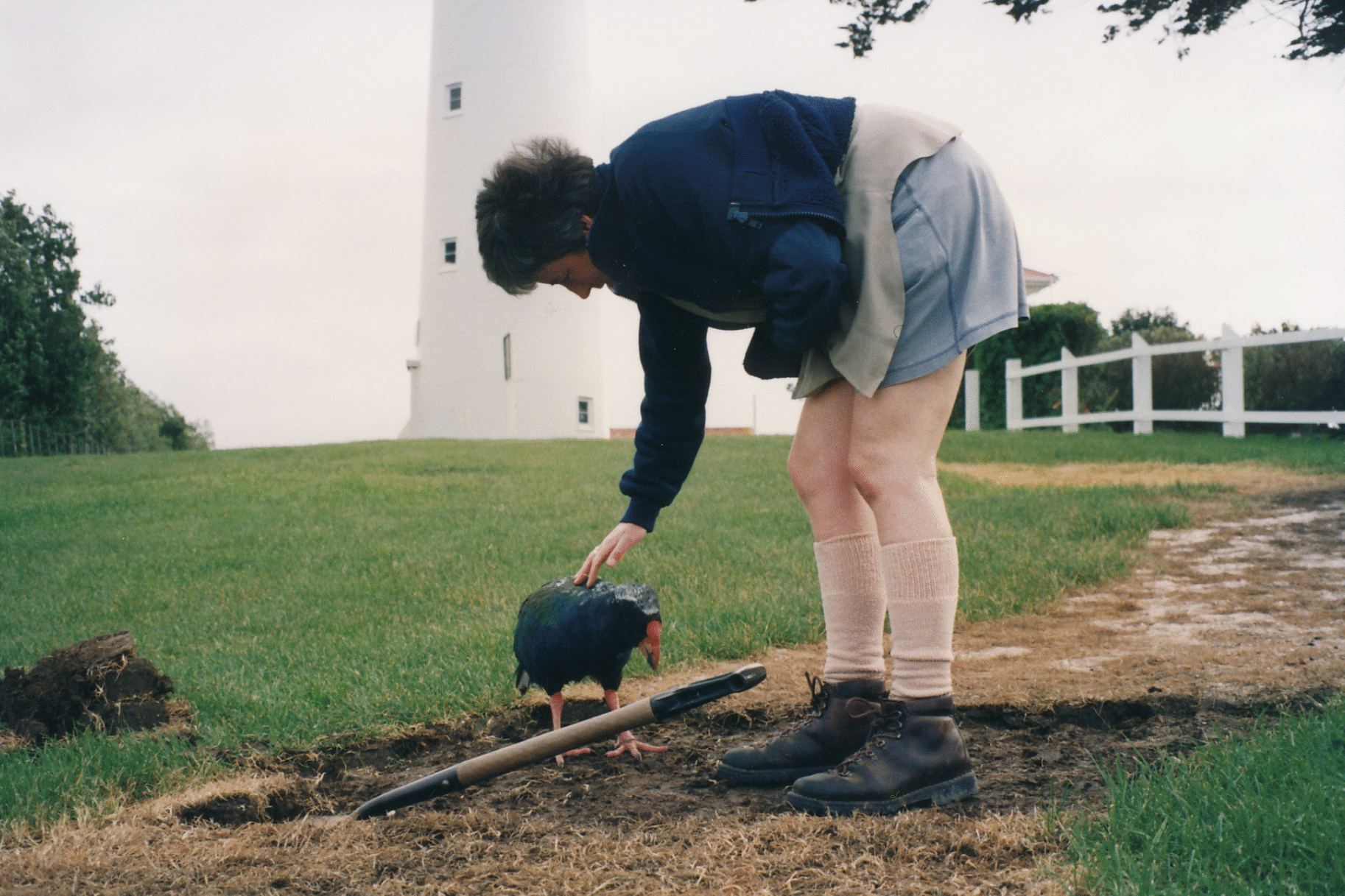

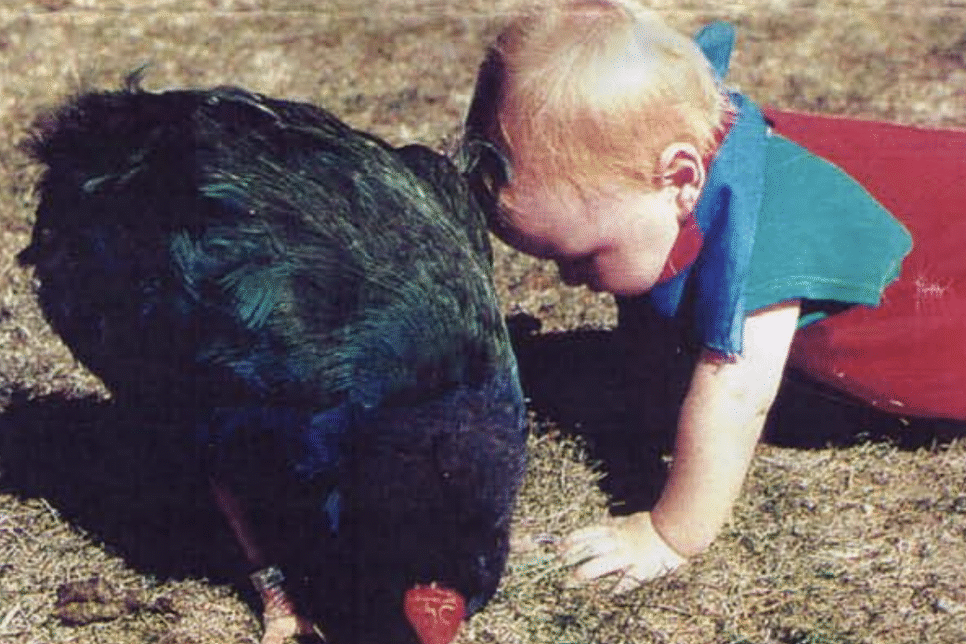
Image on the left: Mr Blue ‘helping’ Dell Hood. Photo credit: Val SmythemanMiddle image: Mr Blue will always hold a special place in the hearts of all the children who saw him. The photo below was taken only three days before his death. Words and photo credit: R Kearns
Image on the right: Winning hearts and minds. Photo credit: Barbara Walter
Select image below to view past takahē blog articles
Two men and a baby

Sharing the love: where are the takahē now?
Remembering Cloudsley Shovell and Te Koha Waiata, Tiritiri Matangi’s Founding Kōkako Pair
Remembering Cloudsley Shovell and Te Koha Waiata, Tiritiri Matangi’s Founding Kōkako Pair
Remembering Cloudsley Shovell and Te Koha Waiata, Tiritiri Matangi’s Founding Kōkako Pair
The following content is the work of Morag Fordham and drawn from previous editions of Dawn Chorus collated by Janet Petricevich.
Heading photo credit: Cloudsley Shovell, Geoff Beals
The North Island kōkako (Callaeas wilsoni) is one of Aotearoa New Zealand’s most hauntingly beautiful and unique forest birds. A member of the ancient wattlebird family, kōkako are related to tīeke/saddlebacks and the now-extinct huia. Easily recognised by their steel-blue-grey plumage, black mask, and vivid fleshy blue wattles at the base of their beak, kōkako are often heard before they are seen. Their rich, organ-like duet song carries through the forest canopy, creating an unforgettable soundscape.
Unlike most birds, kōkako prefer to glide and hop through the treetops rather than fly in long stretches. They are curious, gentle birds that live in monogamous pairs and maintain strong territories, often working together to defend their patch and raise chicks. Their diet consists of leaves, fruit, flowers and invertebrates, making them vital seed dispersers in healthy forest ecosystems.
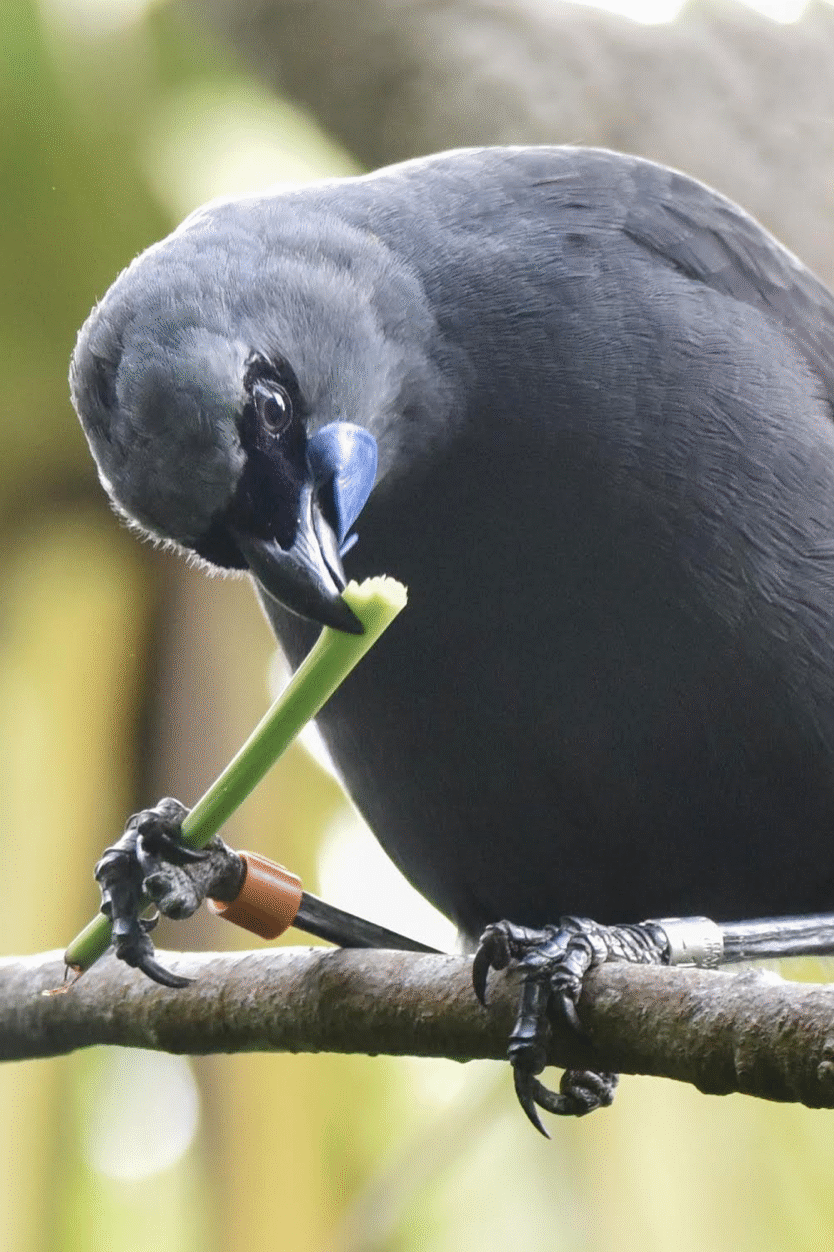
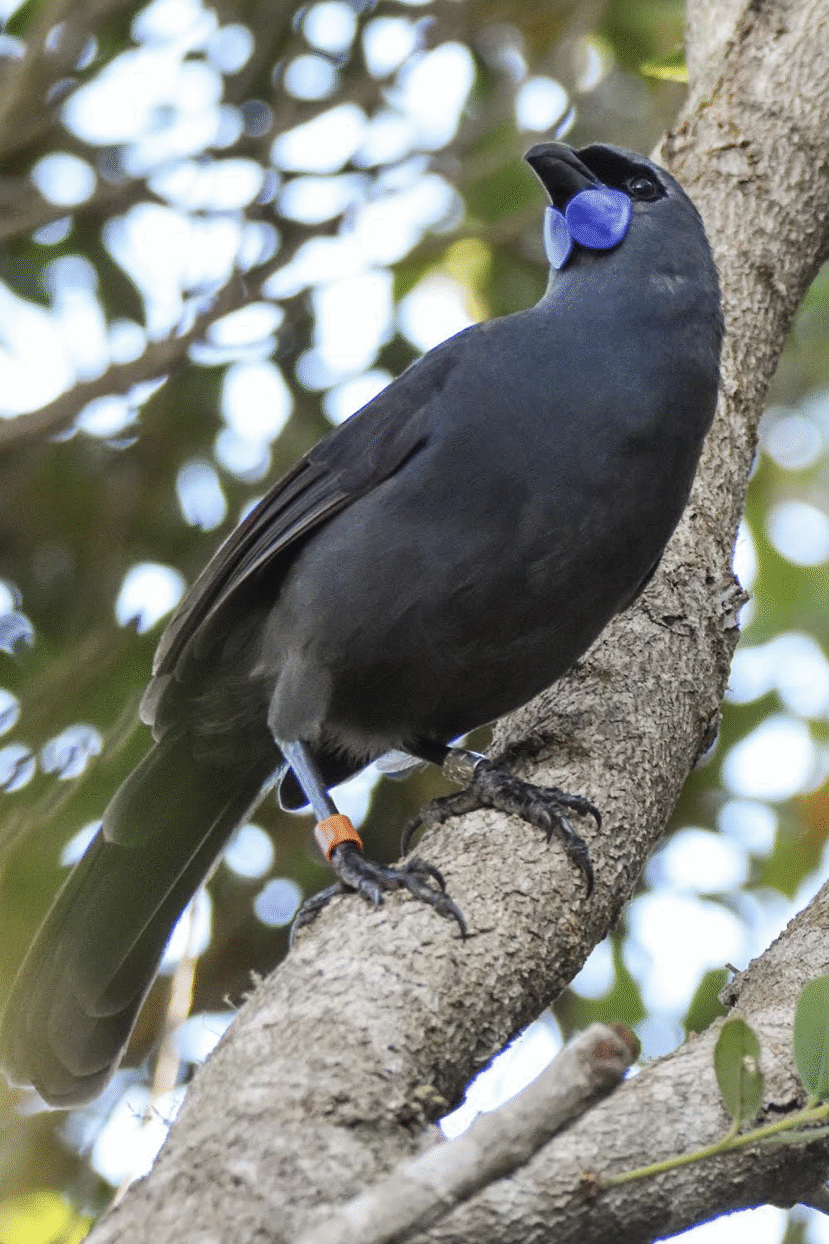

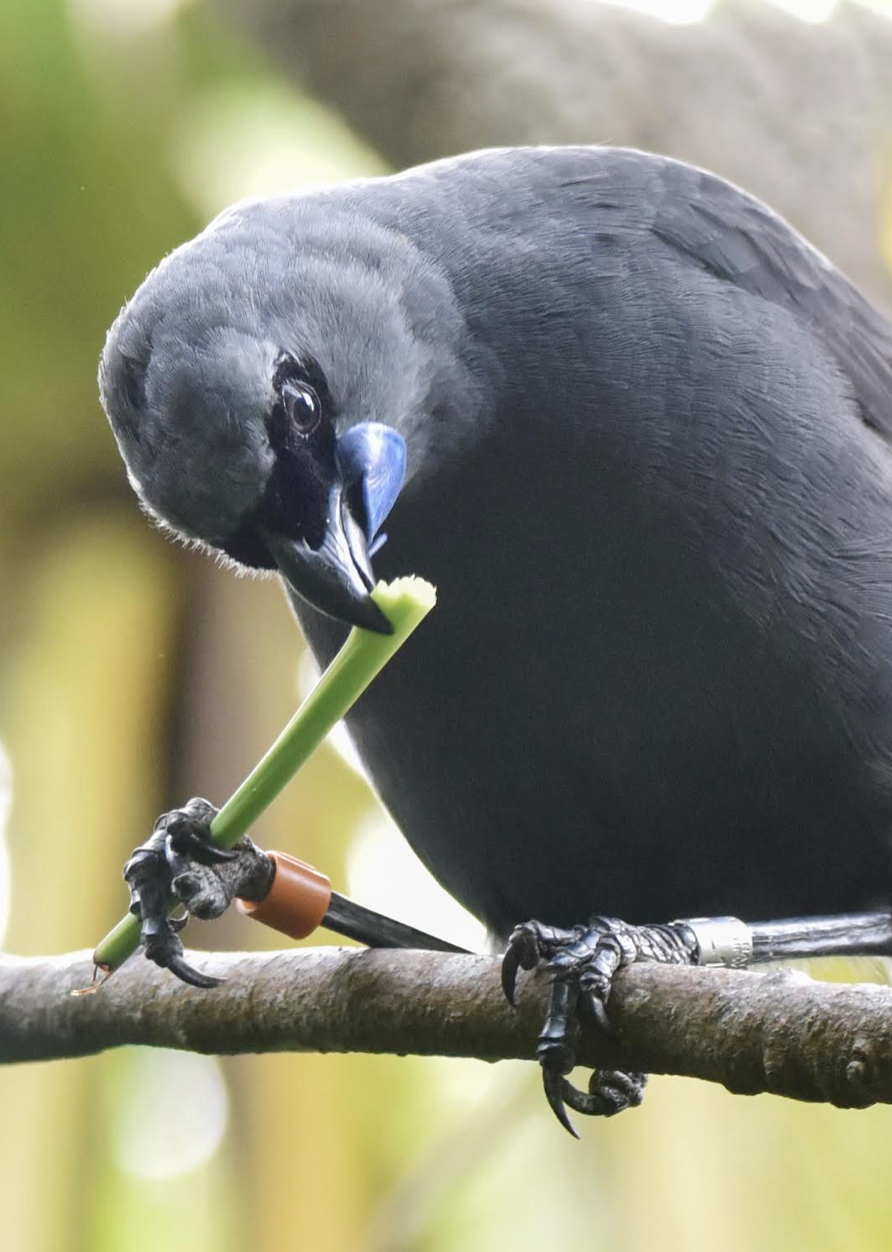
The two photos on the left feature Cloudsley Shovell, a beautiful female kōkako admired not only for her striking appearance but for the special place she held in the heart of Tiritiri Matangi. The third image shows her long-time companion, Te Koha Waiata.Photo credits: Cloudsley Shovell – Darren Markin; Te Koha Waiata – Geoff Beals.
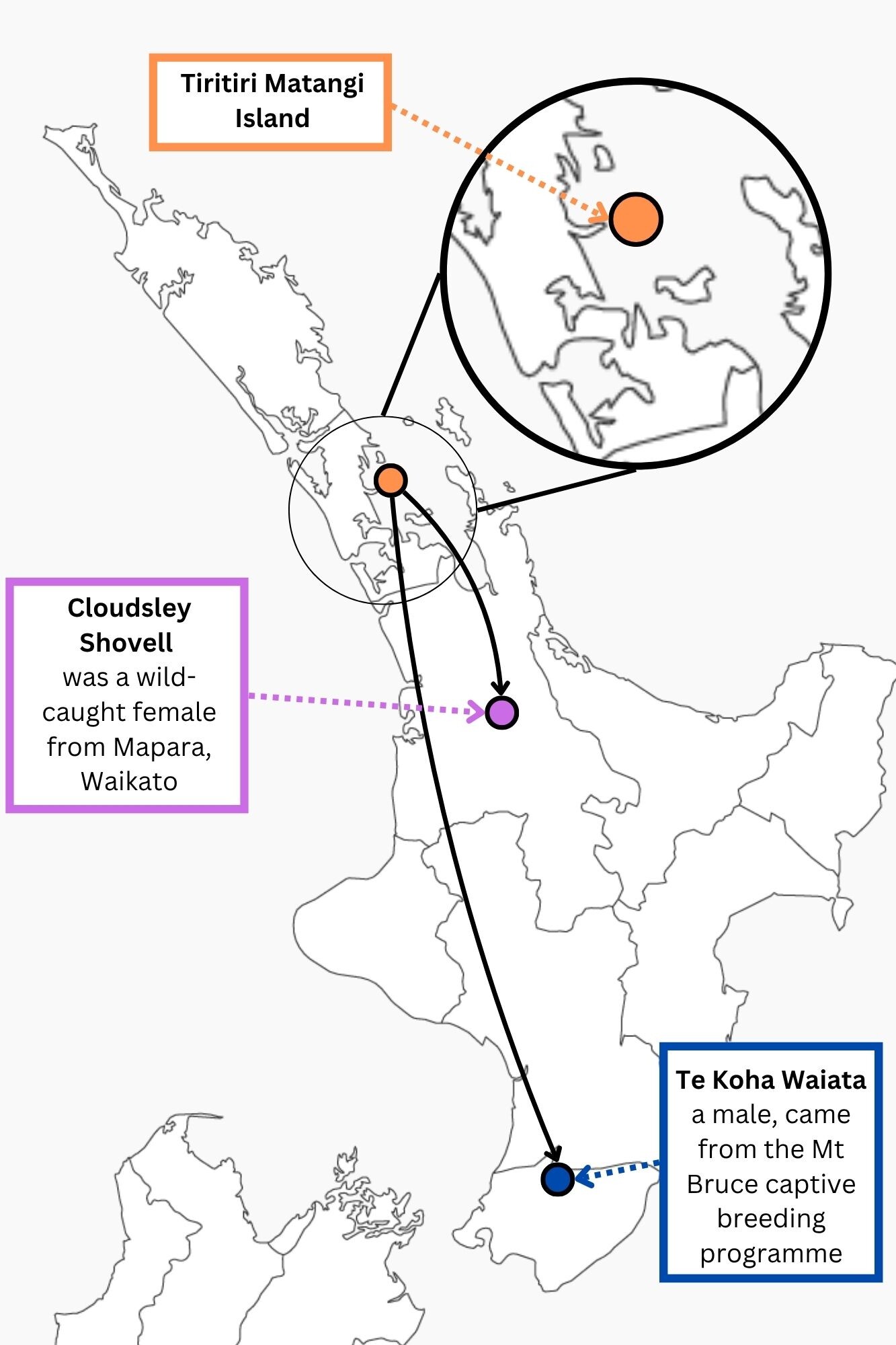
The map shows where Cloudsley Shovell and Te Koha Waiata were translocated from.
On Tiritiri Matangi Island, kōkako were reintroduced as part of the island’s forest restoration project, and two particular birds Cloudsley Shovell and Te Koha Waiata became legendary among supporters and visitors for their long-standing partnership and success as parents.
Cloudsley Shovell was a wild-caught female from Mapara, Waikato, born around December 1996. Te Koha Waiata, a male, came from the Mt Bruce captive breeding programme, born on 22 November 1996 to parents Pork Chop and Ma, themselves descendants of wild-caught birds from the Rangitoto Ranges and Pirongia Forest Park.
The pair were among the first kōkako released onto Tiritiri Matangi Island on 10 August 1997. Shortly after release, Cloudsley Shovell and Te Koha Waiata paired up and stayed together faithfully for nearly two decades. From 1997 until 2015, the duo successfully fledged 22 chicks, playing a crucial role in establishing a thriving kōkako population on the island.
Despite other potential suitors being available (including Te Koha Waiata’s four brothers, who were also released on the island), Cloudsley Shovell appeared devoted to her original partner. Te Koha Waiata disappeared from his territory in June 2015 and was never seen again. The following season, Cloudsley Shovell paired briefly with another male, Bandit, but after his translocation to Taranaki in May 2017, she eventually found a new mate, Hemi.
Cloudsley Shovell reached the impressive age of 20 in December 2016, a testament to her resilience and importance to Tiritiri’s ecosystem. She vanished during the Covid lockdown period in April/May 2020 and is presumed to have passed away at 23 years old, a remarkable lifespan for a wild bird.

Cloudsley Shovell. Photo credit: Geoff Beals


A busy Cloudsley Shovell and Te Koha Waiata.
Photo credit: Niels Meyer Westfeld
Key Milestones
- 10 August 1997 – First kōkako release on Tiritiri Matangi: Te Koha Waiata (male) and Cloudsley Shovell (female)
- December 1998 – January 1999 – First kōkako chick successfully hatches and fledges on the island
- June 2015 – Te Koha Waiata disappears from his territory and is later presumed dead
- 2015/16 season – Cloudsley Shovell pairs with Bandit
- December 2016 – Cloudsley Shovell turns 20 years old
- May 2017 – Bandit and others are translocated to Parininihi; Cloudsley Shovell pairs again
- April/May 2020 – Cloudsley Shovell disappears during Covid lockdown, presumed dead at 23
Their legacy lives on not just in their offspring, but in the echoing song of kōkako that now drifts through the canopy of Tiritiri Matangi, a sound heard in living memory, thanks to two remarkable birds, the conservation community who made their return possible, and the mana whenua, whose deep connection to this land and taonga species we respectfully acknowledge.

Nature’s Carbon Catchers: How Pōhutukawa Trees Help Our Planet
Nature’s Carbon Catchers: How Pōhutukawa Trees Help Our Planet
Nature’s Carbon Catchers: How Pōhutukawa Trees Help Our Planet
Author: Stacey Balich, volunteer guide
Photo credit: Pōhutukawa photos, Jonathan Mower
Did you know that big old trees like the pōhutukawa are working quietly every day to keep our planet healthy? These trees are more than just beautiful, they’re nature’s carbon catchers.
When trees grow, they absorb a gas from the air called carbon dioxide (CO₂). This gas is made up of carbon, a natural building block found in all living things, people, animals, and plants included. When trees grow, they soak up carbon from the air and use it to build their trunk, branches, and leaves. This is called being a carbon sink, it’s like the tree is a sponge, soaking up extra carbon! This helps keep the Earth cooler, because too much carbon in the air can make the planet warmer than it should be. So, trees aren’t just growing, they’re helping cool the planet.
And there’s more! As trees take in carbon dioxide, they also release oxygen, which we all need to breathe. That means every tree is helping us in two big ways: by cleaning the air and by giving us the oxygen we need to live.

This incredible pōhutukawa has stood through centuries of change, regenerating itself after falling, and now grows in a graceful curve along a hillside spur.
One special pōhutukawa tree on Tiritiri Matangi Island, nestled beside the Kawaura Track, is estimated to be over 1,000 years old. This incredible tree has stood through centuries of change, regenerating itself after falling, and now grows in a graceful curve along a hillside spur. It’s a living link to the original coastal forest that once covered the island, long before people arrived in Aotearoa.
This ancient Metrosideros excelsa is more than just a tree, it’s a powerful symbol of resilience, renewal, and natural history. But it’s also a climate hero. A mature pōhutukawa can store up to 8 tonnes of carbon dioxide in its lifetime, that’s like stopping a car from driving the entire length of New Zealand from Cape Reinga to Bluff and back more than ten times!

Tiritiri Matangi’s forest restoration is another amazing story. In the 1980s, volunteers planted around 280,000 native trees to bring the island’s forest back to life. These trees have absorbed roughly 280,000 tonnes of carbon dioxide—that’s equivalent to the carbon emissions from heating and powering around 30,000 average New Zealand homes for a year!
We do our part to keep Tiritiri sustainable, too. We use solar panels for power, rainwater tanks for water, and e-bikes to get around the island. While we still need to bring over some fuel for the ute and LUV, we’re working to reduce that by using the e-bikes more and more.

Around 300 million years ago, Earth’s oxygen levels were much higher, about 35%, compared to today’s 21%. During this period, some insects grew enormous, with dragonflies reaching the size of seagulls! Higher oxygen made it easier for insects to grow large because they absorb oxygen directly through their skin. Today, Earth’s atmosphere contains just the right amount of oxygen for life as we know it, too little, and breathing becomes impossible; too much, and it could cause harm. Just like carbon dioxide, balance is key. Nature does an amazing job of maintaining this balance, and it’s up to us to help keep it steady.
Three Easy Ways You Can Help
- Walk, bike, or catch the bus instead of using the car all the time—it puts less carbon into the air.
- Turn off lights and electronics when you’re not using them to save energy.
- Plant trees and care for nature—trees soak up carbon and keep the air fresh and clean. Support or volunteer in local restoration projects like the one on Tiritiri Matangi
- Grow some of your own food – even herbs in pots reduce transport emissions.
Every time we protect trees, care for forests, and choose lower-carbon ways of living, we’re helping our planet stay cooler, cleaner, and healthier for the future. Just like the ancient pōhutukawa on Tiritiri Matangi, we all have a role to play.
The Sometimes Missing ‘F’ Word: Fauna, Flora, and Funga
The Sometimes Missing ‘F’ Word: Fauna, Flora, and Funga
Written by Stacey Balich, based on the Tiritiri Talk presented by speaker Peter Buchanan.
We were thrilled to welcome Peter Buchanan from Manaaki Whenua, Landcare Research as the guest speaker for this season’s Tiritiri Matangi Talk. His engaging presentation, “The Sometimes Missing ‘F’ Word: Fauna, Flora, and Funga,” opened our eyes to the often-overlooked world of fungi and its essential role in our ecosystems. Around 80 people gathered to hear Peter’s fascinating insights, making it one of our most well-attended and thought-provoking talks to date.
Peter opened with a surprising revelation: there are three (not 2) large biological kingdoms of multicellular life on Earth. In biology, a kingdom is one of the highest levels of classification, grouping together all forms of life with shared fundamental traits. Fauna (animals) ranks first in number of species due to the insects, funga (fungi) are second, and flora (plants) comes in third, challenging the way many of us think about the natural world and its major players. He explained that fungi are so abundant and ecologically important that, in April 2024, National Geographic officially adopted the term “funga,” giving fungi equal footing with flora and fauna in biodiversity conversations.
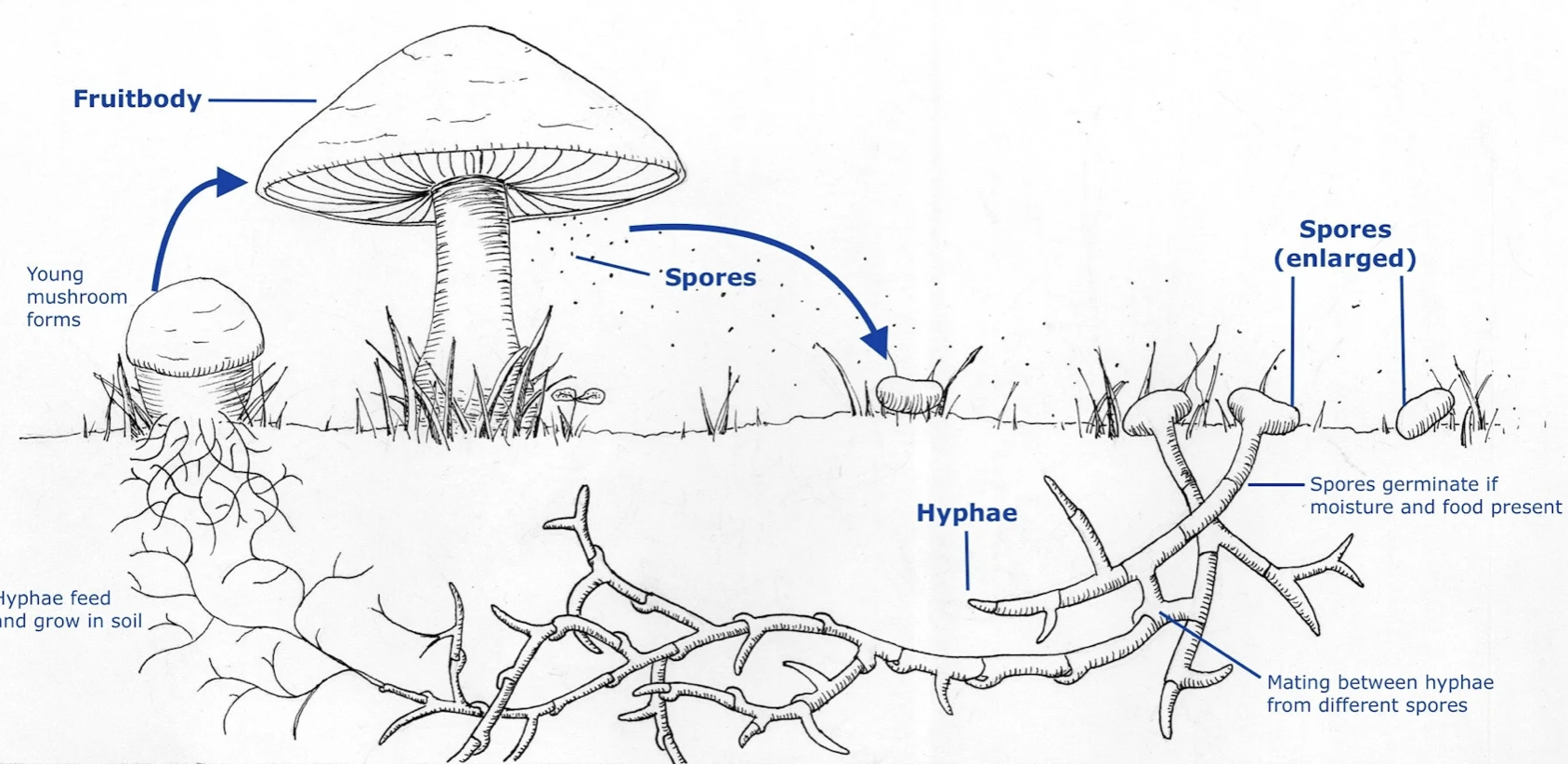
He went on to explain the powerful role of symbiotic fungi, particularly in native forests of beech, mānuka, and kānuka. These fungi form mutually beneficial partnerships with plant roots, helping them absorb water and nutrients through vast underground networks called mycelium. The fungi, in turn, feed on carbohydrates provided by the plants. These thread-like fungal cells, called hyphae, spread out through the soil, massively increasing the area that plant roots can access, making the forest floor a complex web of interdependence and nutrient exchange.
Peter also discussed lichens, which are not a single organism but a partnership between fungi and algae. The fungal structure provides a framework, while the green algae component captures sunlight to create energy. Without the fungus, the lichen wouldn’t exist, it’s this partnership that allows them to thrive in harsh and nutrient-poor environments.
He reminded us that the mushroom we see above ground is just the fruiting body, its purpose is to produce and release spores, much like a tree flowering to make seeds. The majority of a fungus lives below the surface (eg, of soil or wood) as mycelium, working constantly to feed on and hence break down organic material – and thus sustain forest health.
The talk also touched on parasitic fungi, such as myrtle rust, which arrived in New Zealand from Australia in 2017. It has caused widespread damage to native myrtle species like pōhutukawa, ramarama, and rōhutu. Peter also noted Armillaria, a native fungus that causes root rot and sometimes affects commercial crops like kiwifruit. These are examples of pathogenic fungi, those that cause disease. All our crop plants have their share of plant diseases caused by fungi, bacteria, and/or viruses. Like crop plants themselves, most of their pathogens are from overseas.
In contrast, saprobic fungi play a vital role in decomposing dead organic material and cycling nutrients back into the forest. However, Peter cautioned that artificially adding machine-chopped mulch to forest environments can disrupt these natural cycles, as such mulch may attract non-native fungal species and change the native balance.
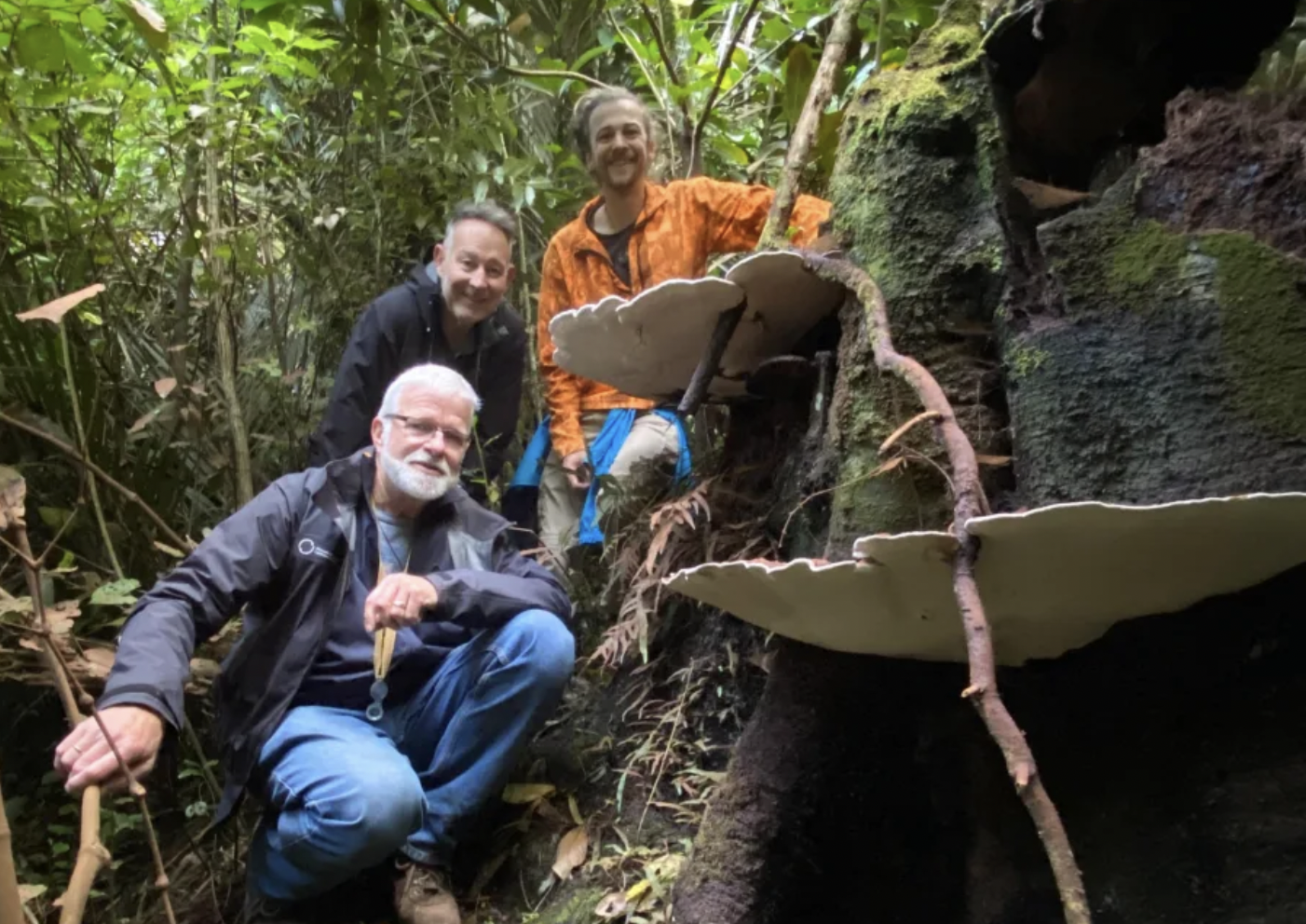
A highlight of Peter’s talk was a remarkable photograph a journalist took during the 2025 New Zealand Fungal Foray at Rotokare, near Eltham. It featured a gigantic Ganoderma bracket fungus, 82 x 45 cm,, estimated to be around 30 years old. Even after decades of research, Peter admitted he’d never seen one so large, and the same tree stump had three other brackets of similar size. The discovery was a vivid reminder of how quietly and powerfully fungi shape our landscapes over time, and why most fungi don’t fit the description of ‘microorganisms’.
Peter highlighted the astonishing fungal diversity in Aotearoa. For every one species of vascular plant, there may be up to six fungal species, meaning there are likely tens of thousands of fungi in New Zealand, many yet to be formally described.
He also honoured mātauranga Māori, traditional Māori knowledge of fungi. He shared that:
- Te pūtawa, a bracket fungus, was used as tinder/carrying fire and for wound care.
- Te pekepekekiore, an icicle-like fungus on well-decayed wood. This was collected as food–tasting a bit like seafood–and is now available in mushroom grow-kits for home ‘cultivation’.
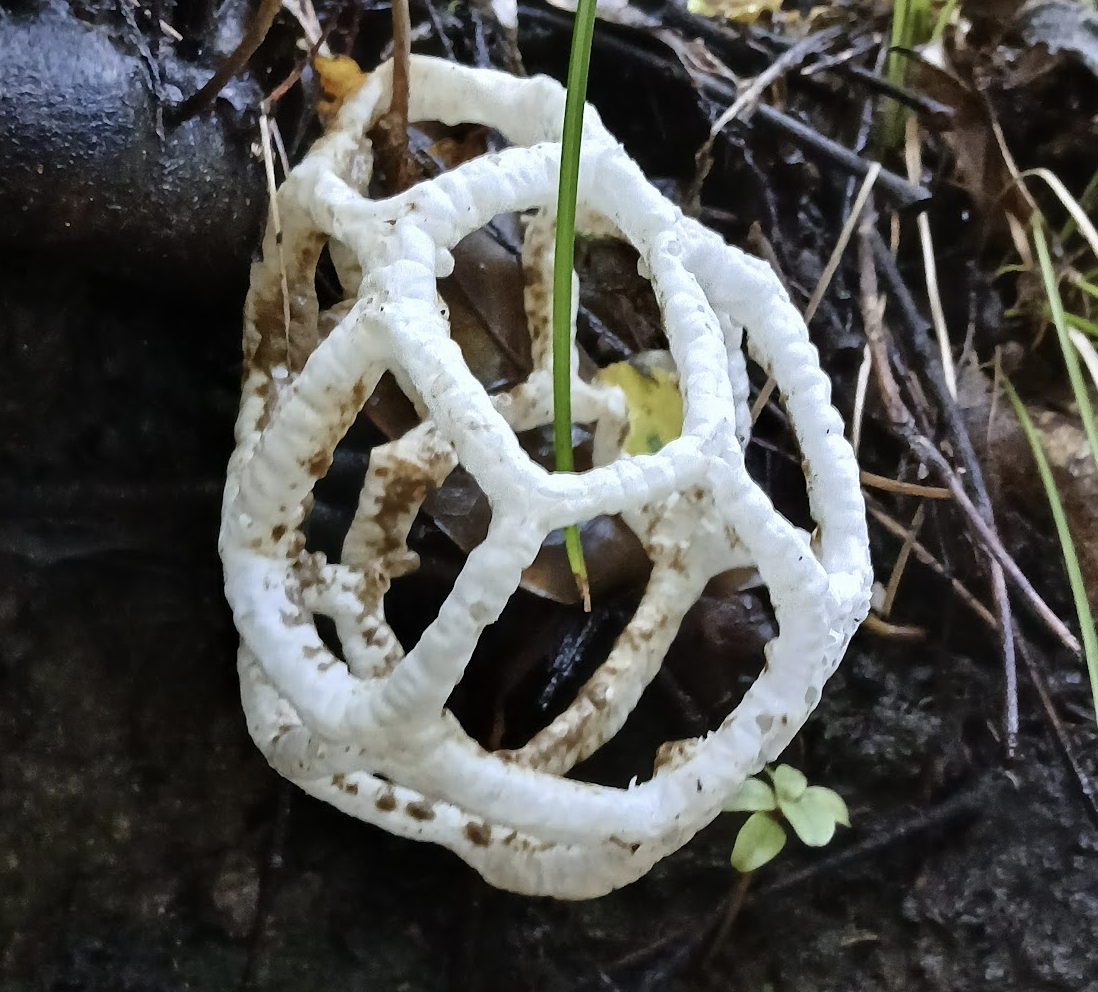
- Te matakupenga, the net-like, stinkhorn, Basket fungus was reported to be traditionally eaten in its immature “egg” form. Its foetid smell is designed to attract flies that disperse its spores
- Te Āwheto, a parasitic fungus that feeds on caterpillars of a particular native moth. The buried mummified caterpillar and emergent stalk-like fungus was collected by Māori> When burnt, its charcoal was ground to a powder and mixed with bird fat to create a stable black pigment for tā moko (traditional tattooing).
- Cyttaria, a parasitic fungus fruiting during spring on galls of southern beech, is a seasonal food for kererū.
Another significant species is te hakeke, or wood ear fungus (Auricularia), nicknamed “Taranaki wool.” It holds the distinction of being the only native mushroom commercially exported, thanks to Chinese merchants including the famous Chew Chong. Wood ear was collected and exported between about 1875 and 1910. There is a fantastic museum in Taranaki, Tawhiti Museum near Hawera, that tells this story in more detail.
Peter also broke down the lifecycle of a typical saprobic mushroom living in soil:
- Spore dispersal – Mushrooms release spores into the environment.
- Germination – If food and moisture is present, spores germinate and develop branched hyphae – that secrete enzymes into their food and absorb the digested materials.
- Mycelium formation – Hyphae from different, but mating-compatible, spores fuse and grow into a mycelial network.
- Fruiting – The mycelium produces mushrooms above ground when environmental conditions trigger reproduction. For most mushrooms, that occurs during autumn as temperatures drop and moisture increases. The mushroom’s only function is to produce spores.
- Spore release – The cycle begins again.
He added that fungi reproduce sexually when compatible hyphae (like male and female types) meet and exchange genetic material, further revealing how complex and life-like fungal systems can be.
A particularly heartwarming moment came when Peter shared how he had contributed feedback to the Reserve Bank during the redesign of the $50 note. In the earlier design, te werewere-kōkako, a stunning blue fungus, was partially obscured. Thanks to his advocacy, it now features prominently. He also shared the beautiful Māori kōrero that the kōkako bird’s distinctive blue wattles came from brushing against this blue fungus while feeding, tying together the bird and the fungus in name, legend, and colour.
To conclude, Peter highlighted why conserving fungi is essential for ecosystem health. Today, 45 New Zealand fungi are assessed by the IUCN Red List, and nine are listed as endangered. These include:
- Claustula fischeri (Fischer’s egg),
- Ganoderma sp. -, the pukatea bracket fungus, last seen in 1972,
- and Hypocreopsis amplectens—the critically endangered “tea tree fingers.”
Peter closed with a look at New Zealand’s two major fungal collections managed by Manaaki Whenua (soon to become part of Bioeconomy Science Institute – from 1 July 2025) at St Johns, Auckland:
- The New Zealand Fungarium (PDD) holds over 110,000 dried specimens of fungi, with data freely accessible to the public on the website: https://scd.landcareresearch.co.nz/
- The International Collection of Microorganisms from Plants (ICMP), which contains 11,000 living fungal cultures, deep-frozen in liquid nitrogen vapour.
- Together these collections and the specialist associated fungal researchers (mycologists) support Aotearoa’s biodiversity, biosecurity, and conservation sciences.
Peter’s talk was a powerful reminder that fungi are not just background players in nature, they’re architects of ecosystems, keepers of culture, and unsung heroes of biodiversity.
To find out more, click on the images below.
Researchers uncover giant 30-year-old fungus near Eltham
Fungal life cycles – spores and more
Chew Chong
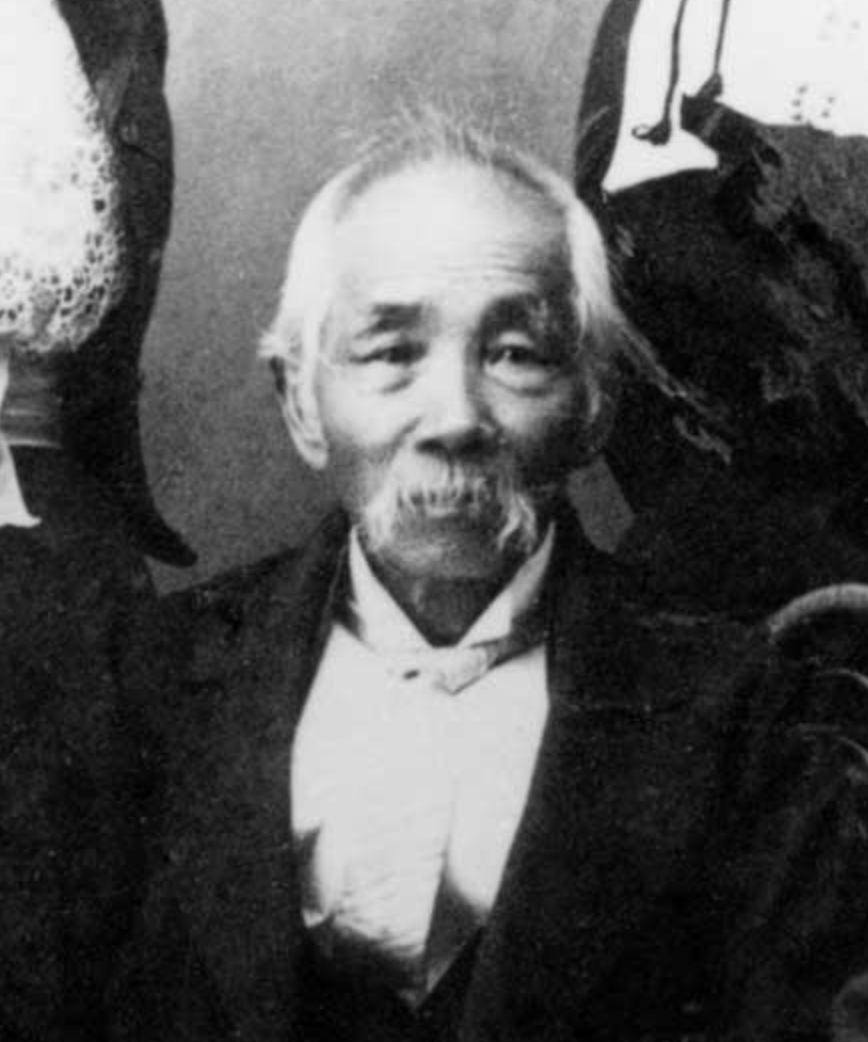
Website for the fungal network for New Zealand

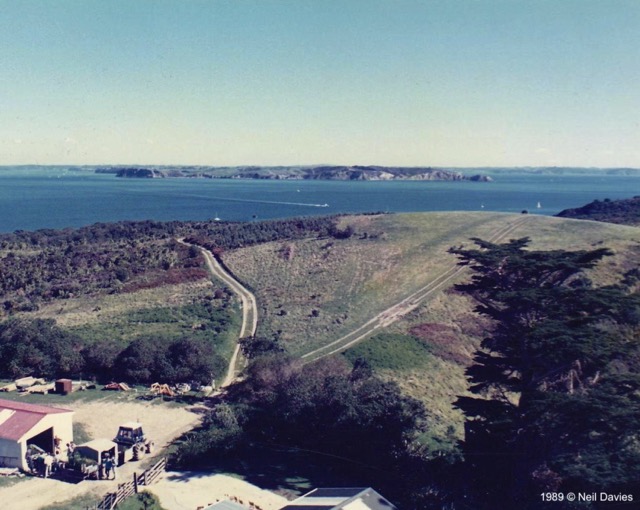
How WWF Sparked New Zealand’s Open Sanctuary
How WWF Sparked New Zealand’s Open Sanctuary
This narrative is compiled with reference to Anne Rimmer’s detailed account in her book, Tiritiri Matangi: A Model of Conservation.
In 1982, Sir Peter Scott, son of legendary Antarctic explorer Captain Robert Falcon Scott, was in New Zealand scouting potential conservation projects for the World Wildlife Fund. A visit to Tiritiri Matangi Island, arranged by his friend Ronald Lockley and accompanied by conservationists John Craig, Neil Mitchell, and Graeme Turbott, sparked his imagination. As they sailed to the island aboard MY Bondi Belle, Scott saw more than just windswept paddocks, he saw possibility. It was Scott who first coined the now widely used term “open sanctuary” to describe Tiritiri Matangi: a predator-free haven accessible to all.
Motivated by Scott’s vision, the World Wildlife Fund adopted Tiritiri Matangi as a flagship project. Under Scott’s direction, WWF formed a fundraising committee, and over $40,000 was raised by public subscription. With a two-to-one government subsidy, the fund grew to nearly $150,000, an impressive sum for the time. This allowed the project to move from drawing board to reality. Landscape architect Mike Cole, alongside Tiritiri’s first park ranger and last lighthouse keeper, Ray Walter, began the hard graft of ecological restoration.
In 1983, a large shadehouse complex was completed, and Cole and Walter began germinating seeds collected from the island’s remnant native bush. Unlike much of the surrounding region, Tiritiri lacked kauri and was instead suited to a rich mix of northern broadleaf coastal species; pōhutukawa, kohekohe, pūriri, karaka, and taraire. In total, 29 species were propagated, including six from Te Hauturu-o-Toi/Little Barrier Island, chosen specifically to provide vital nectar and berries for the future population of hihi/stitchbirds.
By autumn 1984, over 30,000 young trees stood ready in root-trainers. But the question loomed: how would they all be planted? It became clear the project’s success would rely on long-term voluntary labour, an approach never before attempted at such a scale in New Zealand. At the same time, Ray Walter’s role on the island was coming to an end, with the automation of the lighthouse set to make his job redundant. But from this uncertain period emerged a new opportunity. The Tiritiri Matangi project needed someone to live full-time on the island, someone capable, self-sufficient, and familiar with its rhythms. Ray, already deeply connected to Tiritiri and skilled in hands-on island living, was the perfect fit.
Encouraged by Neil Mitchell, who told him, “If you can grow cabbages, you can grow trees” Ray officially took charge in 1985. Under his steady guidance, and with the support of thousands of volunteer hands, Tiritiri Matangi was slowly transformed from open paddocks into a thriving forest—its story a lasting testament to vision, resilience, and collective effort.
To find out more about Tiritiri Matangi history why not buy Tiritiri Matangi: A Model in Conservation by Anne Rimmer
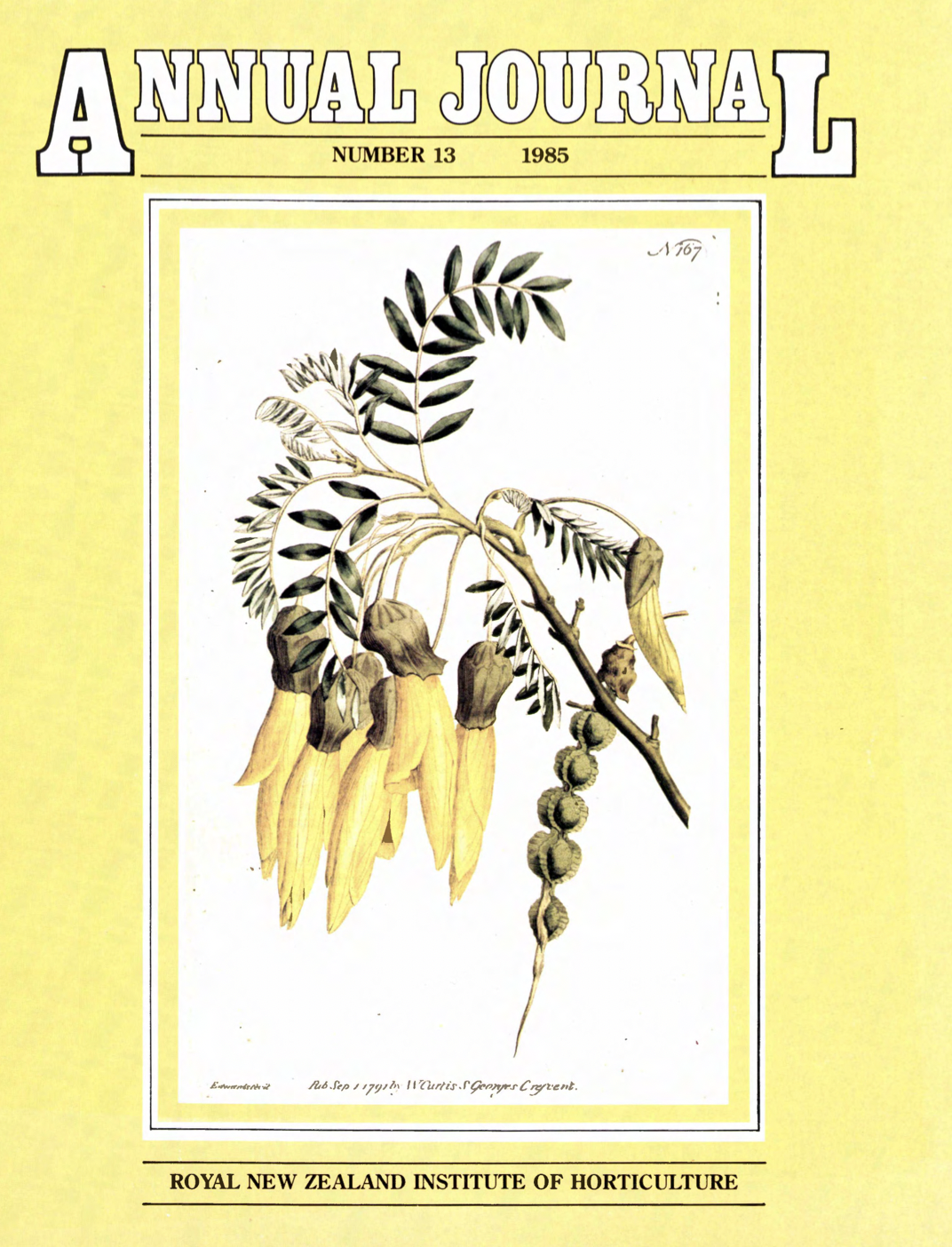
Please click on the images below to read old documents for more information

Ferns, Fungi, and Forest Magic
Ferns, Fungi, and Forest Magic
Ferns, Fungi, and Forest Magic
Author: Stacey Balich, volunteer guide
Tiritiri Matangi is one of those rare places where you can truly switch off, and I mean really switch off. There’s no Wi-Fi and barely any phone reception, so your mobile pretty much turns into just a camera. And honestly? That’s kind ofthe point. The island moves at a slower pace, and you do too. You breathe deeper, walk slower, and notice all the little things you usually miss in the rush of everyday life.
Winter might just be the best time to visit. The sugar feeders are buzzing with life, hihi/stitchbirds and korimako/bellbirds darting in and out, filling the air with this incredible, layered birdsong that somehow manages to be both chaotic and calming. Just find a bench nearby, sit still, and listen. You might spot a tūī hanging around, trying to sneak a sip of sugar water, though they’re way too big to get in. It’s kind of cheeky and charming all at once. And when you really stop and let yourself tune in, it’s wild how much you hear.
If you’re up for a walk, my go-to is the Kawerau Track. It weaves through some of the island’s oldest forest, where the trees are tall, the light filters in soft and green, and the forest feels… grounded. The track kind of invites you to slow right down and just be. No rush. No noise. Just birds, trees, and that gentle hush that only old forests seem to have.
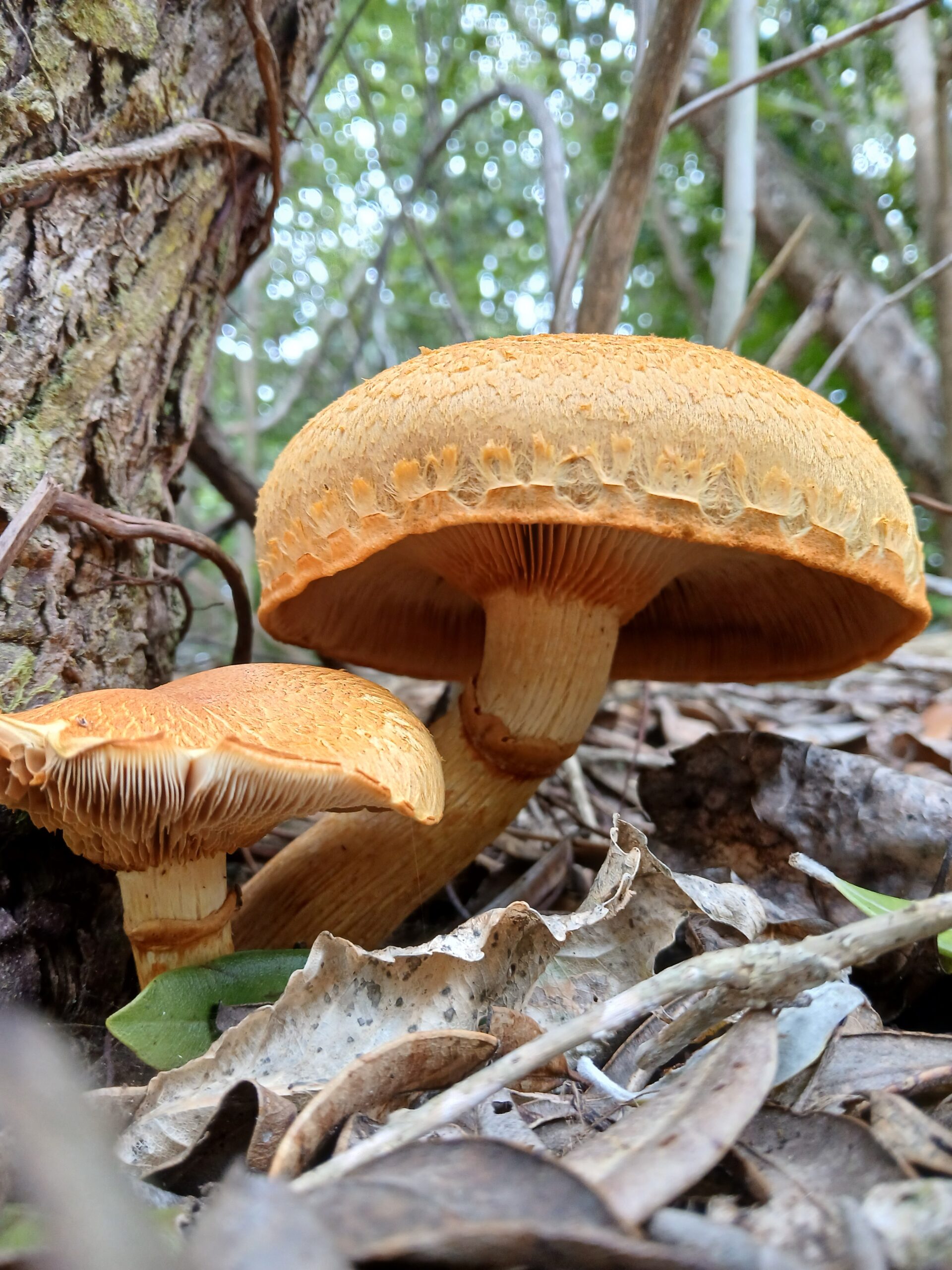
Winter’s also peak fungi season, and yes, I get way too excited about that. The forest floor becomes a treasure hunt (my favourite kind), dotted with tiny pops of colour and weird, wonderful shapes. Bright orange caps, little inky fans, coral-like clusters growing out of moss and bark. They’re not just pretty either, fungi are these underground powerhouses, breaking down dead stuff and returning nutrients to the soil. Total decomposition superheroes. They even help store carbon in the soil, doing their bit to keep forests resilient in our ever-changing climate.
Further along the trail, there’s a little stream. If you’re lucky (and patient), you might spot a kokopu gliding through the water, almost ghost-like. Everything here feels ancient, like the forest is holding old stories and every now and then, it tells you one.
And don’t forget to look up. The tree ferns are quietly doing their thing, with their fronds slowly unfurling in perfect spirals. I always pause to check the crooks of the trunks, sometimes, just sometimes, you’ll see a sleepy ruru/morepork tucked into the ferny shade. Spotting one always feels like a tiny bit of magic.
Right now, the kohekohe are flowering. It always surprises me, these small, delicate blooms sprouting straight out of thick tree trunks. There’s something so beautiful about that contrast. And the birds clearly agree, you can hear them hopping between blossoms, taking full advantage of the nectar buffet.
Every time I come here, I’m reminded that this island exists because people had a dream, and they made it happen. Walking under those old pōhutukawa trees, seeing the fresh green fronds beside their gnarled branches, it feels like nature’s way of saying thank you. Like the old and the new are growing side by side.
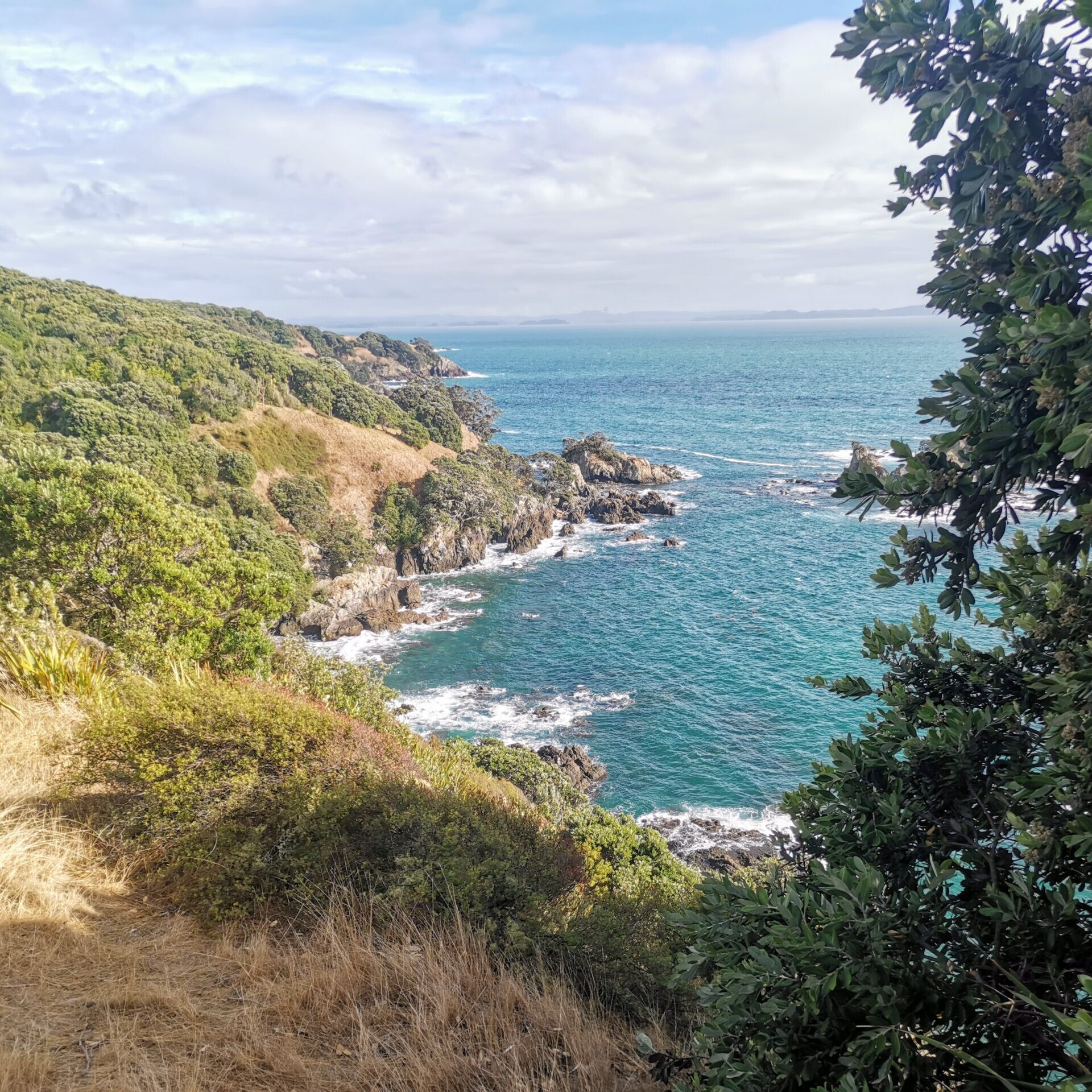
Views along the east coast
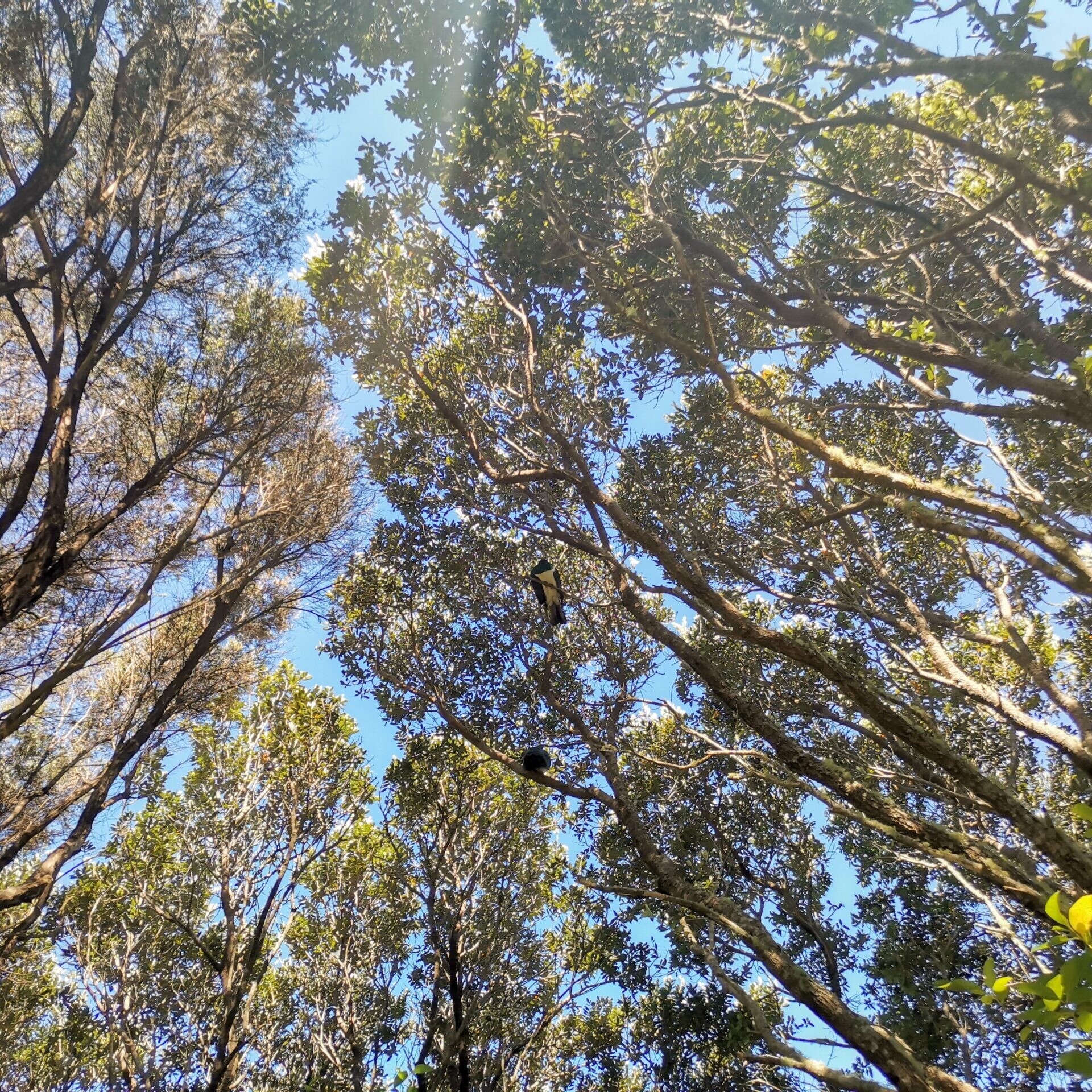
Looking up

A busy decomposing superhero

My favourite bird, the takahē
If you’ve got the time, I really recommend cutting across Fishermans Bay Track when you’re up on Ridge Road. The walk along the coastline up to the lighthouse gives you these incredible views, with dramatic cliff edges that feel totally different from the bushy side of the island. It’s also where I’ve been lucky enough to hear the call of the mātātā/fernbird and spot flashes of bright green kākāriki darting through the shrubs. It’s a bit quieter out that way too, which makes those special wildlife moments even better.
My absolute favourite bird on the island has to be the takahē. Every time I see one, it fills up my inner bird bucket, there’s just something about them. The way they walk is so deliberate and a bit clumsy, it’s hard not to smile. And their feathers? Iridescent blues and greens that catch the light like a living jewel. There’s a pair that often hang out near the lighthouse and another pair that sometimes up the north end of the island, so keep your eyes peeled, you’ll never forget the moment you spot one.
So if you’re feeling a bit frazzled or just tired of scrolling—come over for the day. Leave your phone on airplane mode and listen to the birds instead. Take a deep breath. Wander a trail. And let Tiritiri Matangi remind you how to slow down and just be again.
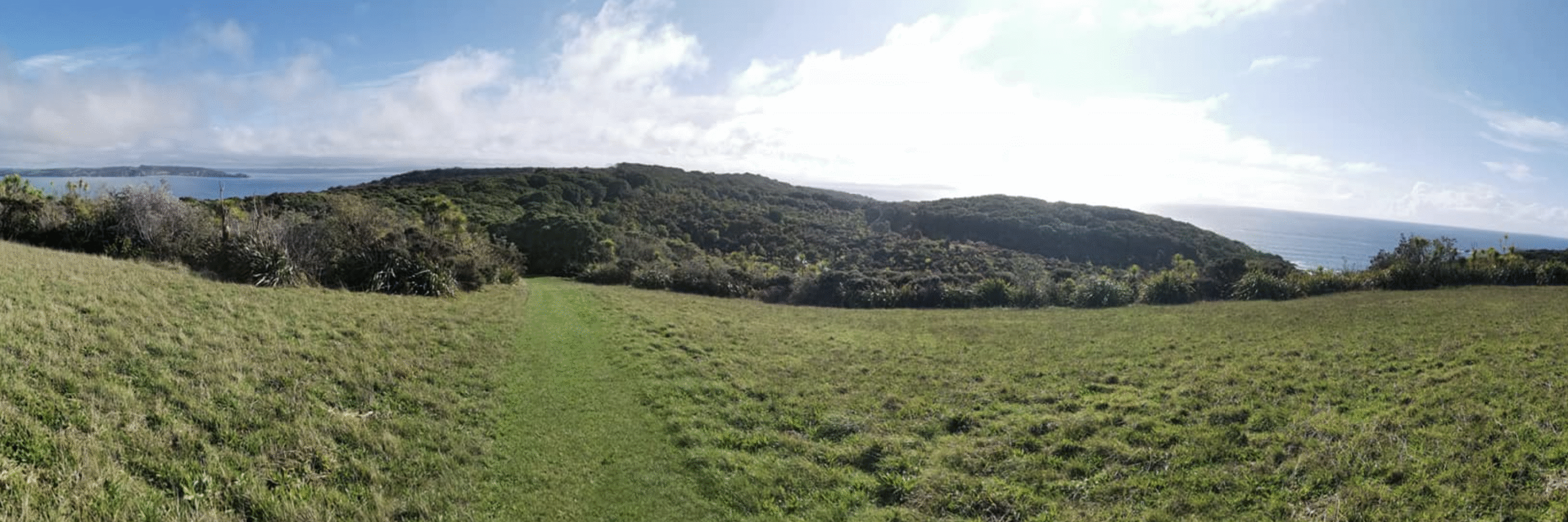
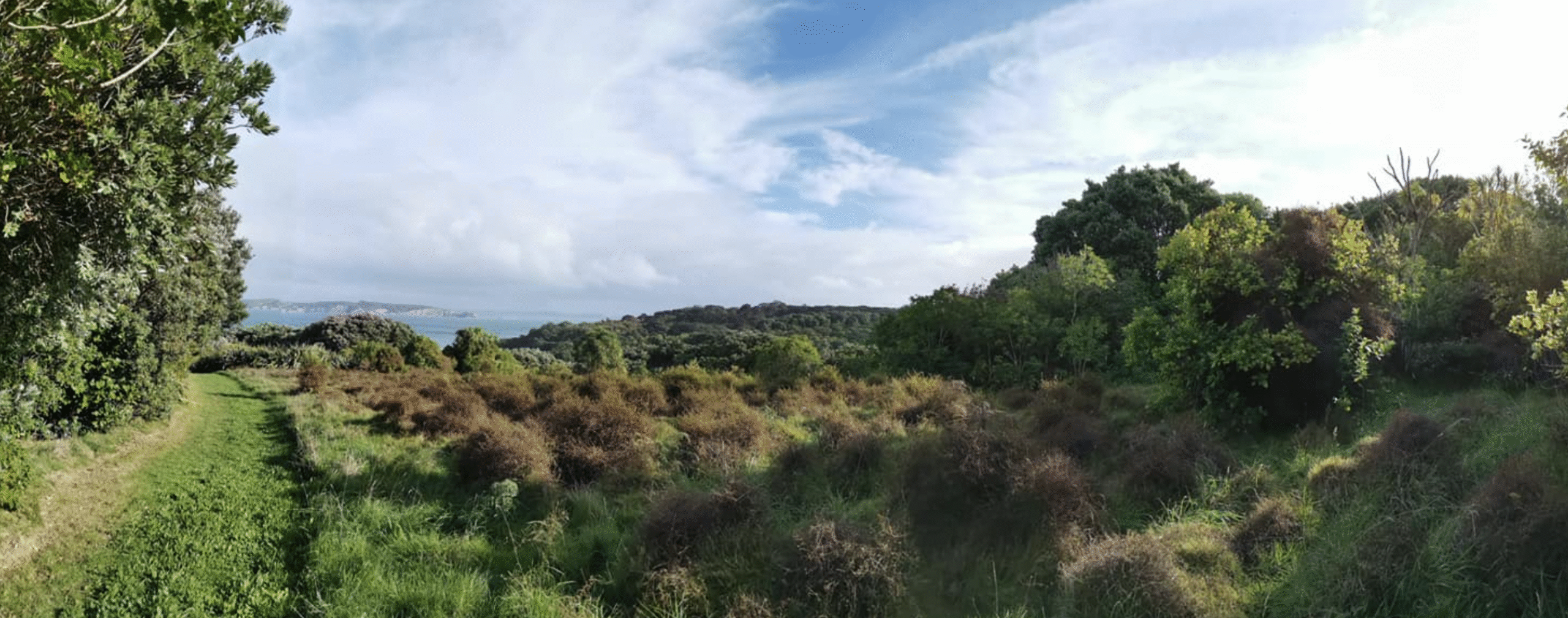
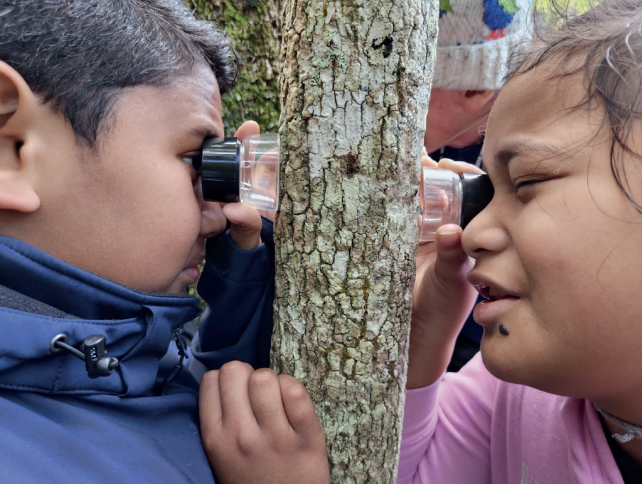
Inspiring environmental action in our school
From Tiritiri Matangi to Ōtāhuhu:
Inspiring environmental action in our school
From Tiritiri Matangi to Ōtāhuhu:
Author: Josh Burrowes, Associate Principal at Ōtāhuhu Primary, shares the school's journey of environmental learning with Dawn Chorus.
From the Supporters of Tiritiri Matangi Archives: Bulletin 139, November 2024
Ōtāhuhu Primary School has been undergoing a shift in our approach to inquiry learning over the past two years.
Last year, we made a plan to investigate the “three B’s” in our school environment – birds, bugs and bees – to understand biodiversity and the relationship between our physical environment and its impact on how the three B’s survive. Given the industrial nature of our school’s surrounding neighbourhood, we wanted to ensure that our students are exposed to a rich and biodiverse ecosystem so that they can better understand these concepts.
We were connected with Tiritiri Matangi and applied for the Growing Minds Programme, which has allowed us to see our vision come to life. Throughout 2024, with the support of the funding we received through Growing Minds, we have been able to take almost all of our Year 4-6 students across to Tiritiri Matangi Island (almost 300 students) to experience this once-in-a-lifetime opportunity.
The journey began during the Term 1 school break when we took our teachers across to Tiritiri Matangi to get firsthand experience on the island, with guided walks from some of the island’s educators. This was an amazing opportunity for our teachers to find their feet and understand all of the learning that can take place on the island, as well as understand the demands of taking large groups of students across. Growing Minds provided us with additional resources to make this trip achievable, which we were very thankful for. This pre-visit was incredibly important for our teachers to gain the confidence they needed to undertake this experience. We highly recommend that any new schools looking at going to Tiritiri Matangi take this step as well.
Over Term 2, we had planned to take 13 classes to the island in all. Most made it without trouble, some trips were postponed due to high winds and storms, and one trip got as far as Gulf Harbour before having to turn back due to much worse than anticipated sea conditions. This was an unfortunate experience for those two classes as they battled large waves, a rocky boat, and a lot of upset stomachs. Their trip has been rescheduled, but a nervous wait looms for those children and their parents.
For the trips that have gone ahead, all we can say is that we are so glad we took the risk and put months of planning into making them happen. These experiences have been invaluable not only for our students, who have made incredible connections to their learning experiences in school, but for the whānau that have come along as well. As you can imagine, this has been a very popular experience for our community, and we have done what we can as a school to get as many people across to the island as possible. Our principal has shown great leadership and commitment to the programme, ensuring that no one misses out, despite the costs involved. We know that we are fortunate to be able to visit Tiritiri Matangi Island, and many of our students and their families will not get this opportunity again. It is worth it!
Our teachers and students have been inspired by what they have seen. Tiritiri Matangi is so full of life, and to know that within our lifetimes (at least for many of our teaching staff) it was a farm riddled with rats and other pests, that has been transformed into this brilliant sanctuary, it gives us hope as to how we can impact our local environment. Our students now have the challenge of taking some of the magic they experienced on Tiritiri Matangi and putting it into practice as they apply their new knowledge back in Ōtāhuhu. Gardens, tree planting, constructing bee sanctuaries, and bug hotels are all ideas coming to life as we take action this term at school.
We are so grateful for the support we have received from Growing Minds. The educators and volunteers at Tiritiri Matangi have also been incredible on every trip. This is an experience that every Auckland student should get to experience at some point in their lives, particularly with all that we face in our changing climate, and we hope that more opportunities will be created in the future.
From everyone at Otāhuhu Primary, we say THANK YOU to everyone who contributes their time, knowledge and resources to these programmes.
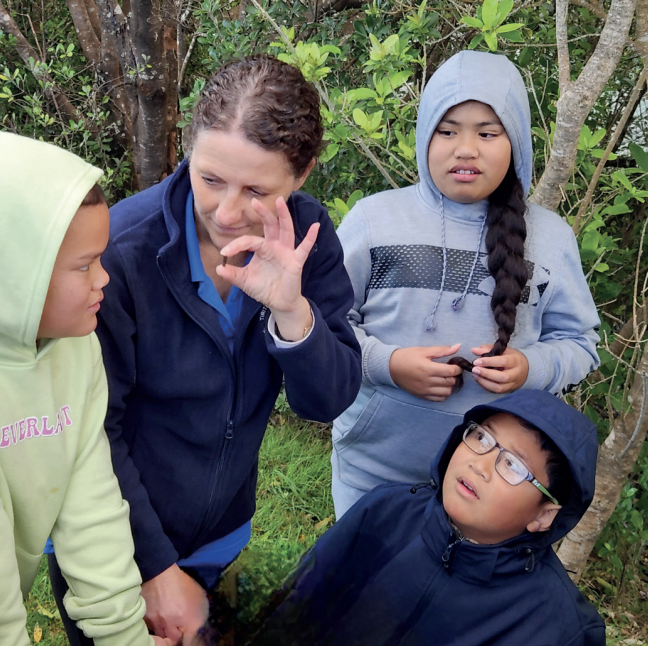
Sara Dean, lead educator shares:
“I’m looking at the bird with a blue chin” – The moment a boy from Otahuhu Primary became enthralled by the wonder of the kōkako. While his classmates enjoyed lunch in the courtyard, I noticed the boy standing alone, his gaze fixed intently. I asked him what he was doing. “I’m looking at the bird with the blue chin,” he replied. Dave was completely captivated by the kōkako feeding on a coprosma just a couple of meters away, oblivious to everything else around him. The experience was incredibly special to him, being so close to such a beautiful bird and even more so when he learnt how rare and endangered it is. Later in the afternoon, he shared his excitement with his classmates, recounting the story of how he had spotted the beautiful, rare bird and had a unique moment with it, undistracted by anything else. It was a touching scene, clearly a transformative experience for this young student.
Tiritiri Matangi’s island ‘classroom’ offers school students a powerful opportunity to explore ecological processes, understand the impact of human activity on the environment, and discover the richness of Aotearoa New Zealand’s unique biodiversity.
Our education programme delivers a range of hands-on, experiential learning experiences on the motu. By engaging with the outcomes of this successful community-led restoration project, students are inspired to become kaitiakitanga in their own local environments.
We believe every student in Auckland deserves the chance to experience Tiritiri Matangi. Thanks to the generous support of the Joyce Fisher Charitable Trust, the Growing Minds programme was launched in 2012. This initiative continues to break down socio-economic barriers, enabling thousands of students to experience conservation in action and learn first-hand about our native and threatened species. Growing Minds covers the cost of ferry travel with Explore and provides access to our education programme free of charge.
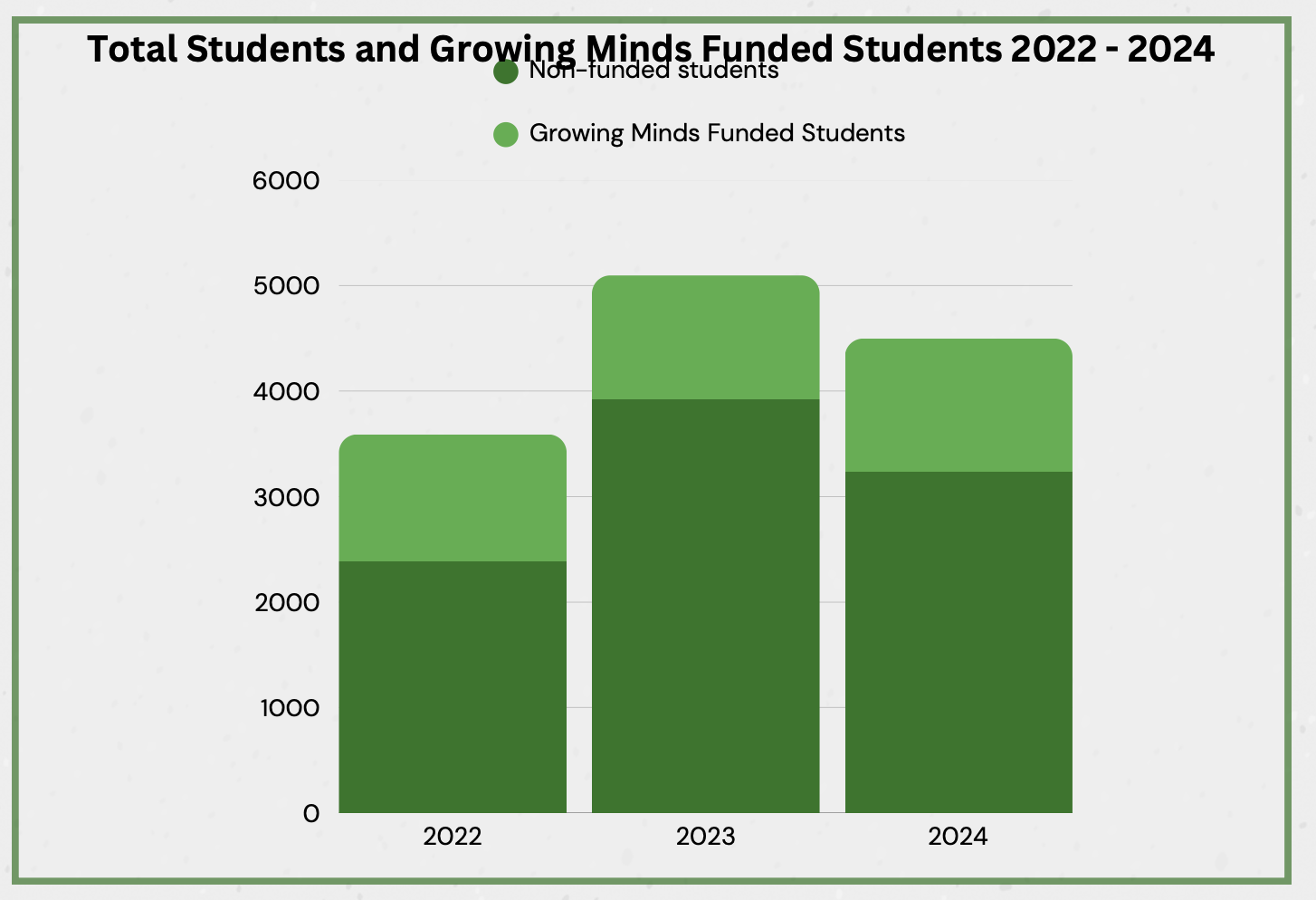
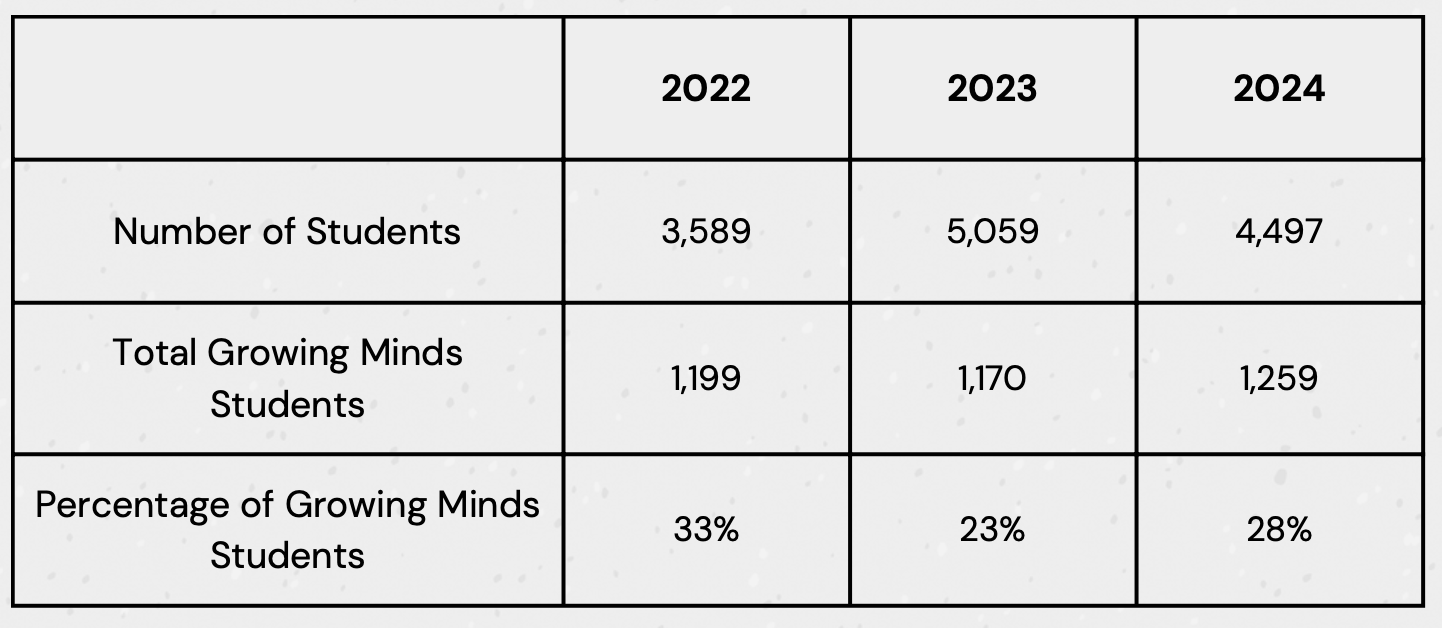
“None of this would have been possible without the Growing Minds Programme. Their commitment to enriching educational experiences has opened doors for our students, empowering them to make a positive impact on their community and the world.”
Christ the King School teacher
“Students reported feeling inspired by the conservation work happening on Tiritiri Matangi and have proposed a number of project ideas for our kura to follow in the footsteps of the motu and its incredible volunteers.”
Ardmore teacher
“The trip itself was nothing short of extraordinary. Tiritiri Matangi provided our students with a unique environment to explore and learn about New Zealand’s rich biodiversity. The educational activities organized on the island, including guided walks and interactive learning sessions about plants, trees, and wildlife, were both engaging and informative. I want to extend our heartfelt appreciation to all those involved for their unwavering support and commitment to providing such a great experience. The impact of this trip on our students’ learning and appreciation for the natural world cannot be overstated.”
Nathalie Irvine, Everglade Primary School
Student Feedback
“It was nice to have places to experience a sanctuary firsthand. I got the feel for nature and why we need to protect it. When you experience it, it makes you want to protect it.”
“I learnt about the power of community and perseverance, and also about the importance of translocation for preserving New Zealand’s biodiversity.”
“I will start doing the same things that the staff did in the island because I want my place to be more clean like an island.”
“The highlight of the day was the people that made our day so much more special and memorable. Of course the knowledge we learned from them, the history and the theory of Tiritiri Island.”

Visitor Centre Opening Springs Surprise
Visitor Centre Opening Springs Surprise
Visitor Centre Opening Springs Surprise
From the Supporters of Tiritiri Matangi Archives: Dawn Chorus, December 2005, Bulletin 63
Photo credit: Fiona Oliphant, DoC
The official opening of Tiritiri Matangi lsland’s new Visitor Centre was attended by more than 100 Supporters and friends in early November. As Ray and Barbara unveiled the plaque, they were surprised to discover that the centre was named in their honour – The Ray and Barbara Walter Visitor Centre.
To the delight of everyone at the official opening of the new Visitor Centre on Tiritiri Matangi, Department of Conservation Rangers Ray and Barbara Walter, were unaware that the Visitor Centre was to be named after them.
As they pulled the cords to reveal the overhead plaque, their surprise was met with warm applause from the crowd.
Speakers and a dedication from Supporters’ founder Jim Battersby, preceded the unveiling and the cutting of a red ribbon by Ray and Barbara. First of the invited guides to speak was the Minister of Conservation Chris Carter, who retains the Conservation portfolio for a second term. He reflected on the Visitor Centre as part of the commitment to the importance of conservation education for present and future generations. “Tiritiri is an international icon for restoration conservation, and at international conservation events I often talk about what has been accomplished on Tiritiri. And about what can be achieved with a dedicated group of individuals working with the Department of Conservation to transform an island.
The Visitor Centre was important for both education and conservation, showing how natural ecosystems can be restored to support our unique biodiversity, he said.
The new Auckland Conservator for DoC, Sean Goddard, said he had visited Tiritiri 15 years ago and could not help but be inspired by what he saw on Tiritiri. “l’m astounded by the changes that have happened since then, in the canopy, and in the sights and sounds on the island. I hope that all of Auckland will become aware of the special places on their doorstep, such as the islands of the Hauraki Gulf.
“Tiritiri is very special among those special places. It is a beacon, and a model and inspiration for our conservation work in the Auckland region. The Visitor Centre was an important milestone, and a premier site for the interpretation of the stories of our threatened species, he said. “Stories that are all the more meaningful when we can see and hear them. These include stories of both our natural heritage and our historical heritage, including all the people that lived and worked on Tiritiri, both Māori and European stories,” said Mr Goddard. “l would like to finish with a proverb: ‘He kura taiao e hokia’, which translates to “A treasured home will always be revisited”. “When I read this proverb in the new General Policy for Conservation, I thought of Tiritiri Matangi – a special place that has become a treasured home to many threatened species. “The Supporters of Tiritiri Matangi have enriched the island through their repeated visits, and been enriched themselves through their involvement with such a special place”, he said.
Ray Walter paid tribute to the work of his wife Barbara on Tiritiri, and said that without the support of Barbara, he would not still be on the island. “l have said that as soon as we get a Visitor Centre, I will retire, but it won’t be quite like that. We will retire sometime next year now,” he said. ” lt’s great to see the Visitor Centre here at last as the culmination of our working together with the Supporters group.
“We started out with a visitors centre in a shed, then a garage, and now we have this $400,000 facility on the same site. Well done to the Supporters for building this facility, which will be enjoyed by many generations and beyond,” said Ray.
SoTM members gather with Ray and Barbara for a group photo at the Ray and Barbara Walter Visitor Centre Opening
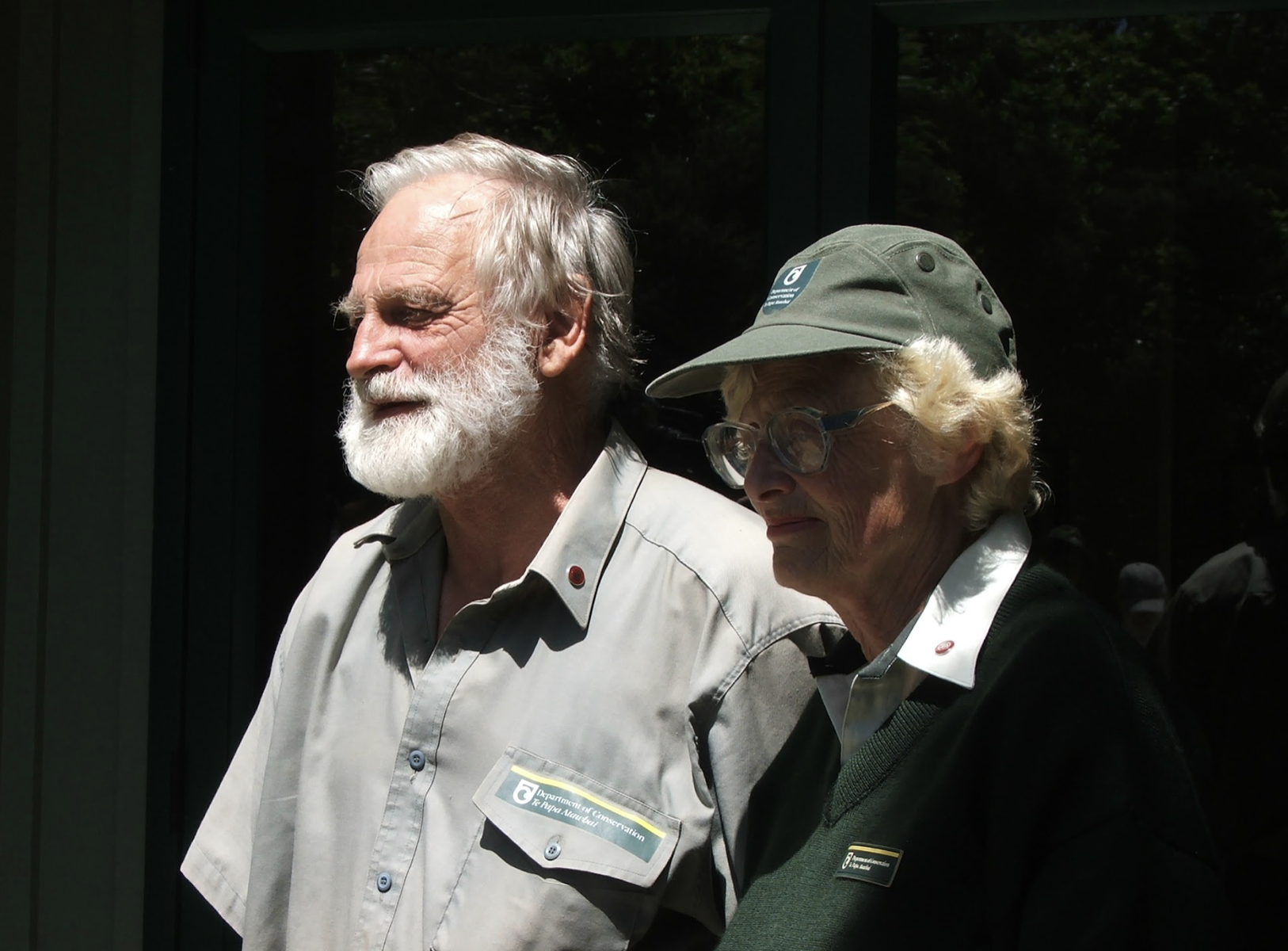
Ray and Barbara Walter
Credit: Neil Davies
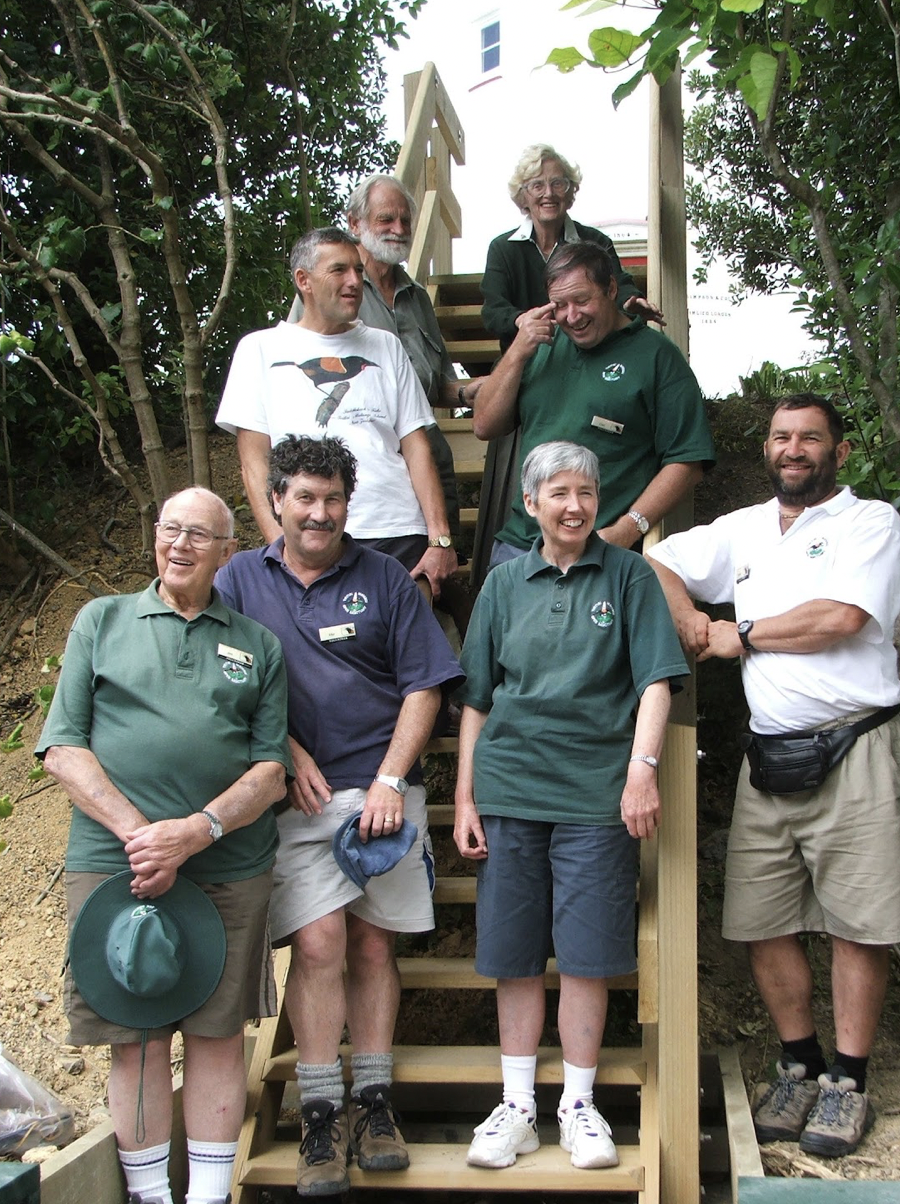
The Visitors Centre opening brought together six of the past seven SoTM chairpersons and they posed for this photograph with Ray and Barbara Walter (top) on the new Lighthouse Sfairs. The chairpersons are (from left front), Jim Battersby, Mel Galbraith, Peter Lee, Dell Hood, Carl Hayson, and Simon Fordham. (Absent is Trevor Sampson)
Credit: Neil Davies
The Visitors Centre opening brought together six of the past seven SoTM chairpersons and they posed for this photograph with Ray and Barbara Walter (top) on the new Lighthouse Sfairs. The chairpersons are (from left front), Jim Battersby, Mel Galbraith, Peter Lee, Dell Hood, Carl Hayson, and Simon Fordham. (Absent is Trevor Sampson)
Credit: Neil Davies
E-Bikes and Solar Power
E-Bikes and Solar Power: How DOC and Volunteers Are Cutting Carbon on Tiritiri Matangi
E-Bikes and Solar Power: How DOC and Volunteers Are Cutting Carbon on Tiritiri Matangi
Photo credit: Janet Petricevich
The Department of Conservation (DOC) is taking meaningful steps toward a greener future, starting with two wheels and the sun.
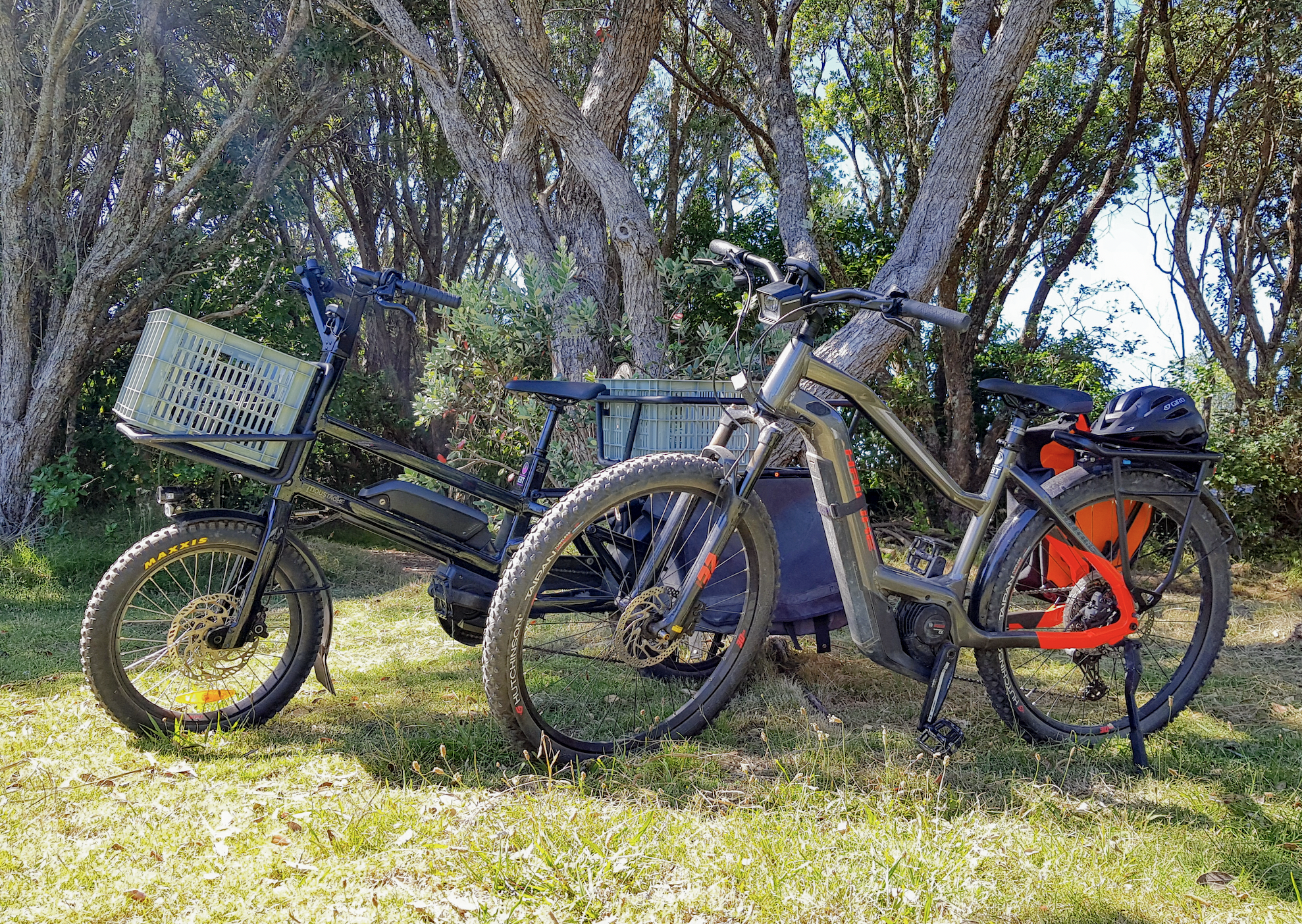
As part of its mission to reduce carbon emissions and model sustainable practices, DOC has added two electric bikes to the transport fleet on Tiritiri Matangi Island. One is a cargo e-bike, perfect for transporting gear and tools, while the other is a standard e-bike used by rangers and Supporters of Tiritiri Matangi (SoTM) volunteers to move around the island efficiently, no petrol required..
The e-bikes are powered by solar energy. Tiritiri Matangi Island is equipped with solar panels that generate electricity for island operations. That means these e-bikes are not only replacing vehicle trips but are being charged with 100% renewable energy.
A Solar-Powered Island
Tiritiri Matangi is no stranger to solar energy. The iconic Tiritiri Matangi lighthouse, New Zealand’s oldest operating lighthouse still in use, has been fully automated and solar-powered since 1990. Its solar panels charge batteries that power the lighthouse’s light assembly. In 2002, the original system was upgraded to a modern rotating beacon, further improving its reliability and efficiency.
Together, the solar-powered lighthouse and electric bikes reflect the island’s commitment to sustainable, low-impact operations, showing that even remote, heritage-rich places can lead the way in renewable energy use.

Simon Fordham using ‘Mo’ to deliver new tititipounamu/rifleman nest boxes prior to the start of the breeding season.
Why E-Bikes?
Electric bikes are a smart alternative to traditional fuel-powered vehicles, especially on a conservation island where minimising environmental impact is crucial.
- No direct emissions – E-bikes don’t burn fossil fuels.
- Energy efficient – They use far less energy than cars or quad bikes.
- Quiet operation – Great for keeping the peace in sensitive wildlife habitats.
- Eco-friendly access – They leave a much smaller footprint, literally and figuratively.
The cargo e-bike, in particular, helps with transporting essential gear, whether it’s tools for track maintenance or resources for the biodiversity team.